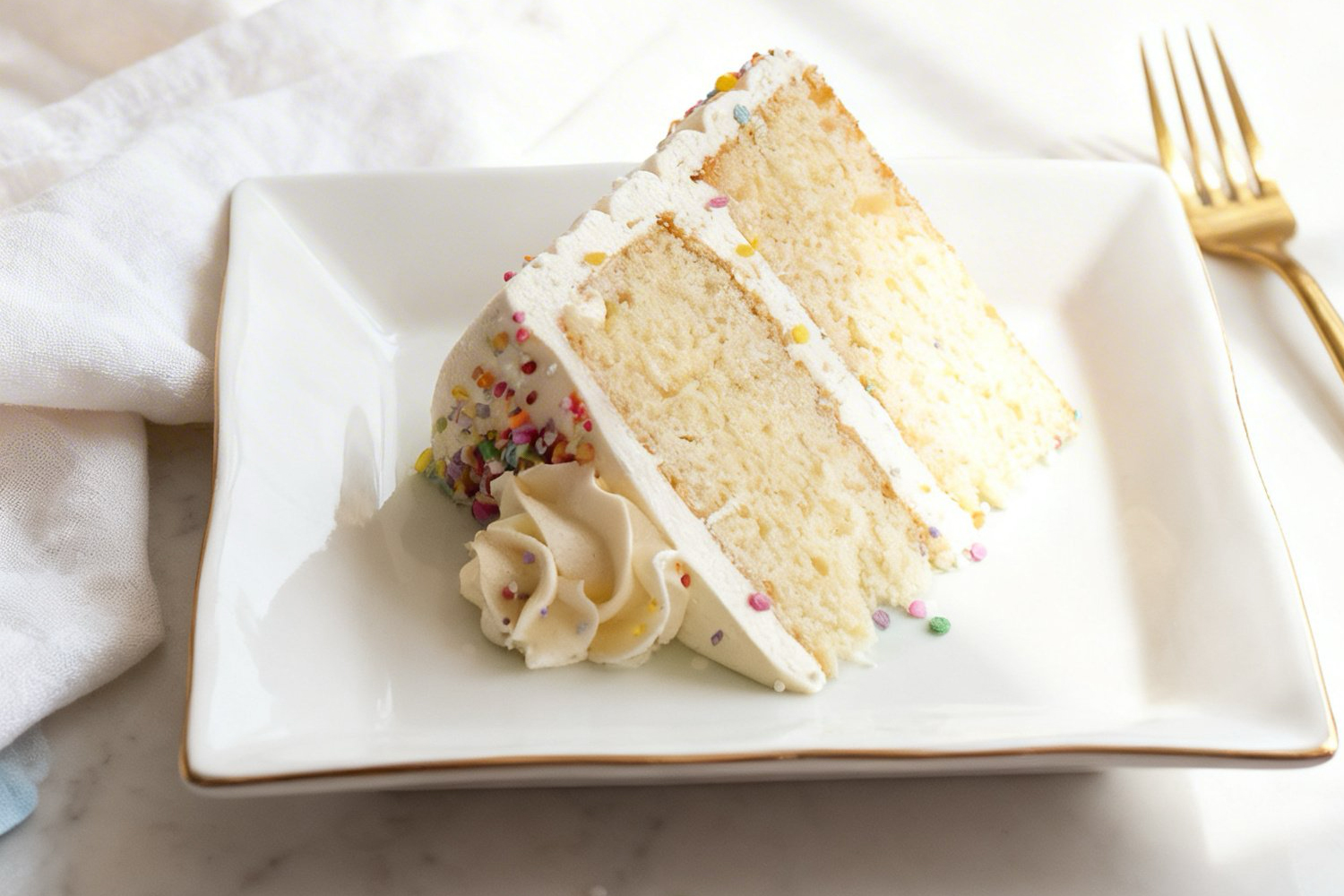
Imagine a dessert that feels like a soft, comforting hug in every bite. This white cake with vanilla buttercream does exactly that. The fluffy, moist layers pair perfectly with creamy vanilla frosting, producing a cake that’s light yet indulgent. Baking it at home is straightforward, and frosting the cake becomes part of the fun experience. This classic combination works for birthdays, tea time, or any occasion that calls for a sweet, timeless treat. Each slice melts softly in the mouth, leaving a delicate balance of sweetness, tender texture, and smooth creaminess. White cake with vanilla buttercream is approachable for beginner bakers while still impressing friends and family, delivering a dessert that’s consistently satisfying and elegant.
🔥 InternalLinking
Why You’ll Love This White Cake With Vanilla Buttercream
With its delicate layers and creamy frosting, this cake feels effortlessly elegant.
- Light, fluffy white layers with tender texture
- Smooth vanilla buttercream complements without overpowering
- Works beautifully for weddings, birthdays, or casual occasions
- Easy to stack and decorate for a polished look
- Classic flavor that never disappoints
Save This Pin for Later to Your Pinterest Board
Ingredients
For the Cake
- All-purpose flour: Provides structure and stability while keeping the cake tender.
- Granulated sugar: Sweetens the cake and helps create a soft, fine crumb.
- Buttermilk (or whole milk): Keeps the cake moist and tender, with a subtle tang that balances the sweetness.
- Unsalted butter: Adds richness, flavor, and a tender texture.
- Eggs: Give structure, trap air for lightness, and keep the cake soft.
- Baking powder: Leavens the cake, helping it rise to a fluffy texture.
- Vanilla extract: Infuses warm, aromatic flavor throughout.
- Salt: Balances the sweetness and enhances the other flavors.
For the Vanilla Buttercream
- Unsalted butter: Creates a creamy, rich base for the frosting.
- Granulated sugar: Sweetens the frosting and stabilizes its structure.
- Egg whites: Whipped for a light, airy texture that gives the buttercream a silky mouthfeel.
- Vanilla extract: Adds a fragrant, sweet aroma to complement the cake.
Assembly & Decoration
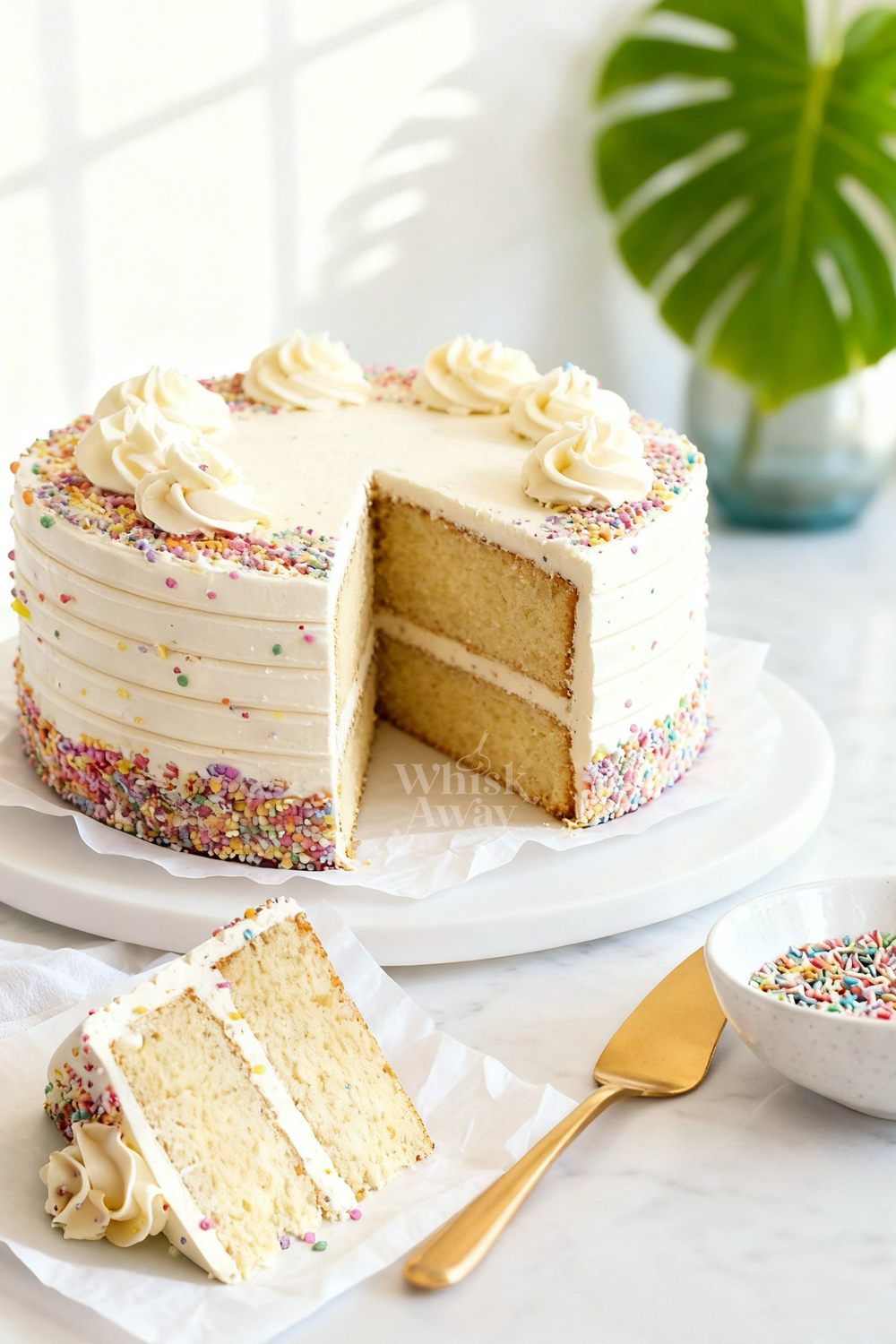
- Confetti sprinkles & nonpareils: Add a playful, colorful touch and a slight crunch for fun visual appeal.
Tips To Get Your Recipe Right
- Use room-temperature ingredients throughout: Butter, eggs, and buttermilk must all be at room temperature to prevent the batter from curdling and to ensure a light, tender sponge.
- Always alternate adding dry ingredients and buttermilk: This gentle incorporation prevents the batter from separating or becoming too thick, protecting the delicate gluten structure and keeping the cake soft.
- Wipe your mixer bowl and whisk attachment thoroughly before making the Swiss meringue: Even a tiny bit of fat prevents the egg whites from whipping properly, which is crucial for a stable, airy frosting.
- Apply a thin crumb coat before the final layer of buttercream: Chilling the cake after the crumb coat traps loose crumbs and creates a smooth canvas for a flawless, bright frosting finish.
- Cut the cake cold with a hot knife: Run the knife under hot water and dry it between slices for the cleanest cuts, then let the slices sit at room temperature for 30 minutes so the Swiss meringue buttercream softens to a perfect, silky texture.
Storage Tips
- Keep it at room temperature for a day or two: Store the cake under a glass dome or in an airtight container away from sunlight. This keeps the sponge soft and the Swiss Meringue frosting light and fluffy.
- Refrigerate for longer storage: Place the cake in the fridge in an airtight container for up to 5–7 days. Always let it sit at room temperature for 2–3 hours before serving so the frosting softens and isn’t hard like cold butter.
- Freeze unfrosted or fully frosted layers: Wrap baked, unfrosted layers tightly in plastic wrap and foil. For a decorated cake, freeze uncovered for 2 hours until the frosting is firm, then wrap tightly. Thaw in the fridge overnight, unwrapped, to prevent the frosting from sticking to the plastic.
- Protect cut edges: Press parchment or wax paper against any exposed sponge to lock in moisture and prevent the cake from drying out.
- Refresh chilled slices: Microwave a single slice for 5–8 seconds to soften the sponge and buttercream just enough for a melt-in-your-mouth texture without melting the frosting.
FAQs
Why does my Swiss Meringue Buttercream look soupy or curdled?
This is the most common hurdle, and it all comes down to temperature!
If it looks soupy: Your meringue was still too warm when you added the butter, melting the fat. Pop the entire bowl into the fridge for 15 to 20 minutes, then try whipping it again.
If it looks curdled or chunky: Your butter was too cold. Do not throw it out! Just keep the mixer running on medium-high speed. The friction will eventually warm the butter, and the mixture will magically pull together into a smooth frosting.
Can I substitute the buttermilk with regular milk?
You can, but buttermilk is highly recommended because its acidity breaks down the gluten, resulting in that signature tender, melt-in-the-mouth crumb. If you don’t have buttermilk on hand, you can make a quick substitute: stir 1 tablespoon of fresh lemon juice or white vinegar into 1 cup of whole milk and let it sit for 5 minutes until it thickens and curdles.
How do I get my cake layers to bake perfectly flat for easy stacking?
Cakes naturally dome in the center because the outside edges bake and set faster than the middle. To prevent this, wrap damp, fabric cake strips around the outside of your cake pans before putting them in the oven. The strips insulate the metal, ensuring the whole cake bakes at an even rate. If you don’t have strips, simply use a serrated knife to level off any domes once the cakes are completely cool.
Is it safe to leave Swiss Meringue Buttercream at room temperature?
Yes! Because you cook the egg whites and sugar over a double boiler to a safe 160°F (71°C), the frosting is perfectly safe to sit in a cake keeper at room temperature for 1 to 2 days. If you need to store the cake for longer, it can go in the fridge for up to 7 days, but you must let it sit on the counter for a few hours before eating so the butter can soften again.
What is the best way to serve this cake to enhance the flavor?
Always serve this cake at room temperature. Because the vanilla sponge and buttercream act as a beautifully rich, sweet canvas, pairing your slice with a tart fruit contrast elevates the entire dessert. A spoonful of warm Morello cherry compote or a dollop of zesty lemon curd on the side perfectly cuts through the buttery richness for a beautifully balanced bite!
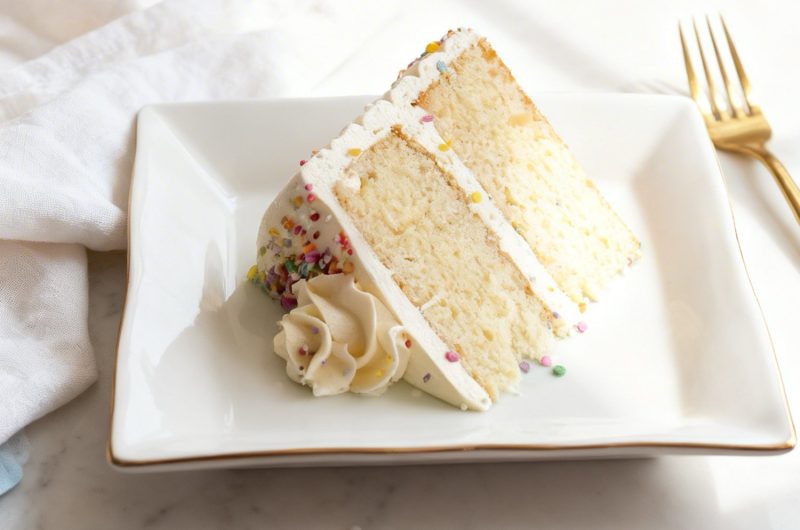
White Cake With Vanilla Buttercream
12
servings2
hours35
minutesThis white cake with vanilla buttercream is tender, moist, and frosted with creamy vanilla goodness.
Ingredients
- Vanilla Cake
2 ¼ Cups All-Purpose Flour
1 ½ Cups Granulated Sugar
1 Cup Buttermilk (Or Whole Milk, Room Temperature)
¾ Cup Unsalted Butter (Room Temperature)
3 Large Eggs (Room Temperature)
2 ¼ Tsp Baking Powder
1 ½ Tsp Vanilla Extract
¾ Tsp Salt
- Vanilla Buttercream
2 Cups Unsalted Butter (Room Temperature)
1 ½ Cups Granulated Sugar
6 Large Egg Whites
2 Tsp Vanilla Extract
- Assembly
Confetti Sprinkles
Nonpareils
Directions
- Preheat your oven to 350°F. Prepare two 8-inch round cake tins by greasing them with butter, dusting with flour, and lining the bases with parchment paper.
- In a medium-sized bowl, whisk together the flour, baking powder, and salt. Set this aside.
- Using a stand mixer with the paddle attachment, beat the softened butter and sugar on medium-high speed for about 3 minutes. You are looking for a pale, aerated, and fluffy texture.
- Turn the speed down and add the eggs one by one. Ensure each egg is fully blended into the batter before adding the next, then stir in the vanilla extract.
- Gradually add the flour mixture and buttermilk in alternating batches. Start with 1/3 of the flour, then half the milk, repeating until you finish with the final 1/3 of the flour. Mix only until just combined after each addition to keep the sponge tender.
- Divide the batter between your pans and bake for 30 to 35 minutes. Test the center with a toothpick; it should come out clean. Let the cakes rest in their pans on a wire rack for 10 minutes before turning them out to cool completely.
- Combine the egg whites and sugar in your stand mixer bowl and whisk them together.
- Set the bowl over a saucepan filled with 1–2 inches of gently simmering water (ensure the bottom of the bowl doesn't touch the water). Whisk constantly until the mixture hits 160°F or until the sugar has completely dissolved and the liquid feels smooth (not grainy) between your fingers.
- Move the bowl back to the stand mixer. Using the whisk attachment, beat on medium-high for 5–10 minutes. You want stiff, glossy peaks, and the bowl should feel cool to the touch.
- Switch to the paddle attachment. With the mixer on low, add the cubed butter one piece at a time. Once all the butter is in, add the vanilla and whip the frosting until it is perfectly silky and smooth.
- Secure your first cake layer on a stand or plate. Spread about 1 cup of buttercream over the top. Add the second layer and apply a very thin crumb coat of frosting over the entire cake. Chill the cake in the refrigerator for 20 minutes to lock the crumbs in place.
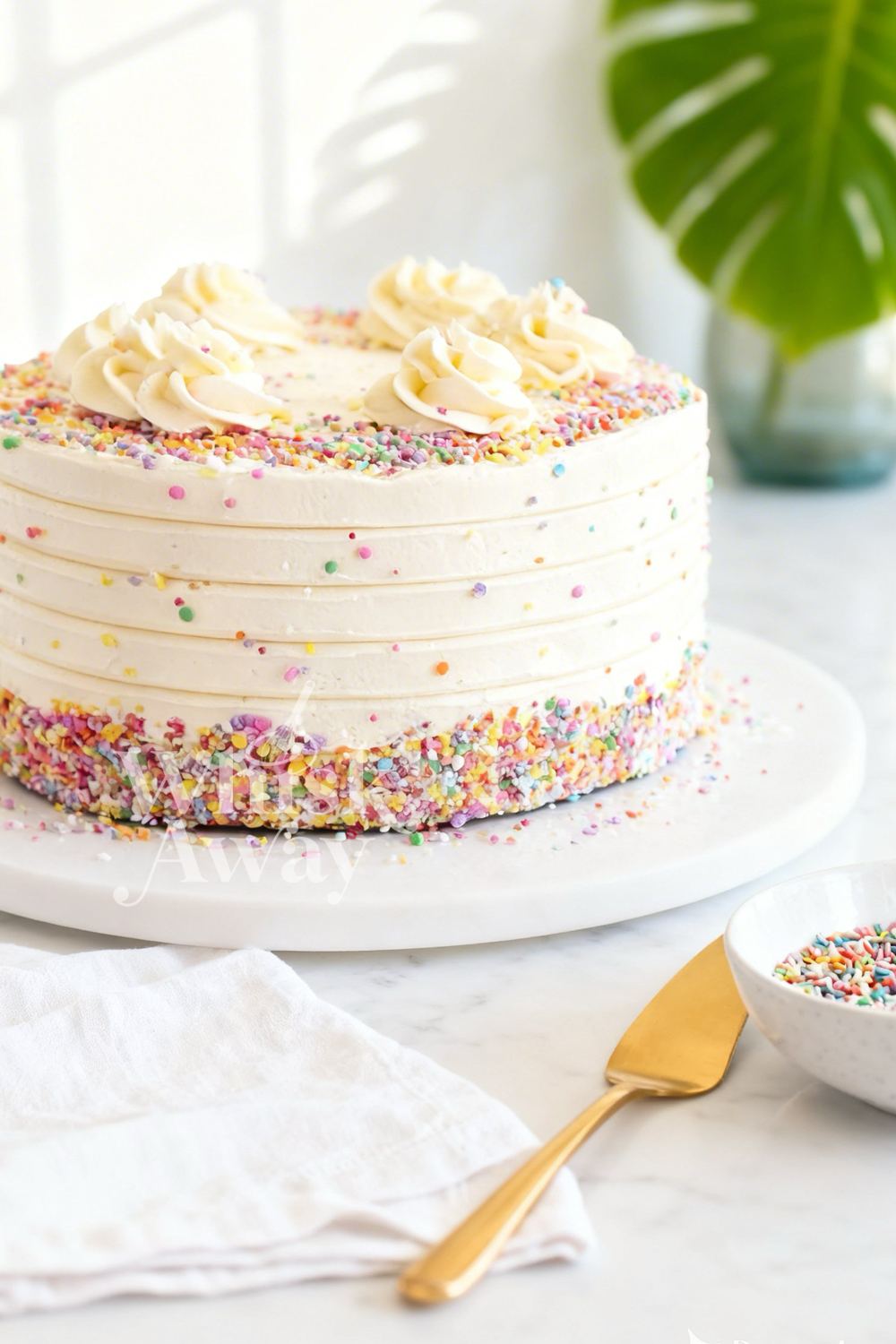
- Apply the remaining frosting to the top and sides. For a professional finish, use a bench scraper to smooth the edges or a decorating comb to create a textured pattern.
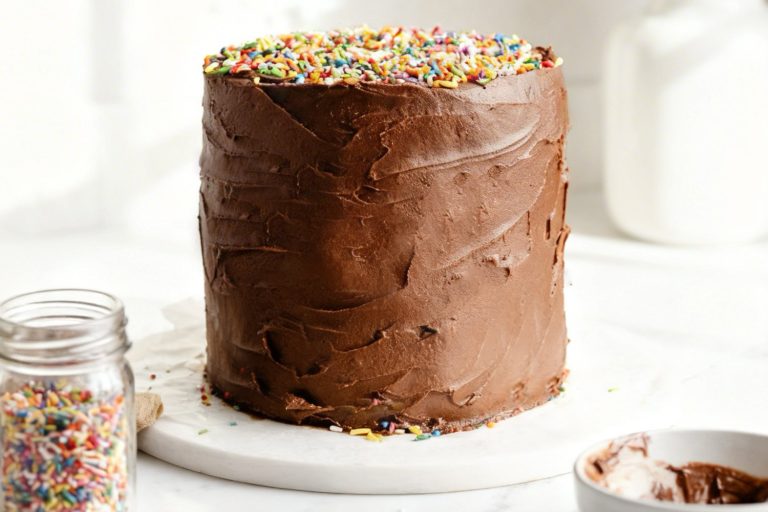
- Mix your confetti and nonpareils. Gently press them into the bottom edge of the cake and scatter some on top. For a whimsical look, lightly toss small pinches of sprinkles against the sides.
- Use a piping bag fitted with a 1M star tip to pipe elegant rosettes around the top border of the cake.