
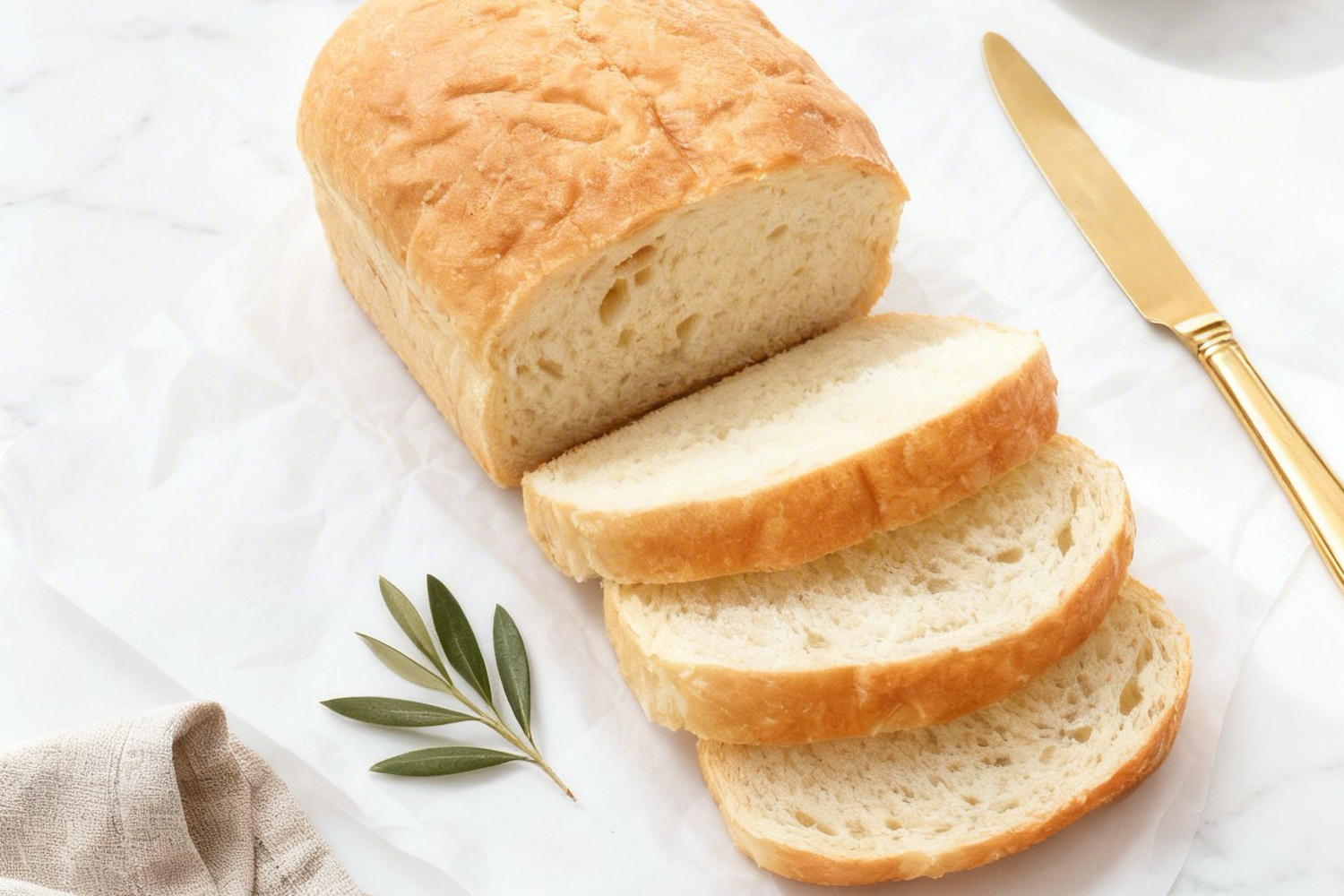
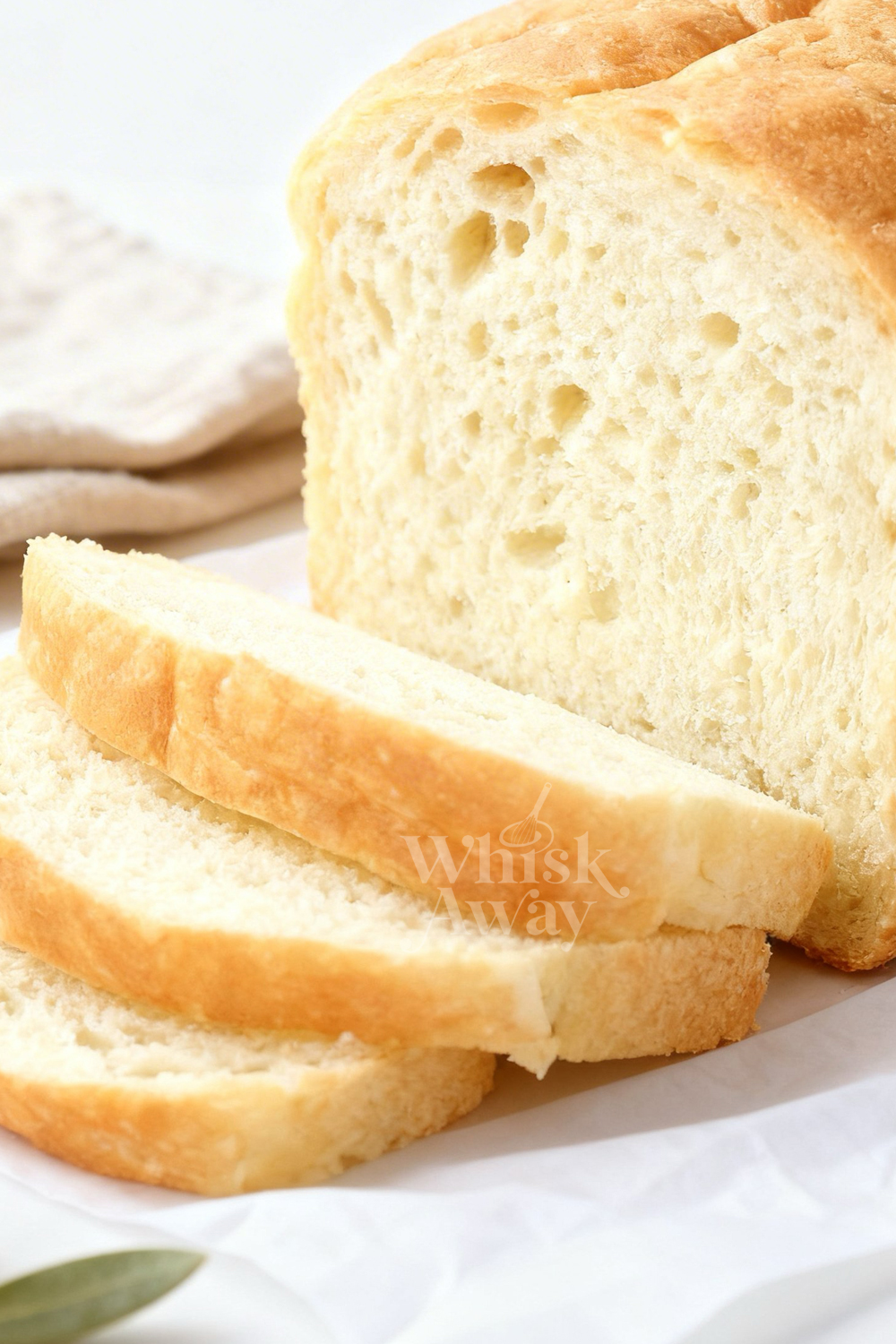
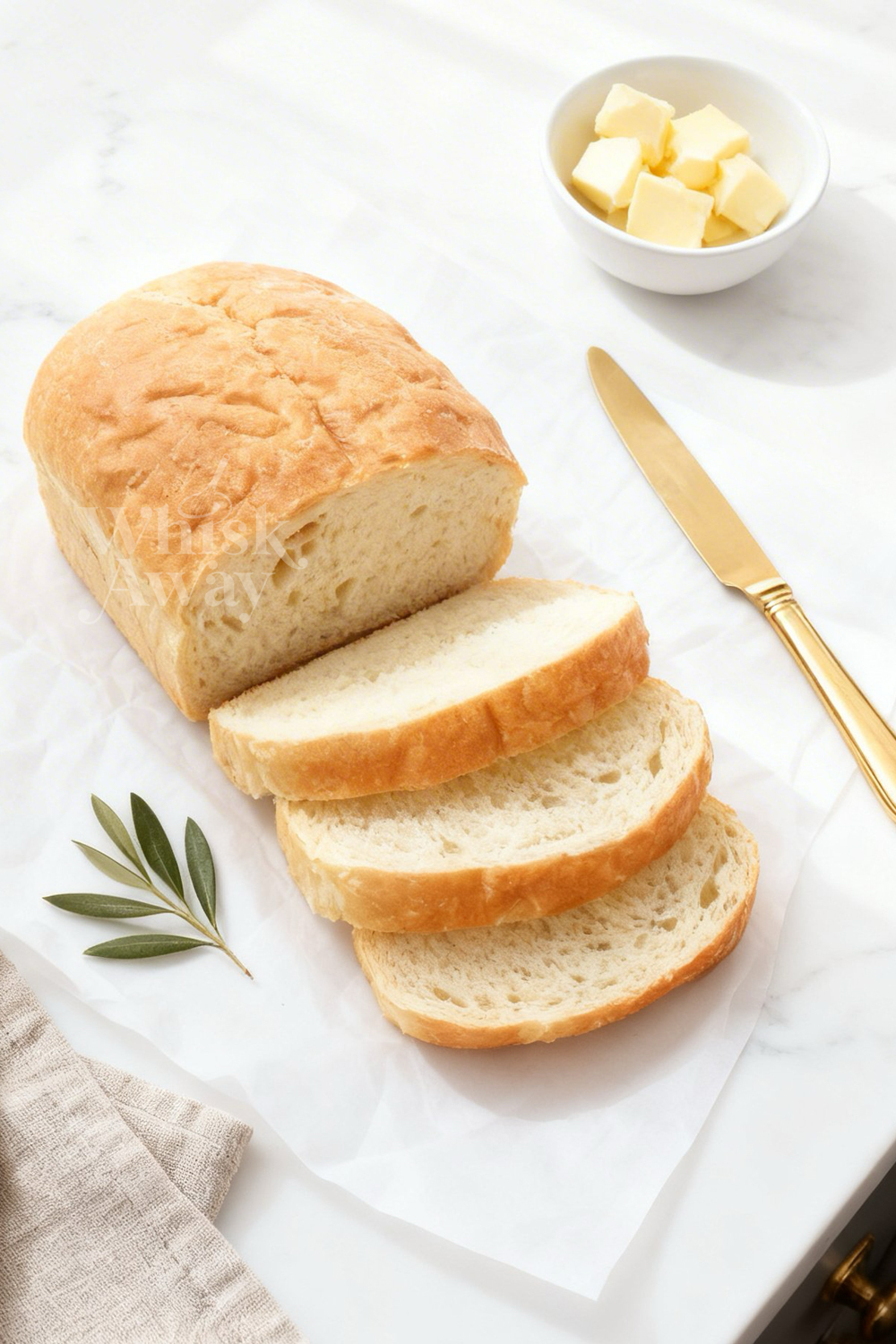
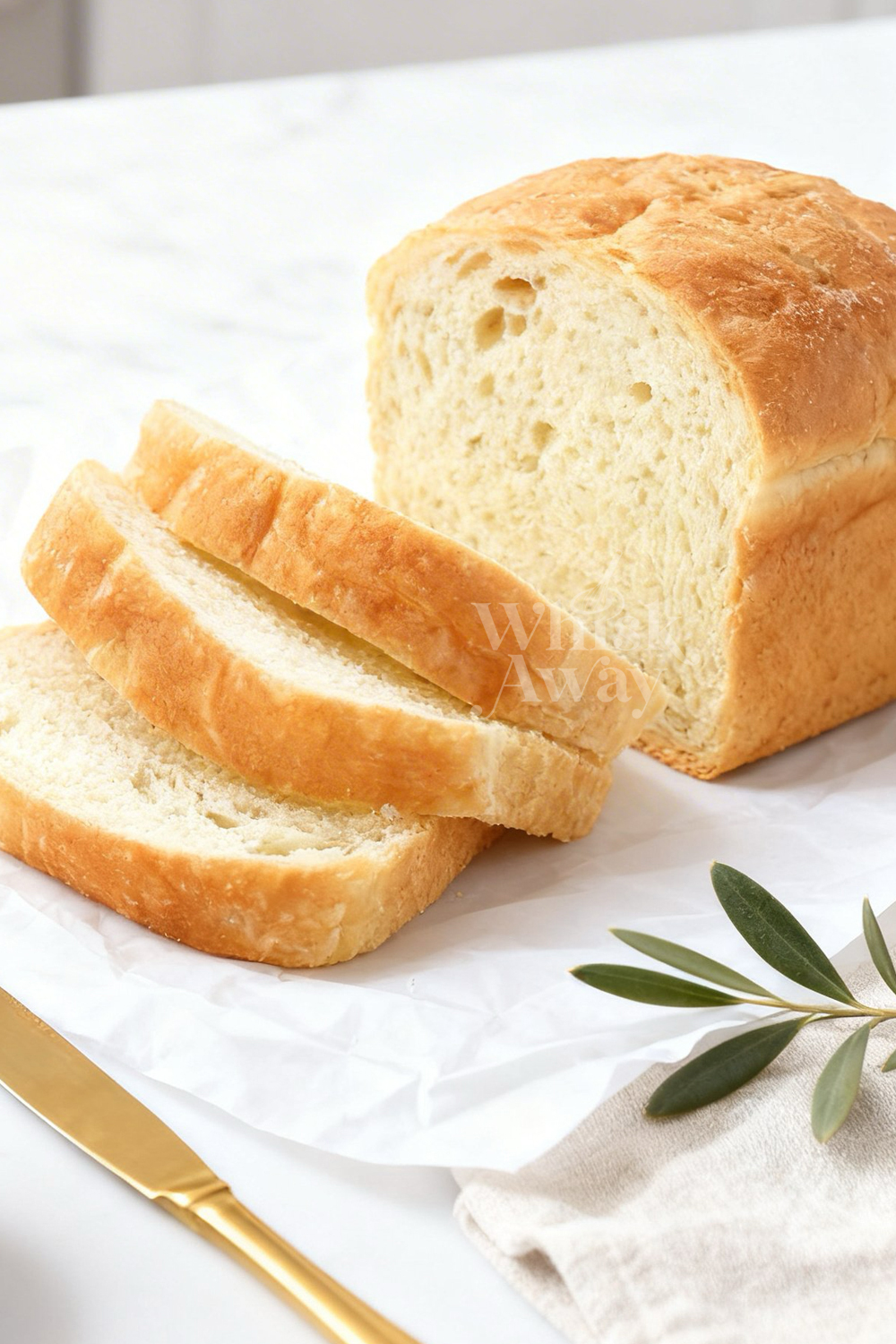
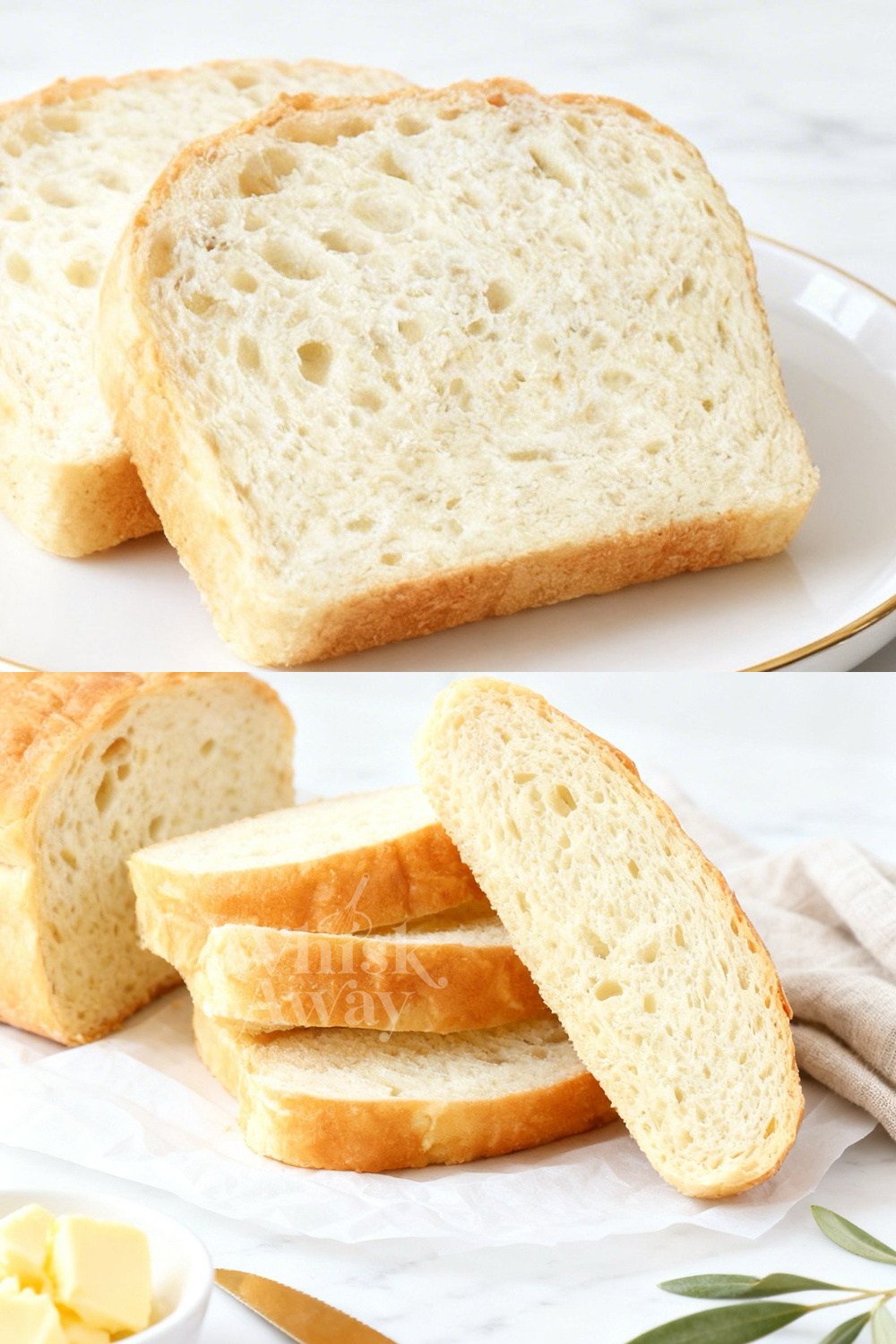
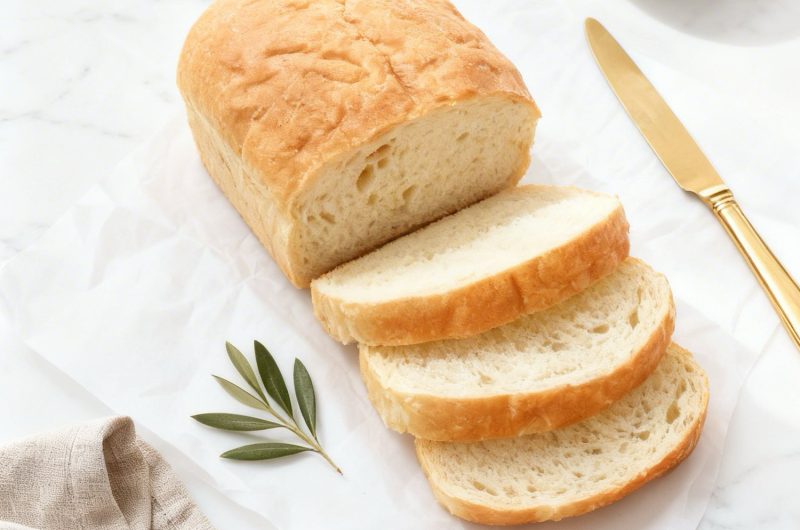
Nothing beats the smell of freshly baked bread, and this simple white bread loaf recipe makes it easy to bring that joy home. With just a few pantry staples, you get a soft, tender loaf with a crisp crust and pillowy interior. This loaf is ideal for beginners. Its texture is soft yet structured, making it versatile for any meal. Every slice of this white bread loaf is comforting and satisfying. Give it a try and experience the joy of fresh, homemade bread in your kitchen.
Why You’ll Love This White Bread Loaf
Once you see how simple ingredients transform into a soft, golden loaf, this recipe quickly becomes a kitchen staple.
- Light, fluffy interior with a soft, tender crumb
- Uses just six basic ingredients you likely already have
- Perfect for sandwiches, toast, or serving alongside meals
- Bakes into a beautifully golden crust with a soft center
- Reliable, beginner-friendly recipe with consistent results
Save This Pin for Later to Your Pinterest Board
Ingredients
- All-purpose flour: This is the main structural component of the bread dough. The flour contains gluten-forming proteins that develop when mixed and kneaded, giving the bread its elasticity and chew. The range (5 to 6 cups) allows you to adjust based on how sticky your dough feels, adding more flour gradually until the dough is soft but not overly sticky.
- Warm water: Water hydrates the flour and activates the yeast. Keeping the temperature below 110°F is critical because water that is too hot can kill the yeast, while water that is too cool may slow down fermentation. Properly warmed water helps the dough rise efficiently.
- White sugar: Sugar adds a subtle sweetness to the bread and, more importantly, feeds the yeast. This helps kickstart fermentation, allowing the dough to rise more quickly and develop a light, airy texture.
- Neutral-flavored cooking oil: Oil adds moisture and richness to the dough, resulting in a softer crumb and longer-lasting freshness. A neutral oil (like vegetable or canola) is used so it doesn’t overpower the flavor of the bread.
- Instant yeast: Instant yeast is the leavening agent that makes the bread rise. It works quickly and can be mixed directly into the dry ingredients without proofing. As it ferments, it produces gas that creates air pockets, giving the bread a light and fluffy texture. (Active dry yeast can be used instead, but it typically needs to be dissolved in warm water first.)
- Butter: Brushing melted butter over the freshly baked loaves adds flavor, softness, and a slightly glossy finish to the crust. It also helps keep the crust from becoming too hard as the bread cools.
- Salt: Salt enhances the overall flavor of the bread and balances the sweetness from the sugar. It also strengthens the gluten structure, helping control the dough’s elasticity and preventing the bread from rising too quickly or unevenly.
Tips To Get Your Recipe Right
- Perfect Flour Measurement: Measure flour using the scoop-and-level method or a scale for accuracy. Too much flour leads to dense, dry bread, while proper measurement ensures a light, fluffy crumb.
- Ideal Water Temperature: Keep water between 100–110°F so the yeast activates properly. Water that’s too hot kills yeast, while cooler water slows fermentation and affects rise.
- Proper Kneading: Knead until the dough is smooth, elastic, and slightly tacky. This develops gluten, allowing the bread to rise well and hold a soft, airy structure.
- Controlled Rising: Let the dough rise in a warm, draft-free space until doubled in size. Proper fermentation builds flavor and ensures a light, well-structured loaf.
- Bake & Cool Correctly: Bake in a fully preheated oven for strong oven spring, and let the bread cool before slicing so the interior sets without becoming gummy.
How to Make White Bread Loaf (With Images)
- Step 1: In a large bowl, whisk together the flour and instant yeast. This helps the yeast distribute evenly for a consistent rise.
- Step 2: In a separate bowl, combine the warm water (110℉), sugar, salt, and oil. Just make sure the water isn’t too hot, or it can kill the yeast.
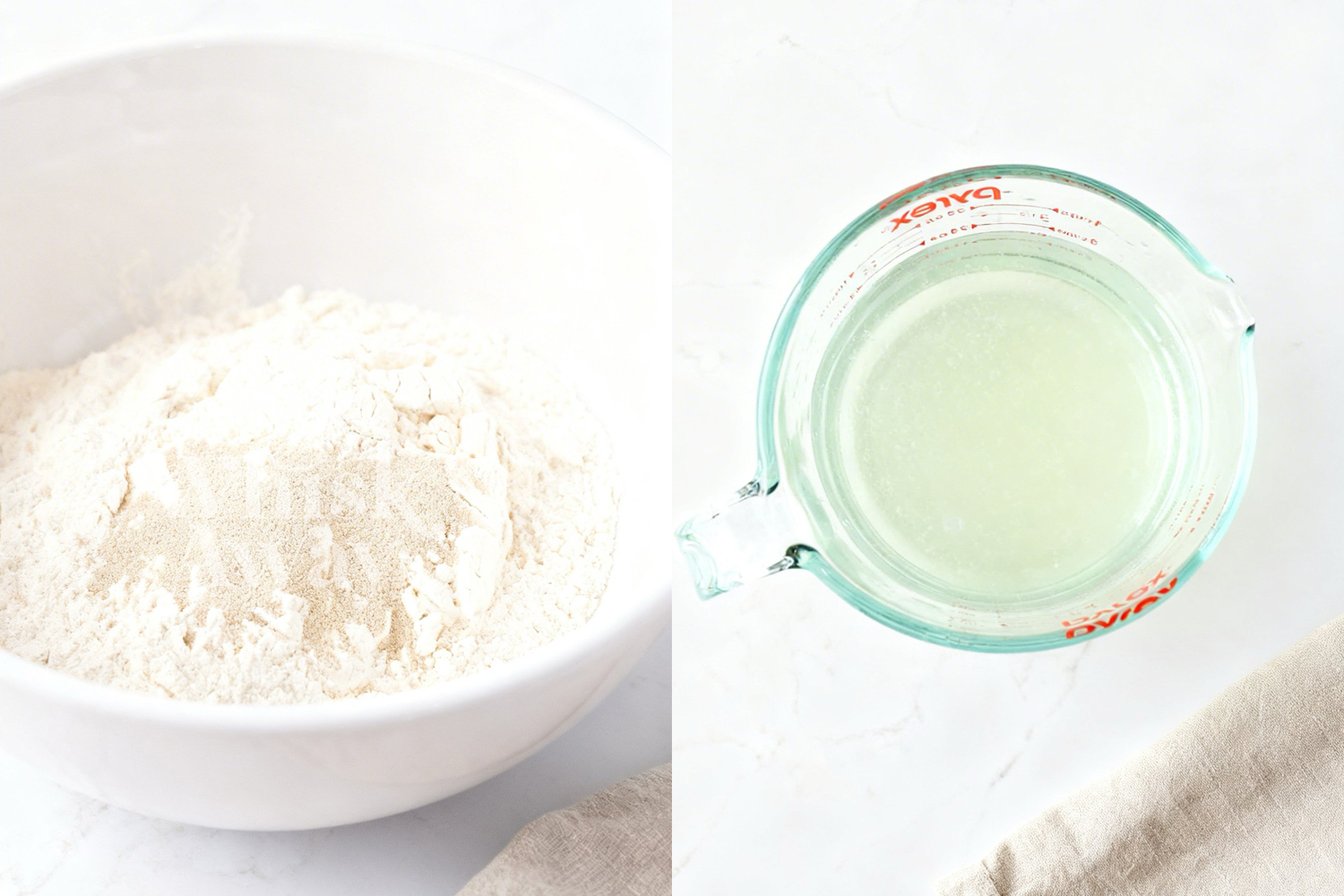
- Step 3: Pour the wet ingredients into the flour mixture and stir until a loose dough forms. Don’t overmix at this stage; you just want it coming together.
- Step 4: Turn the dough onto a lightly floured surface and knead for 5–7 minutes until smooth, or use a stand mixer or bread machine. Proper kneading develops gluten, giving your bread a soft, airy texture. Place the dough in a lightly oiled bowl.
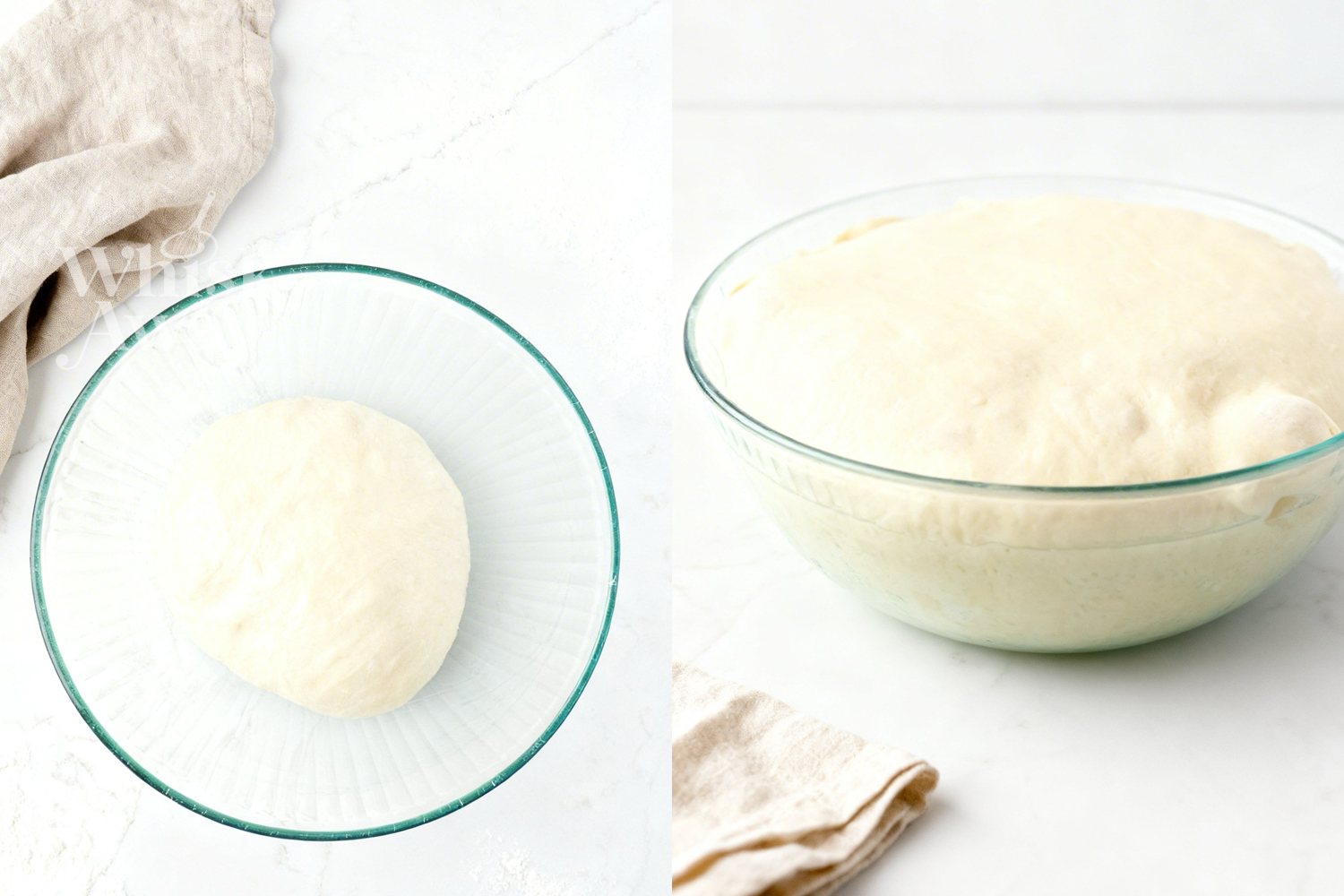
- Step 5: Cover and let rise in a warm spot for about 1 hour, until doubled in size. Checking in after 45 minutes helps ensure it doesn’t overproof.
- Step 6: Punch down the dough, divide it into two pieces, shape into loaves, and place in oiled loaf pans. Gentle handling keeps the bread light.
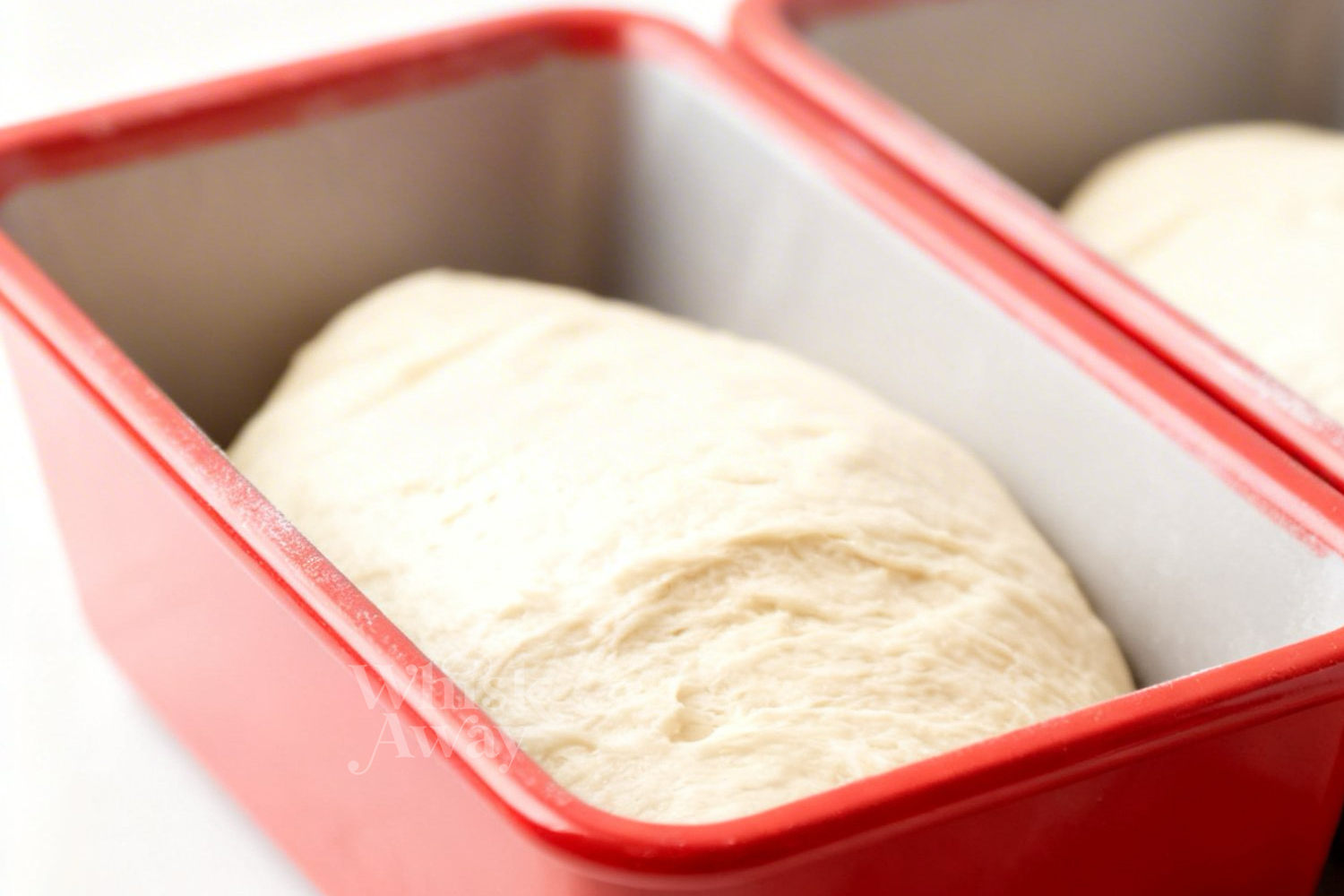
- Step 7: Cover and let rise again for 30–40 minutes, until doubled. This second rise gives the loaves a tender crumb.
- Step 8: Bake in a preheated oven for 30–35 minutes, until golden brown. Tap the bottom of a loaf; it should sound hollow when done. Let the loaves cool in the pans for 10 minutes, then transfer to a wire rack to finish cooling and avoid sogginess.
Storage Tips
- Room Temperature Storage: Keep the loaf tightly wrapped in plastic wrap or in an airtight container once fully cooled. Store it whole and slice as needed to maintain a soft crumb and prevent it from drying out.
- Avoid Refrigeration: Skip the fridge as it speeds up staling and makes the bread firm and dry. If necessary, store it fully sealed and reheat briefly before eating to restore softness.
- Freezer Storage: Wrap the cooled loaf tightly in plastic wrap and foil or place in a freezer bag to lock in freshness. Slice before freezing for easy portioning and quick use.
- Proper Thawing: Let bread thaw at room temperature, then warm slices in a toaster or heat the whole loaf in the oven to bring back that fresh-baked texture.
- Reheating for Freshness: Warm slices briefly in the microwave or refresh the whole loaf in a low oven to soften the crumb and revive aroma without drying it out.
FAQs
Can I use active dry yeast instead of instant yeast?
Yes! You can substitute active dry yeast at the same amount. Just dissolve it in the warm water with a pinch of sugar and let it sit for 5–10 minutes until frothy before adding it to the flour mixture.
Why is my dough too sticky or too dry?
This dough should feel soft and slightly tacky. If it’s overly sticky, add flour 1 tablespoon at a time while kneading. If it feels stiff or crumbly, sprinkle in a teaspoon or two of warm water until it loosens up.
How do I know when the bread is fully baked?
The loaves should be golden brown and sound hollow when tapped on the bottom. You can also check with a thermometer—fully baked bread will read around 190–200°F in the center.
Can I freeze this bread?
Absolutely. Once completely cooled, wrap the loaf or slices tightly in plastic wrap, then place in a freezer-safe bag. It will keep for up to 3 months. Thaw at room temperature and warm briefly in the oven or toaster if desired.
What’s the best way to serve or enjoy this bread?
This loaf is delicious fresh, toasted, or used for sandwiches. It pairs well with butter, jam, soups, and stews, and makes great French toast when slightly stale.
White Bread Loaf
2
loaves1
hour30
minutes1
hourThis simple 6-ingredient white bread loaf recipe is easy, soft, and perfect for homemade sandwiches or toast.
Ingredients
5 – 6 cups all-purpose flour
2 ½ cups warm water (no hotter than 110℉)
2 tablespoons white sugar
2 tablespoons neutral-flavored cooking oil
1 tablespoon instant yeast (quick-rise) see recipe notes for substituting active dry yeast
1 tablespoon butter (to brush on the loaves after baking)
2 teaspoons salt
Directions
- In a large mixing bowl, whisk together 5 cups of the flour and the instant yeast. In a separate bowl, mix the warm water, sugar, salt, and oil until the sugar dissolves. Pour the liquid mixture into the flour mixture and stir with a spatula until a soft, shaggy dough comes together.
- Turn the dough out onto a lightly floured surface. Knead for about 10 minutes, adding small amounts of the remaining flour as needed, until the dough becomes smooth and stretchy. The dough should feel slightly tacky but shouldn’t cling to your hands. Place it in a greased bowl, cover tightly with plastic wrap, and let it rise in a warm spot for about 1 hour.
- Grease two 9x5-inch loaf pans with butter or nonstick spray. Once the dough has doubled in size, punch it down to release the trapped air. Cut the dough into two equal portions, shape each piece into a loaf, and set them into the prepared pans. Cover the pans with plastic wrap followed by a clean towel, then let the dough rise again in a warm place for about 45 minutes.
- Preheat your oven to 350℉ near the end of the second rise. Bake both loaves on the middle rack for 30–35 minutes, or until the tops and bottoms are a deep golden color. Brush each loaf with melted butter immediately after baking to soften the crust and add shine.
- Leave the loaves in their pans for 5 minutes, then transfer them to a wire rack to cool completely. Allow the bread to cool for at least 20 minutes before slicing. Enjoy!"
Notes
If you don’t have instant yeast, you can substitute active dry yeast. Use slightly less and proof it first. To do this, mix ½ cup of the recipe’s warm water with ½ teaspoon sugar, then stir in 2¼ teaspoons active dry yeast. Let it sit for about 10 minutes until foamy. If it doesn’t foam, the yeast is inactive and should be replaced. Once bubbly, add it to the dough with the remaining water, sugar, salt, and oil.