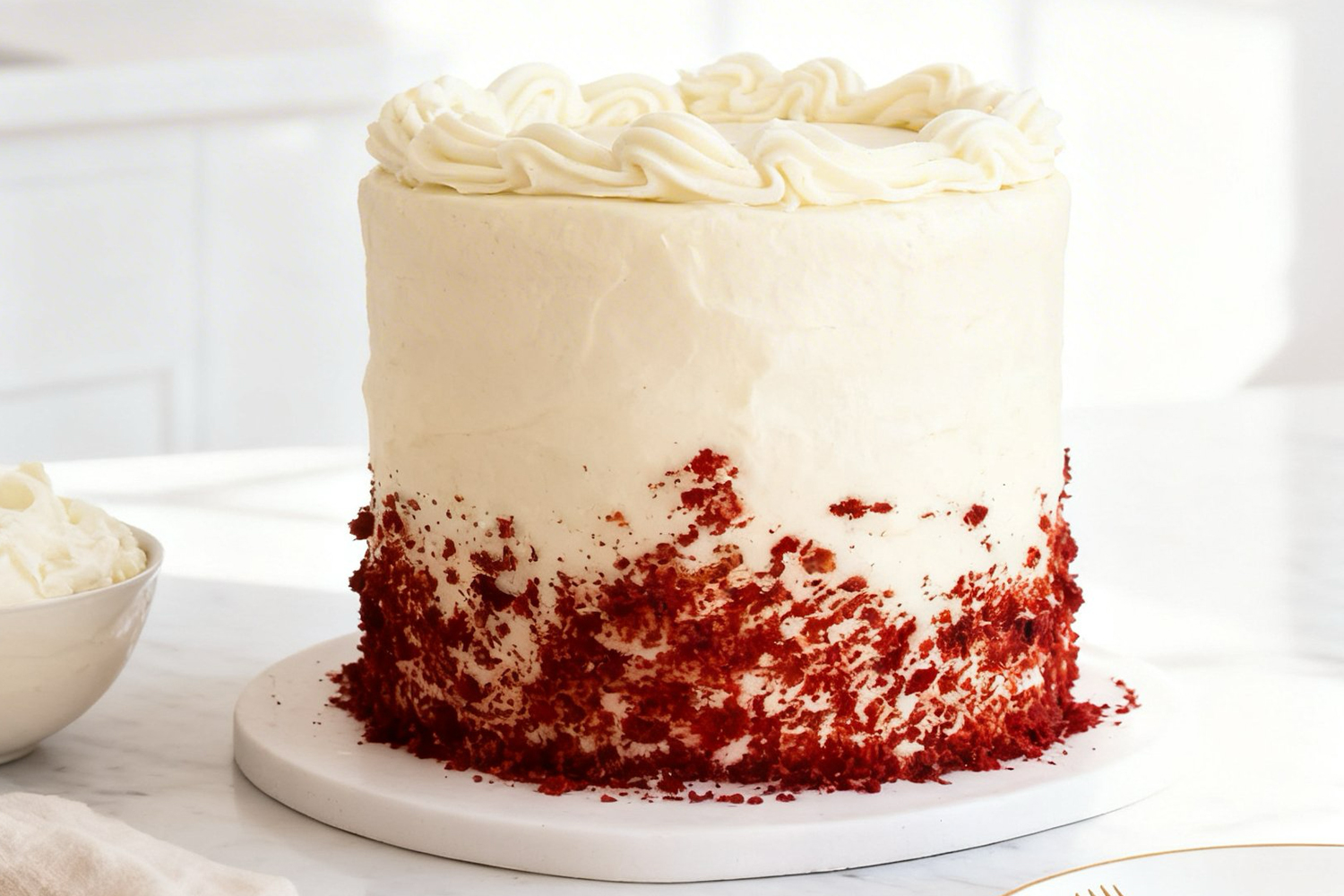
Ever wondered why red velvet cake is such a classic? The bright red velvet cake with cream cheese frosting create a visual and flavor experience that’s hard to resist. Rich cocoa undertones complement the sweet, tangy frosting, giving each bite a velvety texture that’s soft and indulgent. Baking red velvet cake with cream-cheese frosting at home is approachable, producing a dessert that feels elegant yet comforting. Perfect for birthdays, holidays, or a weekend treat, every slice balances flavor, texture, and presentation. The creamy frosting melts in your mouth while the tender layers provide a satisfying chocolate hint, making it a crowd-pleaser. Red velvet cake with cream-cheese frosting continues to charm dessert lovers because it offers both visual impact and classic indulgence, making it a reliable favorite for any occasion.
🔥 InternalLinking
Why You’ll Love This Red Velvet Cake
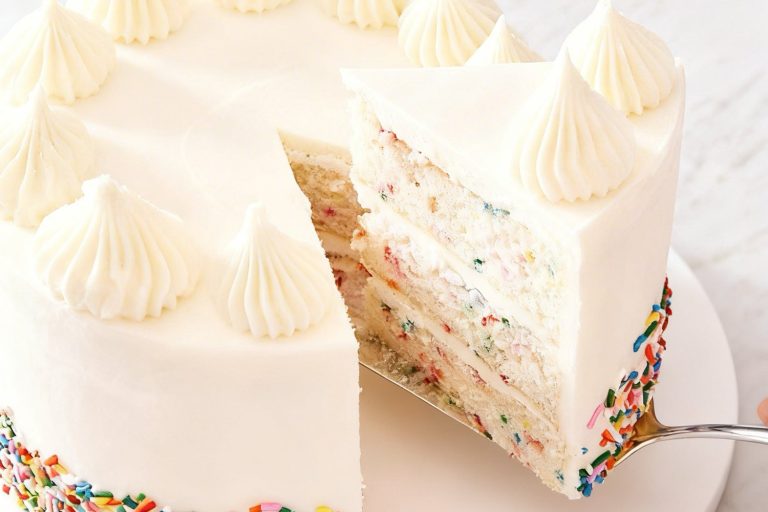
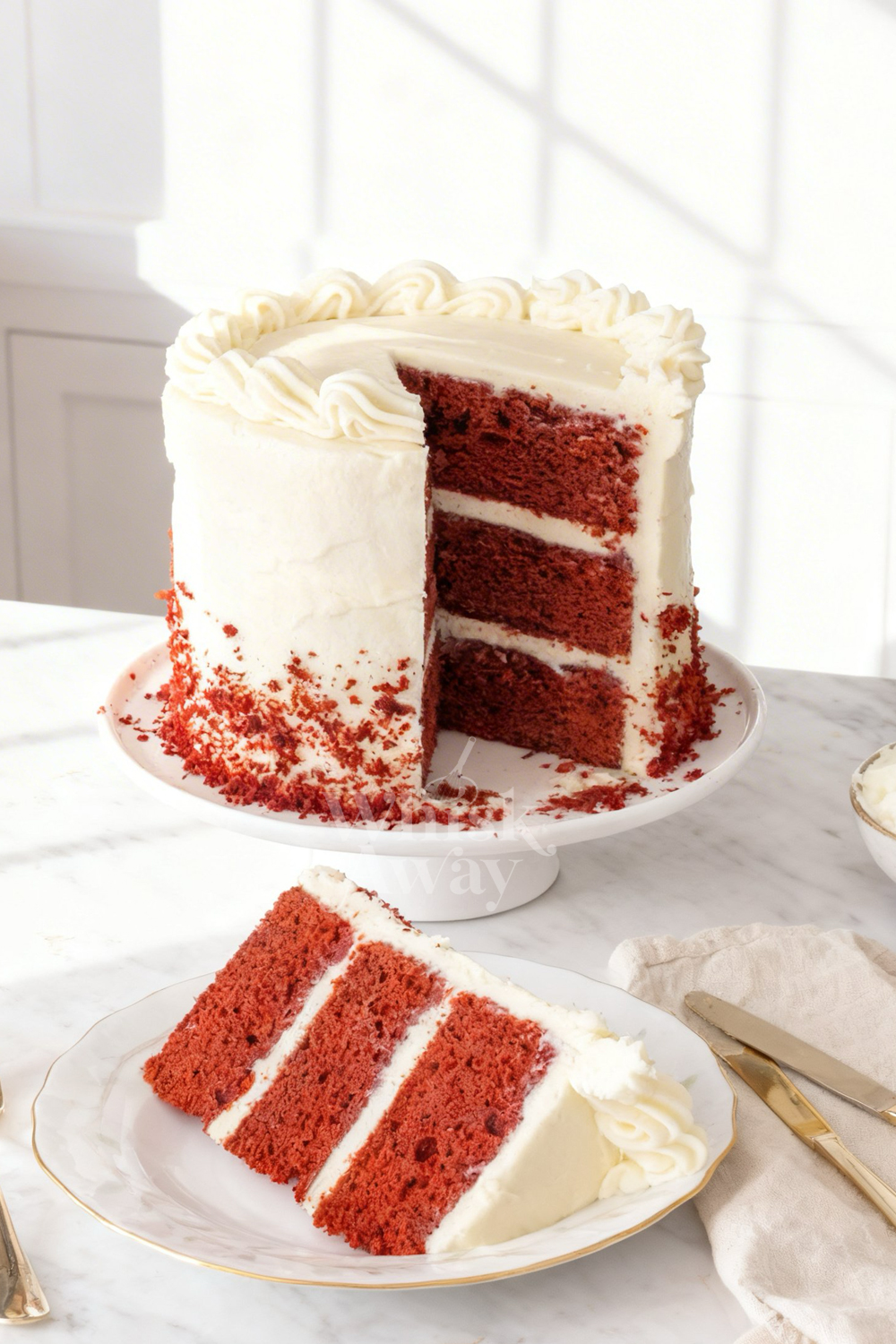
Once the layers are stacked and frosted, it’s easy to see why this cake is a showstopper.
- Vibrant red layers with a tender, moist crumb
- Smooth, tangy cream cheese frosting balances sweetness
- Perfect for birthdays, anniversaries, or special celebrations
- Beautifully striking when sliced, making each piece photogenic
- A classic southern dessert that feels indulgent yet approachable
Save This Pin for Later to Your Pinterest Board
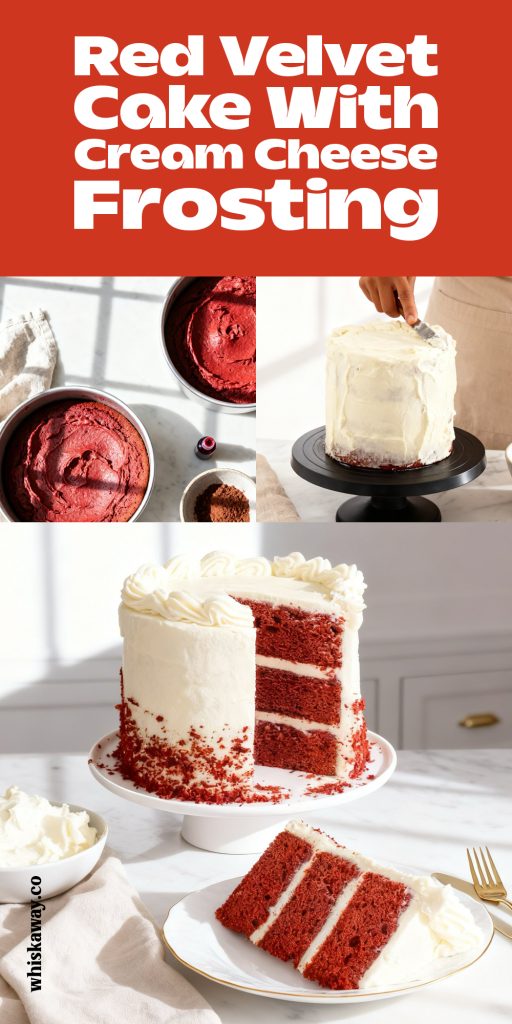
Ingredients
For the Cake
- All-purpose flour: Provides structure while keeping the cake tender and soft.
- Granulated sugar: Sweetens the cake and contributes to a fine, even crumb.
- Buttermilk: Adds moisture, tangy flavor, and reacts with baking soda for a light, fluffy texture.
- Unsalted butter: Adds richness, tenderness, and depth of flavor.
- Liquid red food coloring: Gives the cake its signature vibrant red color.
- Cocoa powder: Adds subtle chocolate flavor that complements the tang of the buttermilk.
- Eggs: Bind ingredients together and provide structure while keeping the cake soft.
- Vanilla extract: Enhances flavor and balances sweetness.
- White vinegar: Reacts with baking soda to help the cake rise and maintain a tender texture.
- Salt: Balances sweetness and enhances overall flavor.
- Baking soda: Acts as a leavening agent, creating lift and lightness.
For the Cream Cheese Frosting
- Confectioners sugar: Sweetens and helps create a smooth, creamy frosting.
- Cream cheese: Adds tanginess, creaminess, and rich flavor to the frosting.
- Unsalted butter: Provides body, richness, and helps the frosting hold its shape.
- Vanilla extract: Enhances sweetness and adds depth to the frosting flavor.
- Kosher salt: Balances sweetness and enhances the cream cheese flavor.
Tips To Get Your Recipe Right
- Add the Acidic Mixture Last: Combine the vinegar and buttermilk at the very end and get the batter into the oven immediately. This maximizes the carbon dioxide reaction from the baking soda, giving the cake its signature light, velvety crumb.
- Sift Cocoa and Sugar: Even fine cocoa can clump, and powdered sugar can be gritty. Sifting both ensures a smooth batter and frosting, with consistent texture and an even, vibrant red color.
- Keep Ingredients at Room Temperature: Eggs, butter, and buttermilk should feel neutral to the touch. Cold liquids can shock the creamed butter, causing curdling and a dense, uneven cake.
- Control Frosting Temperature: Cream cheese should be soft but firm, and butter slightly firmer. Over-soft butter or warm cream cheese leads to runny frosting. If needed, chill the mixture for 15–20 minutes before decorating for a stable, pipeable finish.
- Avoid Overmixing and Frosting Warm Cake: Once flour is added, mix gently to prevent gluten overdevelopment. Always let cake layers cool completely or lightly chill before frosting, or the cream cheese will melt and layers may slide.
Storage Tips
- Chill for Stability: Because cream cheese frosting softens at room temperature, store the cake in the fridge if it won’t be eaten within a few hours. This keeps the layers firm and prevents the frosting from sliding.
- Use an Airtight Container: Cover the cake with a cake dome or loosely with plastic wrap to protect it from absorbing fridge odors while preventing the frosting from drying out.
- Short-Term Room Temperature: If consuming within the same day, the cake can sit at room temperature for up to 4–5 hours. Keep it in a cool, shaded spot away from heat sources.
- Avoid Freezing Frosted Cake: Cream cheese frosting doesn’t freeze well; it can become watery or separate. If freezing is necessary, freeze the unfrosted layers separately and frost after thawing.
- Bring to Serving Temperature: Before slicing, let the cake sit at room temperature for 15–20 minutes. This softens the cream cheese frosting slightly, making it easier to cut neat slices and enhancing flavor.
FAQs
Why is my cream cheese frosting too runny to pipe?
This usually happens if the cream cheese or butter was too warm, or if you used spreadable cream cheese from a tub. Tub versions have higher water content and won’t hold their shape. To fix runny frosting, sift in an extra 1/2 cup of confectioner’s sugar or pop the bowl in the fridge for 20 minutes to firm up the fats before trying to pipe again.
Can I make this cake without the red food coloring?
Yes! The cake will still have the same delicious, tangy flavor and soft texture. Without the dye, it is technically a Cocoa Buttermilk Cake. It will bake up a light, golden-brown color. If you want a natural red tint without dye, you can use beet powder, though the color will be more of a deep maroon than a bright crimson.
What does the vinegar actually do in the recipe?
The vinegar is crucial for two reasons:
Texture: It reacts with the baking soda to create a massive amount of tiny air bubbles, which is what gives the cake its velvet crumb.
Color: It increases the acidity of the batter, which helps keep the red food coloring vibrant and prevents the cocoa from turning the cake a muddy brown.
I don’t have buttermilk. Can I use a substitute?
In a pinch, you can make shortcut buttermilk. Add 1 tablespoon of lemon juice or white vinegar to 1 cup of whole milk and let it sit for 5–10 minutes until it looks slightly curdled. While this works for the acidity, real buttermilk is thicker and provides a richer fat content, so use the real thing if you can for the best results!
Why did my cake layers come out dry?
Red Velvet is a lean cake, meaning it doesn’t have as much fat as a heavy pound cake. It is very easy to over-bake. Check your cakes 5 minutes before the timer is set to go off. A toothpick should come out with a few moist crumbs attached. If it’s bone-dry, it’s been in too long. Also, ensure you are measuring your flour by spooning and leveling rather than scooping, as scooping packs too much flour into the cup.
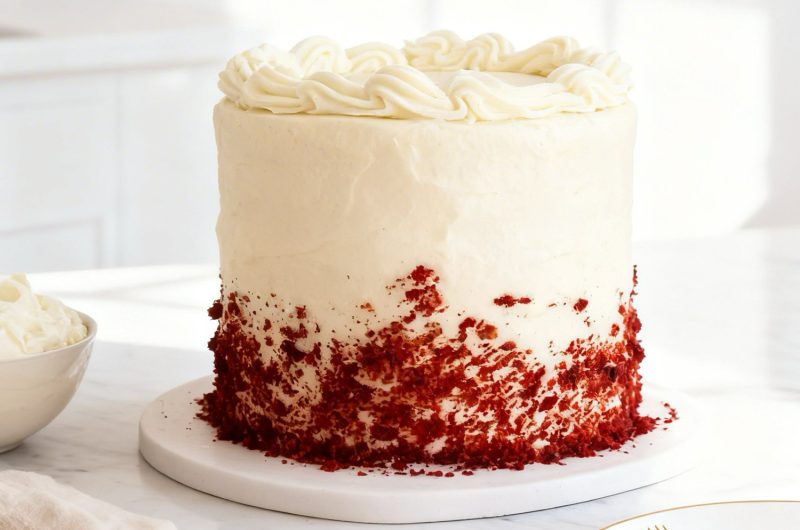
Red Velvet Cake With Cream Cheese Frosting
6
servings1
hour30
minutes30
minutesThis red velvet cake with cream-cheese frosting is soft, tangy, and visually stunning.
Ingredients
- For The Cake
2 ½ Cups (300g) All-Purpose Flour
1 ½ Cups (300g) Granulated Sugar
1 Cup (240ml) Buttermilk (Room Temperature)
½ Cup (113g) Unsalted Butter (Room Temperature)
1 To 2 Tablespoons Liquid Red Food Coloring
2 Tablespoons Cocoa Powder
2 Large Eggs (Room Temperature)
2 Teaspoons Vanilla Extract
1 Tablespoon White Vinegar
1 Teaspoon Salt
1 Teaspoon Baking Soda
- For The Cream Cheese Frosting
1 ½ Pounds (675g) Confectioners Sugar (Sifted)
2 8-Ounce Blocks (454g) Cream Cheese (Room Temperature)
1 ½ Cups (340g) Unsalted Butter (Room Temperature)
1 Teaspoon Vanilla Extract
Pinch Kosher Salt
Directions
- Set your oven to 350°F.
- Butter and lightly flour three 6-inch cake pans. Tap out any excess flour to ensure the cakes don't have a powdery exterior after baking.
- In a medium bowl, sift the flour, salt, and baking soda together. This aeration is key to a light texture.
- Using a stand mixer with the paddle attachment (or a hand mixer), beat the butter on medium speed until smooth. Pour in the sugar and continue mixing for about 3 minutes until the mixture looks pale and fluffy.
- Add the eggs one by one, ensuring each is fully integrated before adding the next. Stir in the vanilla extract.
- Sift the cocoa powder directly into the butter mixture. Mix on low until just combined, then scrape down the sides of the bowl.
- In a measuring jug, whisk together the buttermilk, vinegar, and red food coloring. The vibrancy of the cake depends on how much coloring you choose to add.
- With the mixer on its lowest setting, add half of your dry flour mixture, followed by half of the red buttermilk liquid. Repeat this process with the remaining halves. Mix only until the streaks of flour disappear—over-mixing will make the cake tough.
- Distribute the batter evenly among your three prepared pans. Bake for 30–35 minutes. The cakes are ready when the centers spring back when lightly pressed.
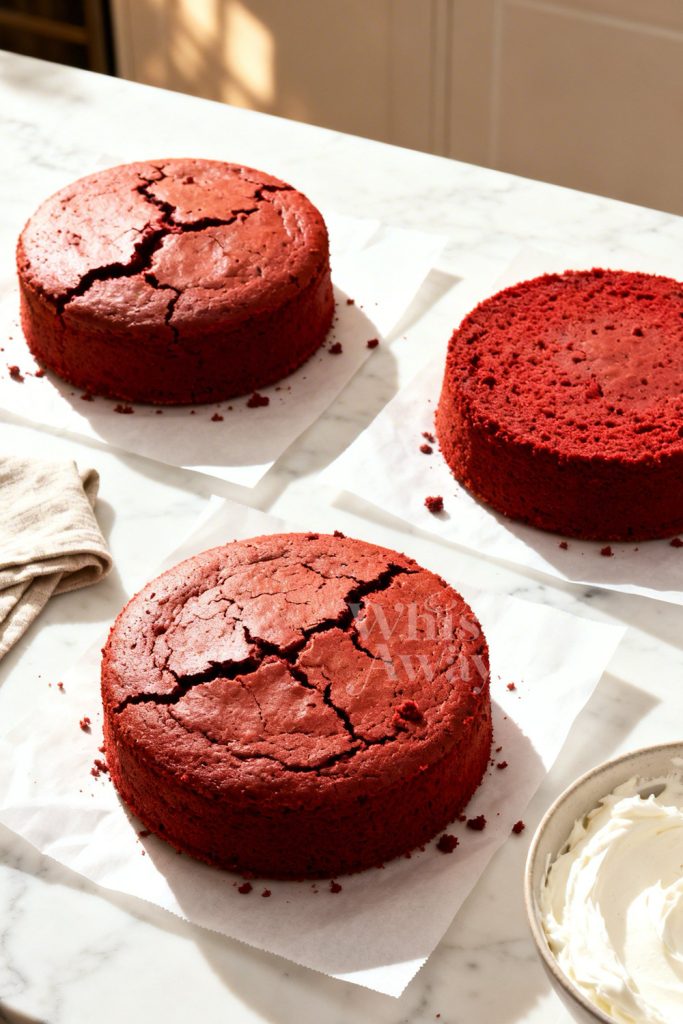
- Let the cakes rest in their pans for 10 minutes to firm up, then invert them onto a wire rack to reach room temperature completely.
- Beat the room-temperature butter and cream cheese together on medium speed for about 3 minutes. It should look silky and voluminous.
- Add the salt and vanilla, beating until combined.
- Sift the confectioner’s sugar into a separate bowl. On low speed, gradually add the sugar to the cream cheese base. Once incorporated, increase the speed to medium and whip for 1 minute until light and airy.
- Transfer about one cup of this frosting into a piping bag fitted with your favorite decorative tip.
- Place your first cake layer on a stand. Smooth about ½ cup of frosting over the top. Repeat with the second layer.
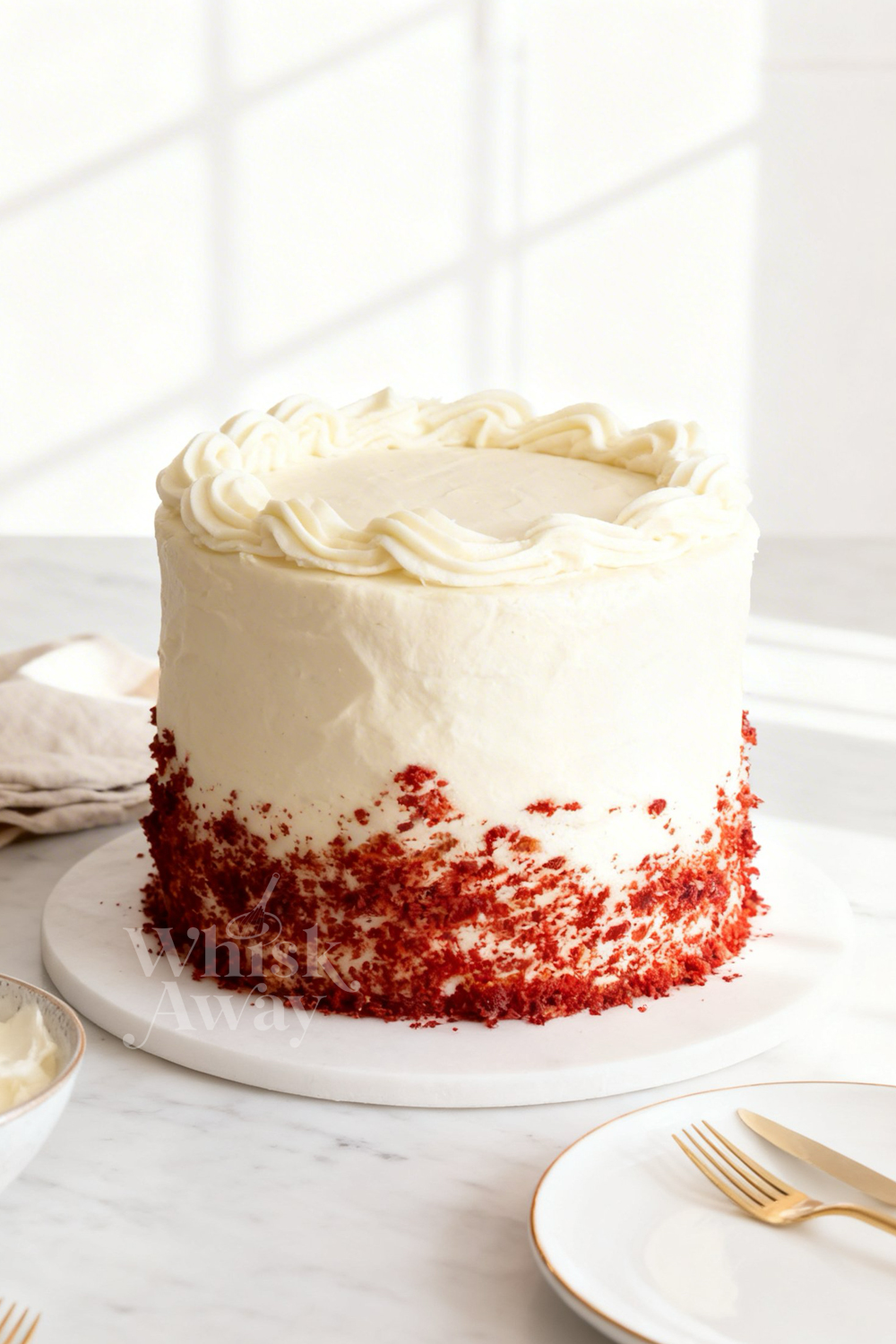
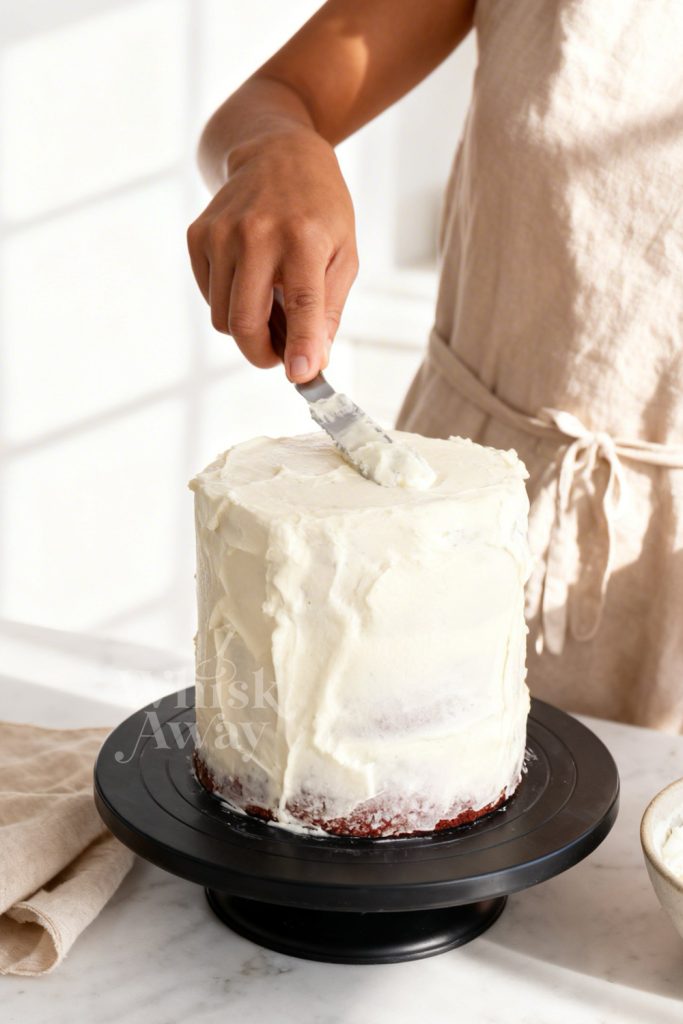
- Top with the final layer and use the remaining frosting to cover the top and sides. Use a bench scraper or spatula for a clean finish, then pipe a decorative border around the top edge.
- Chill the assembled cake for at least 1 hour to allow the frosting to stabilize before slicing.