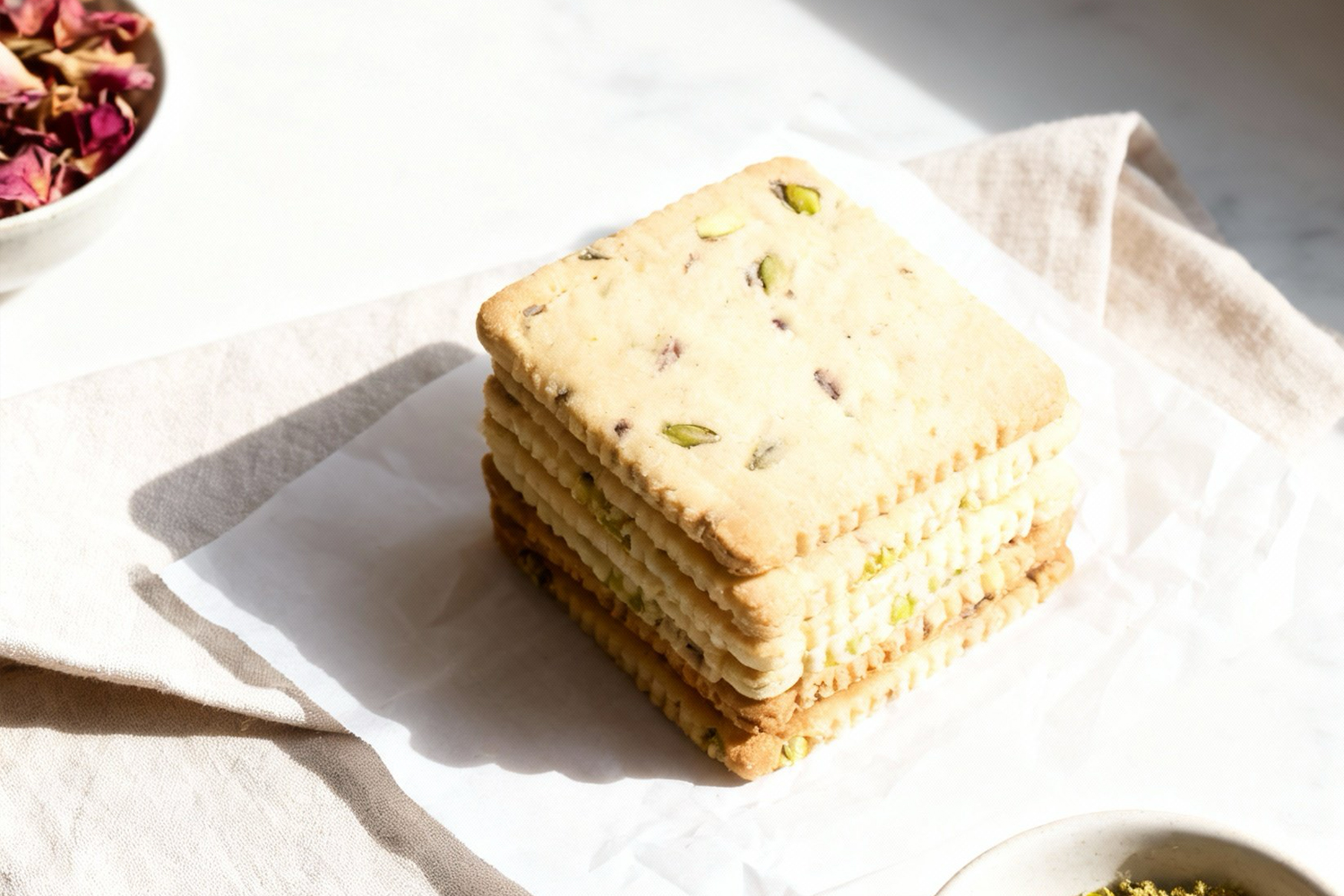
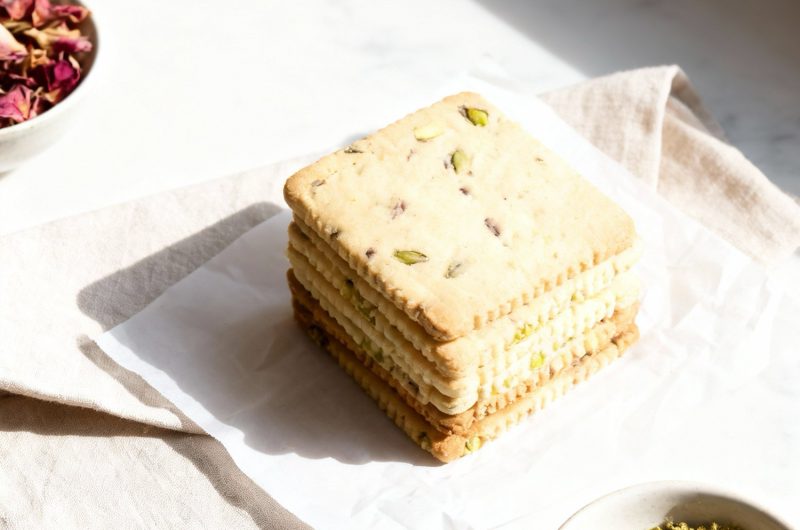
Pistachio rosewater biscuits blend tender, buttery layers with the nutty crunch of pistachios and a subtle floral hint of rosewater for a treat that’s truly unique.
These biscuits are simple to make. Chopped pistachios fold into the soft dough, while rosewater provides a delicate, fragrant note.
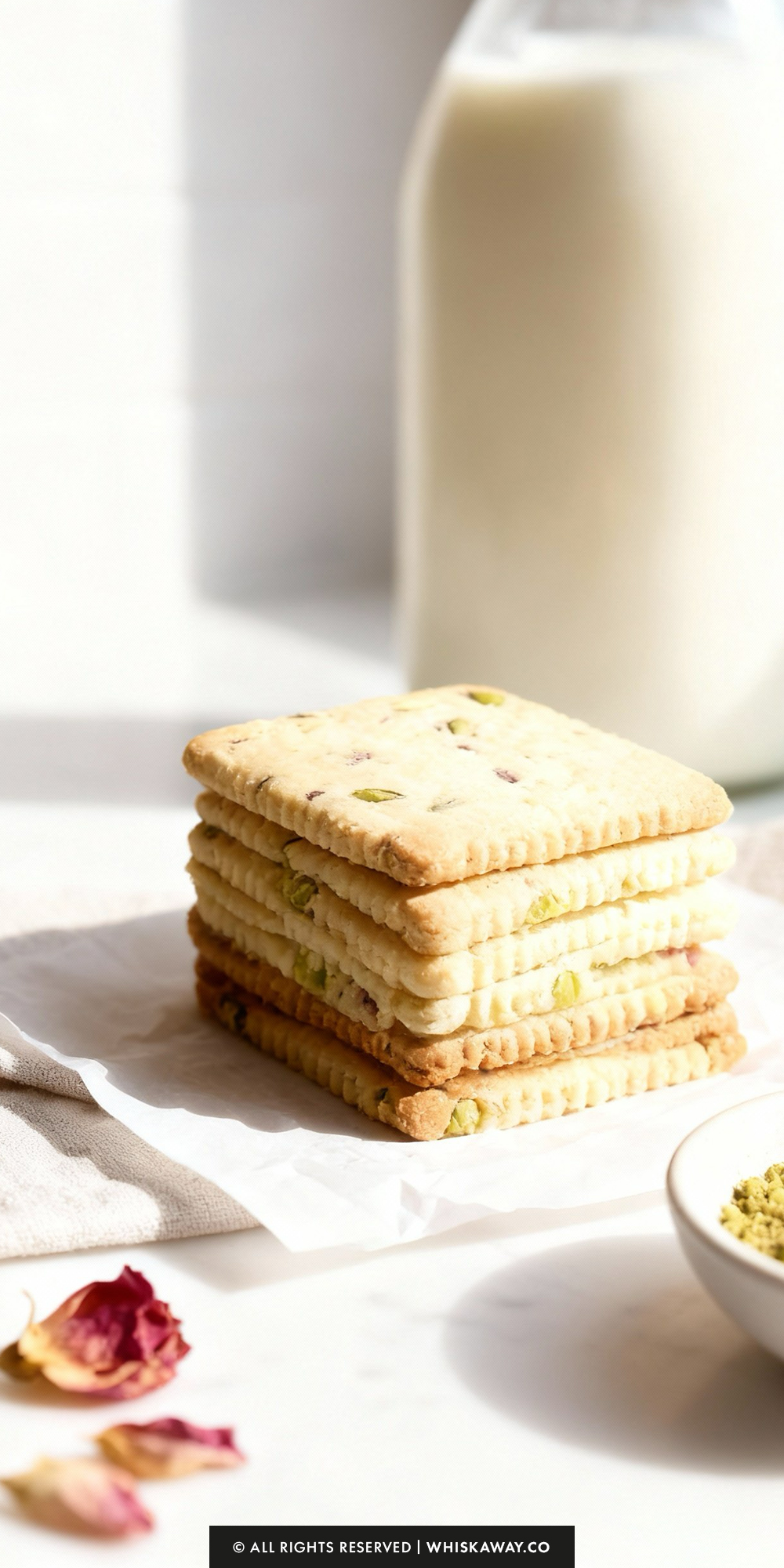
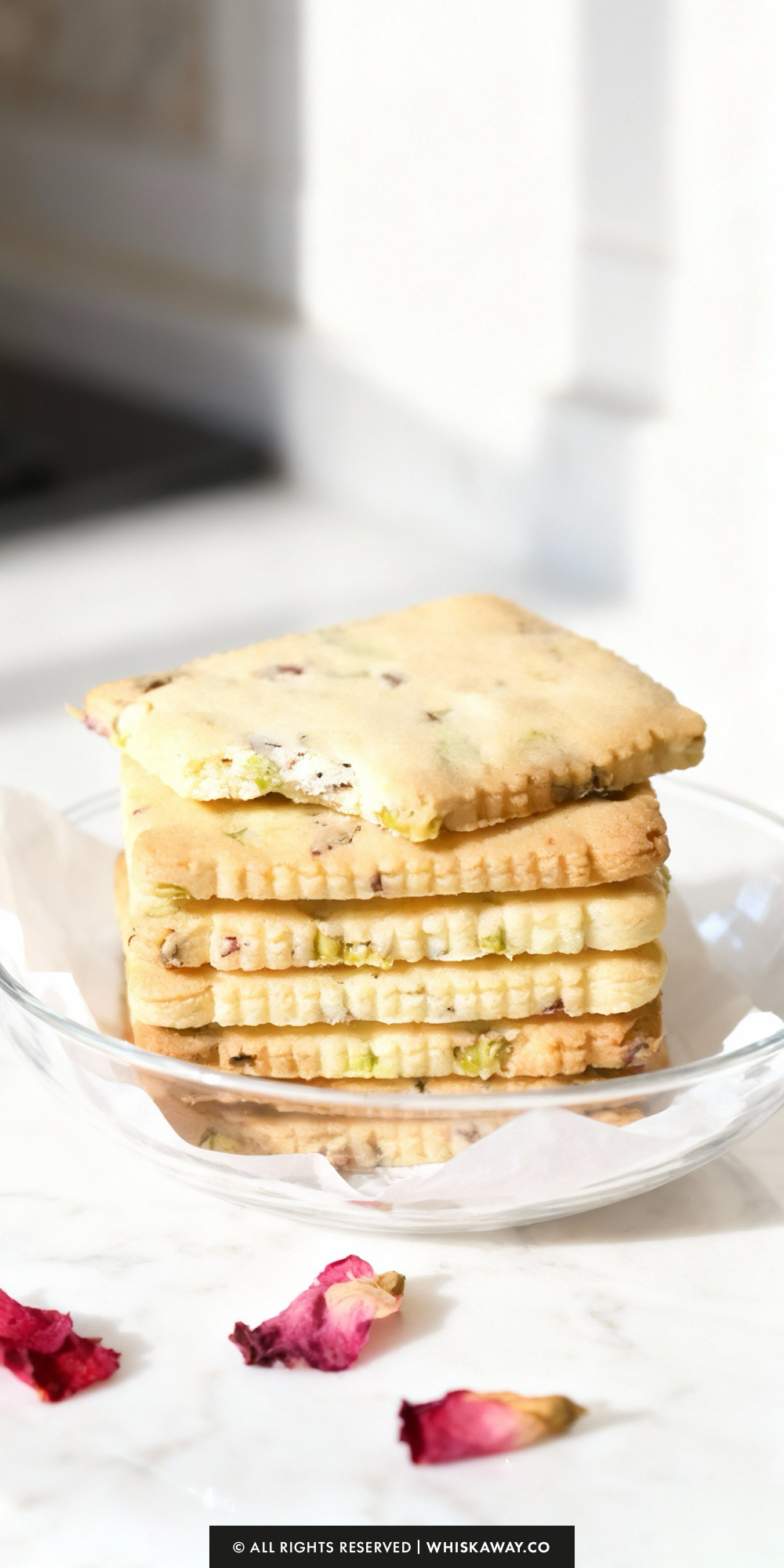
Lightly golden and slightly crisp on the edges, they pair beautifully with tea or can be enjoyed on their own.
Perfect for dessert, brunch, or as a snack, pistachio rosewater biscuits offer tender, flavorful bites with a delicate floral and nutty flavor that feels special without being complicated.
Without any further ado, let’s start baking!
Why You’ll Love This Recipe
Delicate rosewater flavor combined with crunchy pistachios creates a sophisticated, fragrant biscuit. Lightly sweet and elegant, they’re perfect for special occasions or afternoon tea.
What Makes Them Special
- Floral rosewater aroma
- Crunchy pistachio texture
- Soft, tender biscuit layers
- Elegant and unique
- Perfect for gifting or serving
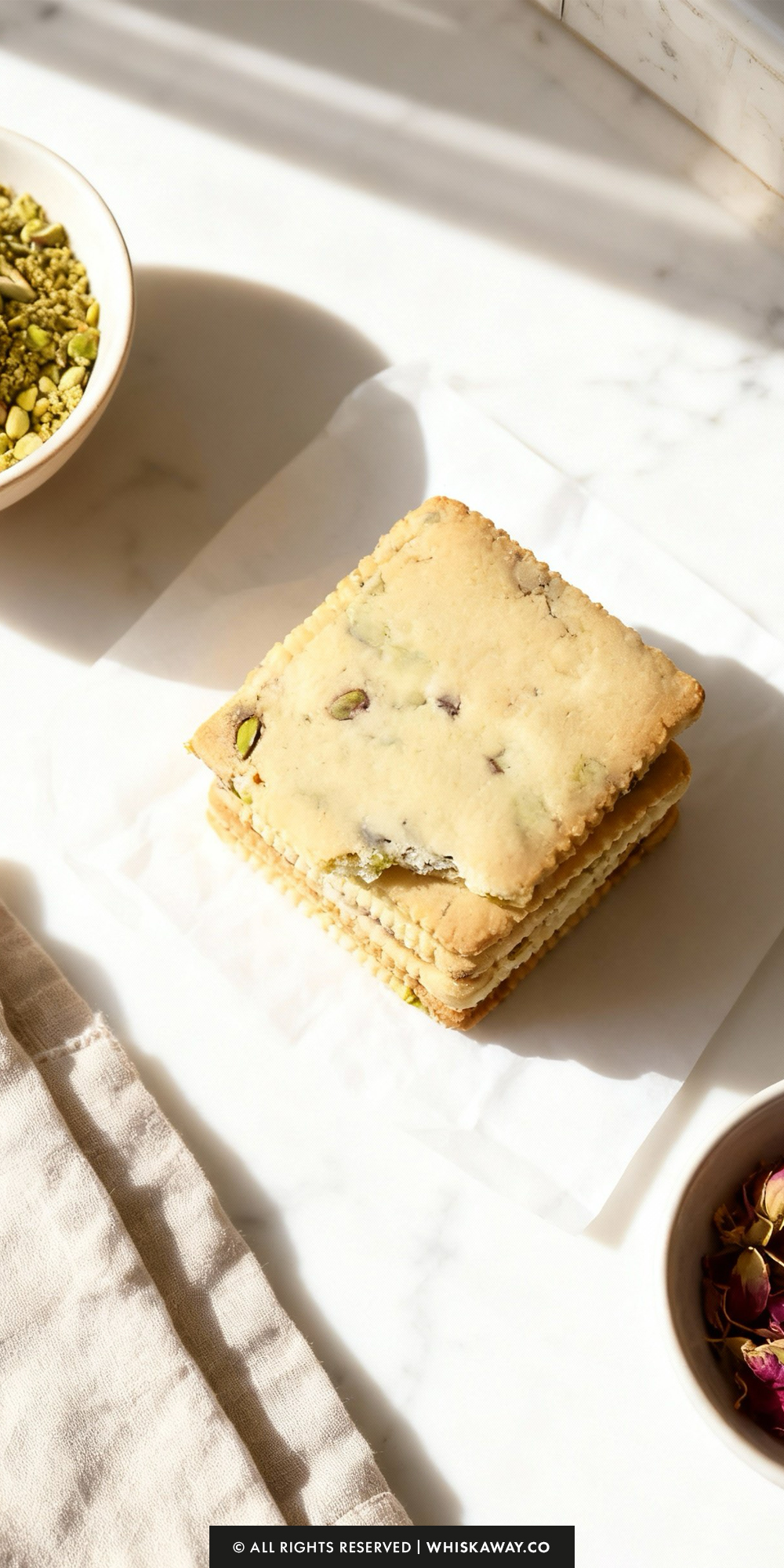
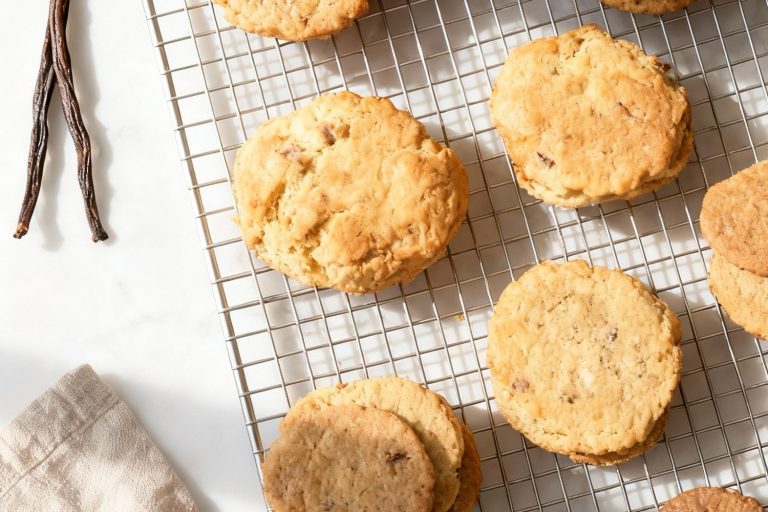
🔥 These pistachio rosewater biscuits offer a delicate, aromatic flavor. If you enjoy floral notes, honey lavender biscuits are another lovely option. For something more traditional, vanilla bean biscuits or sweet shortcake biscuits provide a classic balance.
Save This Pin To Your Pinterest Board for Later
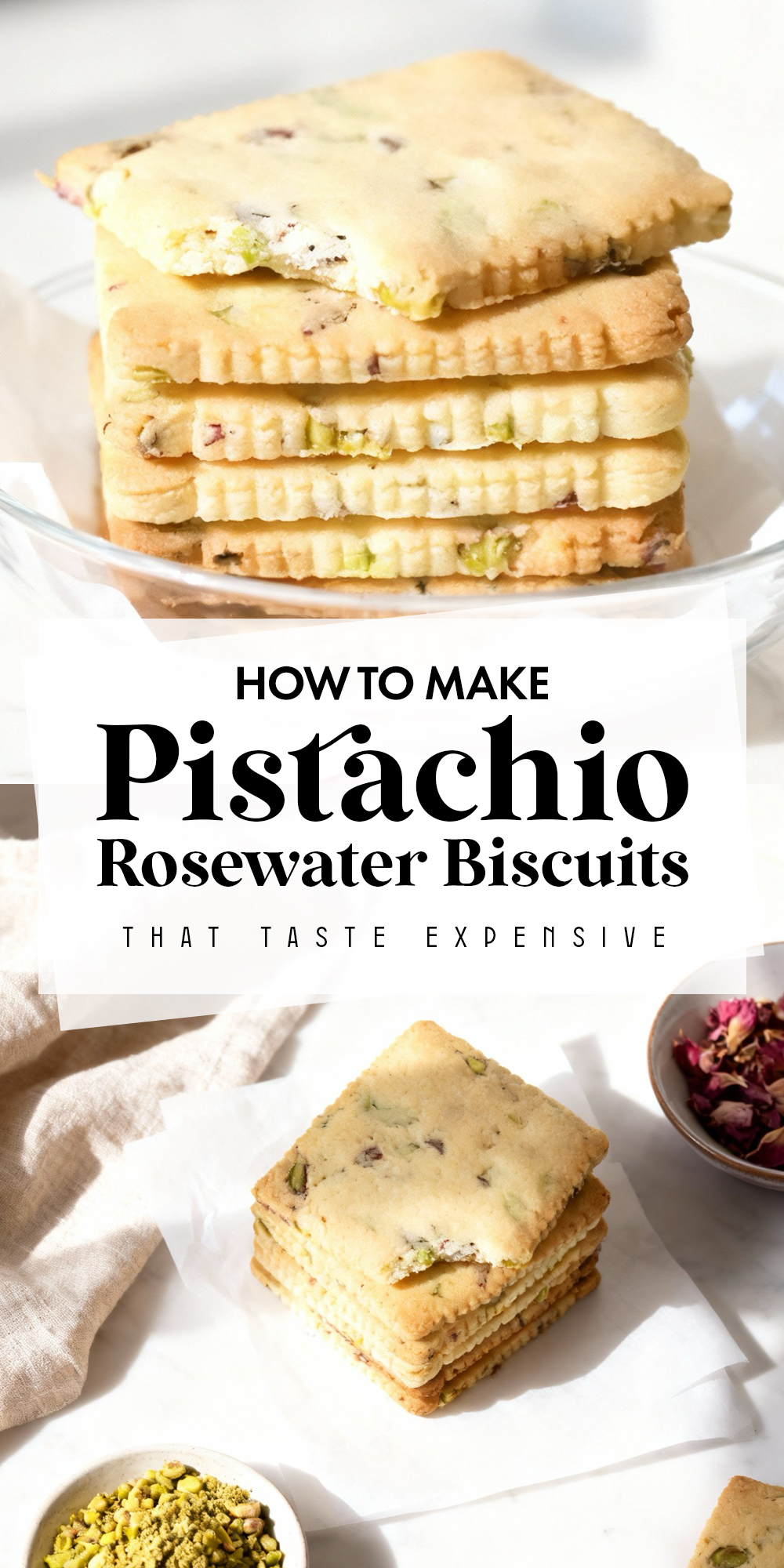
How to Get Your Pistachio Rosewater Biscuits Just Right
1. Measure Carefully
Accurate measurements of flour and sugar are key to achieving the perfect texture. Too much flour can make the biscuits dry and crumbly, while too little may result in sticky, misshapen cookies.
2. Butter Temperature Matters
Use butter at room temperature, not melted or too cold. Softened butter creams easily with sugar, creating a light, tender biscuit.
If the butter is too soft, the dough may spread excessively during baking.
3. Mixing Technique
When combining the egg, butter, sugar, and rose water, mix just until smooth. Overmixing can develop gluten in the flour later, leading to tough biscuits.
4. Gradual Flour Addition
Add flour gradually while kneading to control the dough’s consistency. The dough should be soft but not sticky.
If it sticks to your hands, sprinkle a little more flour but don’t overdo it, or the biscuits will be dry.
5. Evenly Distribute Add-Ins
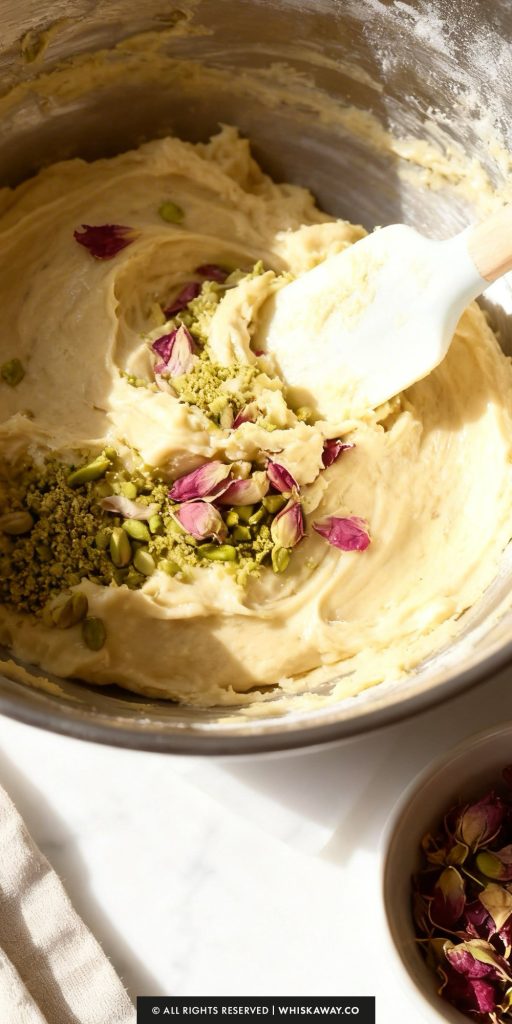
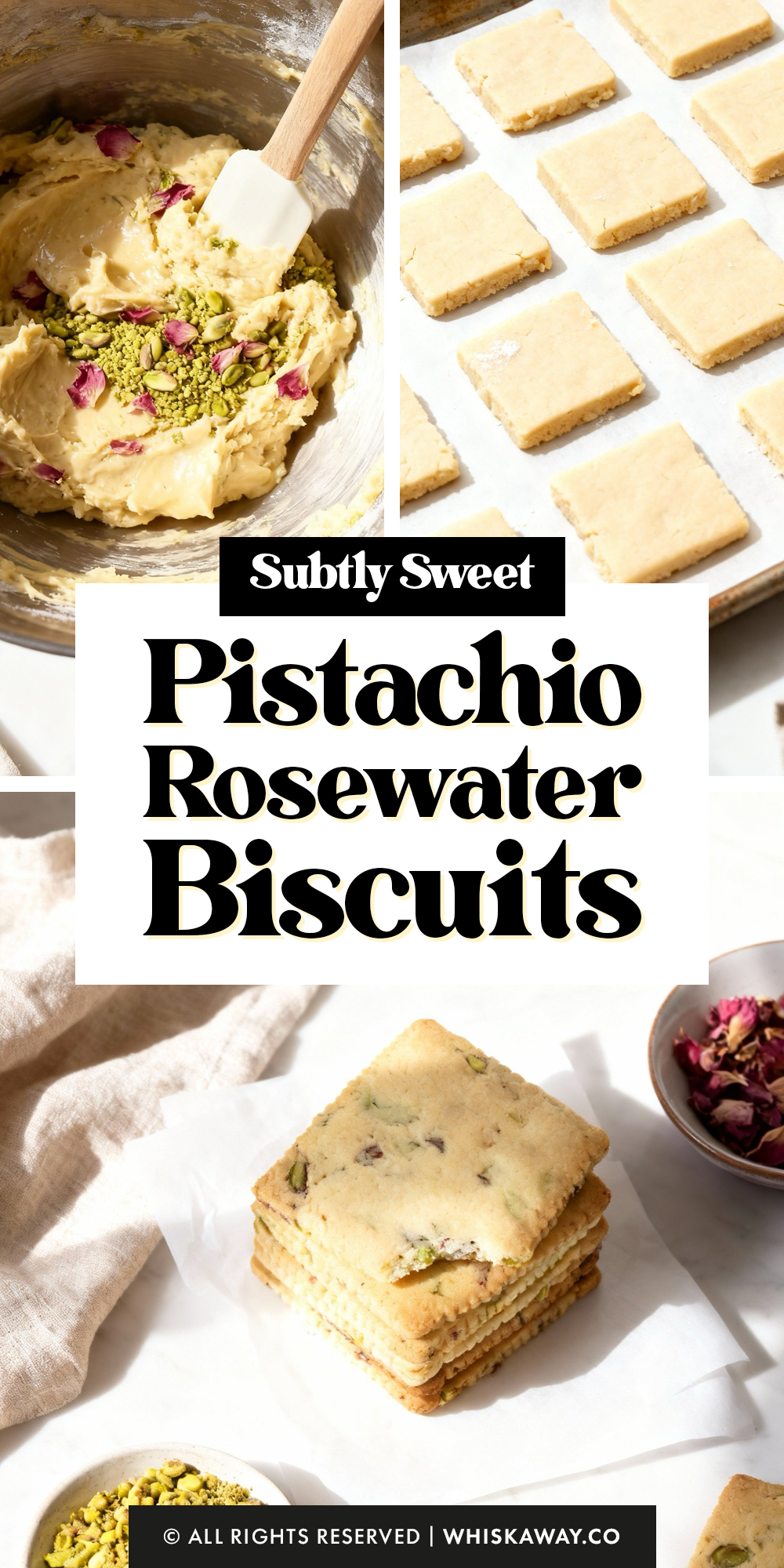
Gently fold in the pistachios and rose petals rather than over-kneading. This keeps the texture light and ensures the flavors are evenly spread throughout each biscuit.
6. Rolling Out the Dough
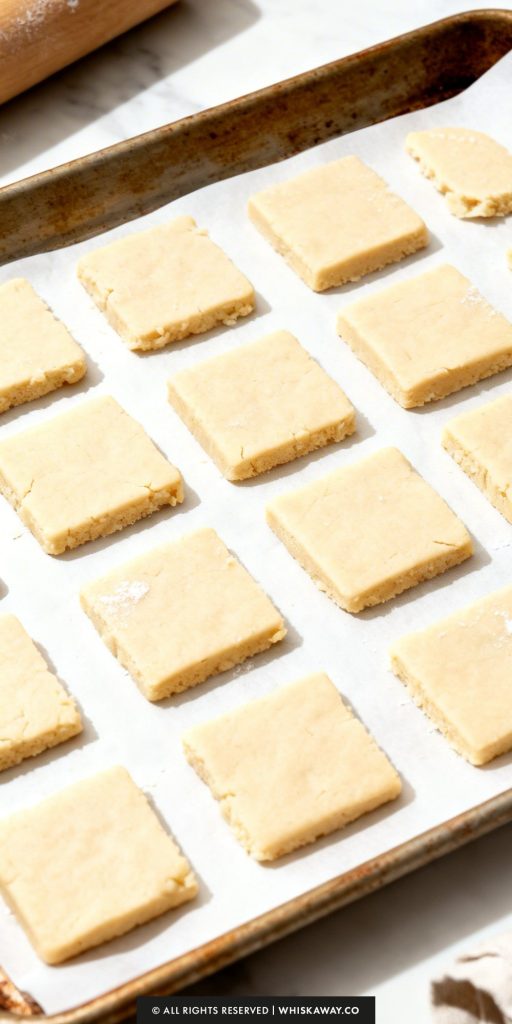
Roll the dough evenly between parchment sheets to avoid uneven baking. Aim for a uniform thickness so all biscuits bake at the same rate.
7. Cutting Shapes
Use a sharp cookie cutter and avoid twisting it, which can compress the dough and alter the shape. Re-roll scraps only once to prevent overworking the dough.
8. Baking Temperature & Timing
Preheat your oven to 180°C (350°F) and bake until the edges are lightly golden. Baking too long can dry out the biscuits, while underbaking may leave the centers soft or doughy.
Keep an eye on the first batch to fine-tune your timing.
9. Cooling
Allow the biscuits to cool on the baking tray for a few minutes before transferring to a wire rack. This prevents them from breaking and helps them firm up without losing their delicate texture.
10. Flavor Balance
The rosewater is potent. So, add it gradually to avoid overpowering the subtle nuttiness of the pistachios. Taste your dough before baking if you’re unsure, adjusting gently as needed.
Following these tips ensures your Pistachio Rosewater Biscuits are tender, fragrant, perfectly shaped, and full of balanced flavors every time.
Easy Baking Tips That Have Worked for Me
Lightly toast the pistachios before adding them to the dough to bring out their flavor and add a slight crunch.
Use rosewater sparingly because it is very potent; too much can overpower the biscuit’s delicate flavor.
Keep the butter cold and fold the dough gently to preserve the layers. Chill the dough briefly if needed to maintain shape during baking.
For an elegant finish, brush the tops with a thin layer of simple syrup or glaze.
Variation Tips
1. Nut Swaps
Replace pistachios with almonds, cashews, or walnuts for a different flavor profile. Toasting the nuts lightly before folding them into the dough enhances their aroma and crunch.
2. Flour Alternatives
Use almond flour or a 1:1 gluten-free flour blend in place of all-purpose flour to make these biscuits gluten-free. Note that the texture will be slightly more delicate and tender.
3. Sweetener Variations
Swap powdered sugar for coconut sugar, superfine cane sugar, or a sugar-free sweetener to adjust sweetness while maintaining texture.
4. Flavor Twists
Add a teaspoon of cardamom, cinnamon, or finely grated orange zest to complement the rosewater.
For a more floral bouquet, try adding a small amount of orange blossom water alongside the rosewater.
5. Chocolate & Drizzle
For a decadent touch, drizzle melted white or dark chocolate over the cooled biscuits. You could also sandwich two biscuits together with a thin layer of chocolate or almond butter.
6. Textural Enhancements
Add a tablespoon of desiccated coconut or finely chopped dried apricots for extra chewiness and flavor contrast.
7. Dietary Adjustments
For a dairy-free version, replace butter with coconut oil or a vegan butter alternative.
Use egg replacers (like flax or chia eggs) to make the recipe vegan-friendly, though the texture may be slightly different.
8. Mini Versions
Make smaller bite-sized biscuits for tea-time snacks or cookie platters. Adjust baking time accordingly, typically 2–3 minutes shorter for small biscuits.
How to Properly Store Your Pistachio Rosewater Biscuits
1. Room Temperature
Store fully cooled biscuits in an airtight container at room temperature.
They will stay fresh for up to 5–7 days, maintaining their delicate texture and flavor.
Keep them away from direct sunlight, heat, or humidity, as moisture can soften the biscuits and diminish their crispness.
2. Refrigeration
Refrigeration is optional but can extend freshness slightly, especially in warm climates.
Place biscuits in an airtight container or wrap tightly with plastic wrap.
They can last up to 2 weeks in the fridge, though the texture may firm up slightly. Allow them to sit at room temperature for 10–15 minutes before serving to regain optimal bite.
3. Freezing
For long-term storage, freeze unbaked dough or fully baked biscuits.
Baked biscuits: Let them cool completely, then layer with parchment paper in an airtight container or freezer-safe bag. Freeze for up to 3 months.
Unbaked dough: Shape the biscuits, place on a parchment-lined tray, and freeze until solid. Transfer to a freezer-safe container. Bake directly from frozen, adding a few extra minutes to the baking time.
4. Packaging Tips
Use airtight containers or heavy-duty resealable bags to prevent moisture absorption and preserve the nutty aroma.
Layer biscuits with parchment paper if stacking to avoid sticking or breaking.
5. Reheating
To refresh slightly softened biscuits, warm them in a preheated oven at 325°F (160°C) for 3–5 minutes.
Avoid microwaving, as it can make them chewy or rubbery.
6. Common Storage Mistakes to Avoid
- Do not store biscuits in the open or in humid environments, as this will cause them to become soft and lose their delicate texture.
- Avoid storing the biscuits with strong-smelling foods, since the subtle rosewater flavor can absorb odors.
Save This Pin To Your Pinterest Board for Later
FAQs
Can I substitute the pistachios with other nuts?
Yes! You can use almonds, cashews, or walnuts instead of pistachios. Keep them coarsely chopped to maintain a similar texture. Roasted nuts can add extra flavor, but raw nuts work well for a milder taste.
Can I make these biscuits without rosewater?
Absolutely. You can replace rosewater with orange blossom water, vanilla extract, or even a few drops of almond extract. Adjust the amount carefully, as these flavors are potent.
How do I prevent the biscuits from sticking while rolling and cutting?
Place the dough between two sheets of greaseproof/parchment paper before rolling. Lightly dust the top with flour if needed. This keeps the dough from sticking to the rolling pin or surface, and ensures clean cookie shapes.
How long do these biscuits stay fresh, and what’s the best way to store them?
Once fully baked and cooled, store in an airtight container at room temperature for up to 5–7 days. For longer storage, refrigerate for up to 2 weeks or freeze for up to 3 months. Layer with parchment paper if stacking to avoid sticking.
What’s the best way to serve these biscuits?
These delicate biscuits are perfect on their own with tea or coffee. You can also serve them with a light dusting of powdered sugar, a drizzle of white chocolate, or alongside fresh fruit for a refined dessert platter. They’re ideal for gifting as well!
Pistachio Rosewater Biscuits
20
biscuits25
minutes12
minutesThis pistachio rosewater biscuits recipe is delicate, lightly nutty, and subtly floral for a sophisticated dessert or snack.
Ingredients
3 cups flour
125 g butter, at room temperature
3/4 cup powdered sugar
1/2 cup coarsely ground raw, unsalted pistachios
1 egg
3 tablespoons rose water
2 tablespoons dry rose petals
1 teaspoon baking powder
Directions
- In a large mixing bowl, combine the egg, butter, powdered sugar, rose water, and baking powder. Mix until smooth and fully incorporated.
- Gradually add the flour, a little at a time, and knead the mixture until you form a soft, non-sticky dough. Adjust the amount of flour as needed to achieve the right consistency.
- Fold in the rose petals and coarsely ground pistachios, kneading gently until they are evenly distributed throughout the dough.
- Place the dough between two sheets of greaseproof paper and roll it out to your desired thickness, shaping it into a square or rectangle.
- Use a cookie cutter to cut the dough into your preferred shapes, and transfer the pieces onto a baking tray lined with greaseproof paper.
- Bake in a preheated oven at 180°C (350°F) until the biscuits are lightly golden around the edges. Remove from the oven and allow to cool before serving.