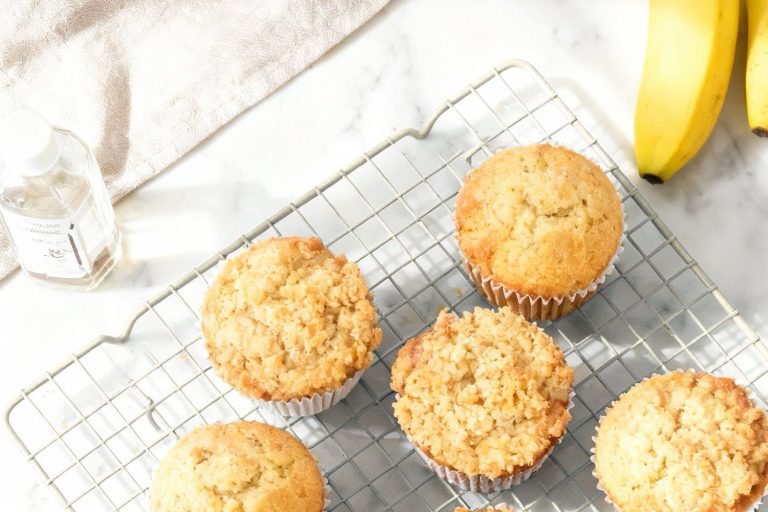
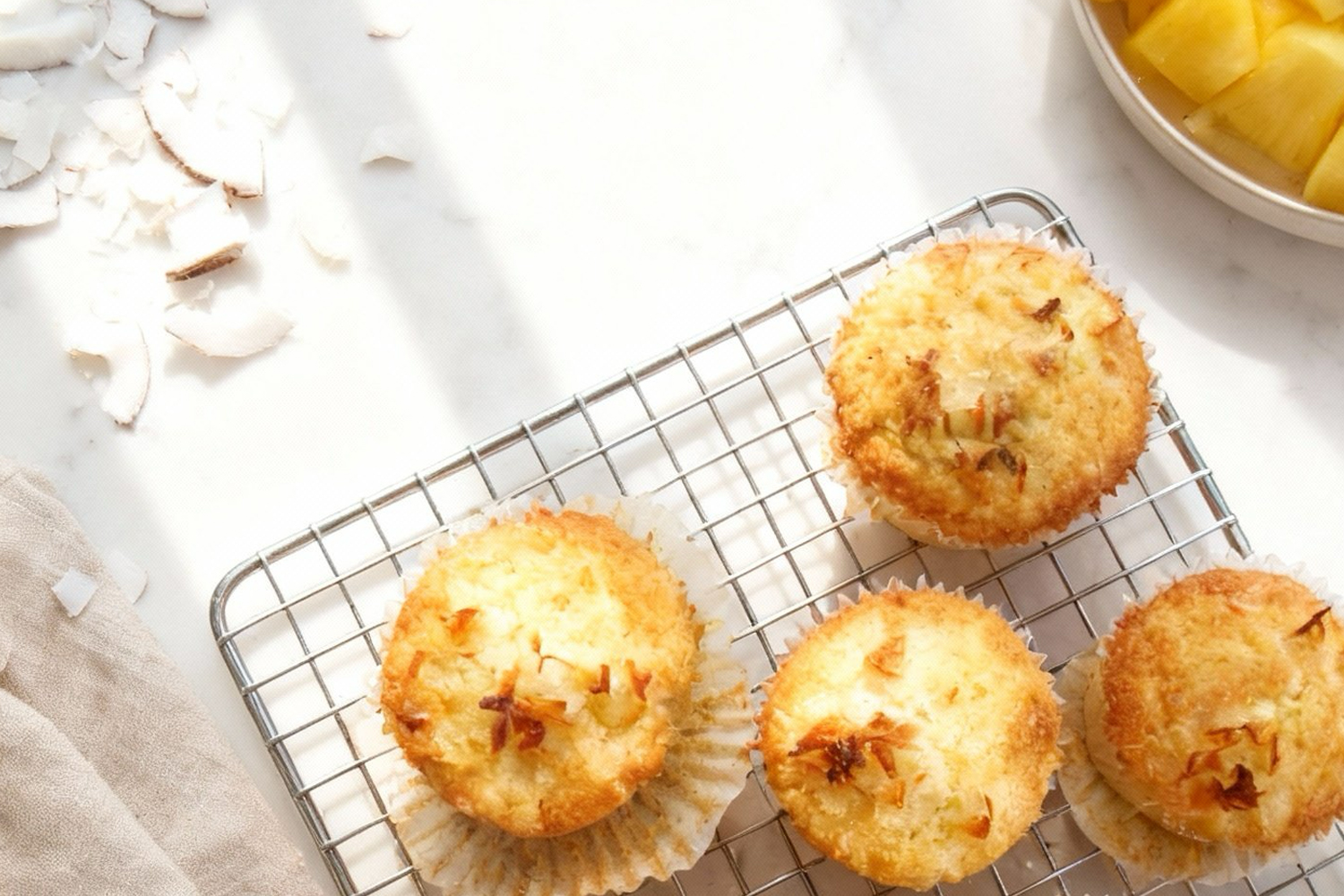
Pineapple coconut muffins feel like a tropical getaway in every bite.
Sweet pineapple chunks and shredded coconut create a soft, moist muffin that’s bright and flavorful.
These pineapple coconut muffins are easy to bake and perfect for brunch, snack time, or even dessert.
They’re playful, delicious, and a total crowd-pleaser.
Why You’ll Love This Recipe
These muffins are tropical, moist, and lightly sweet with coconut and pineapple in every bite. A sunny twist on classic muffins.
What Makes Them Special
- Juicy pineapple throughout
- Coconut adds texture and flavor
- Soft and moist crumb
- Great for breakfast or snacks
- Feels like a mini vacation
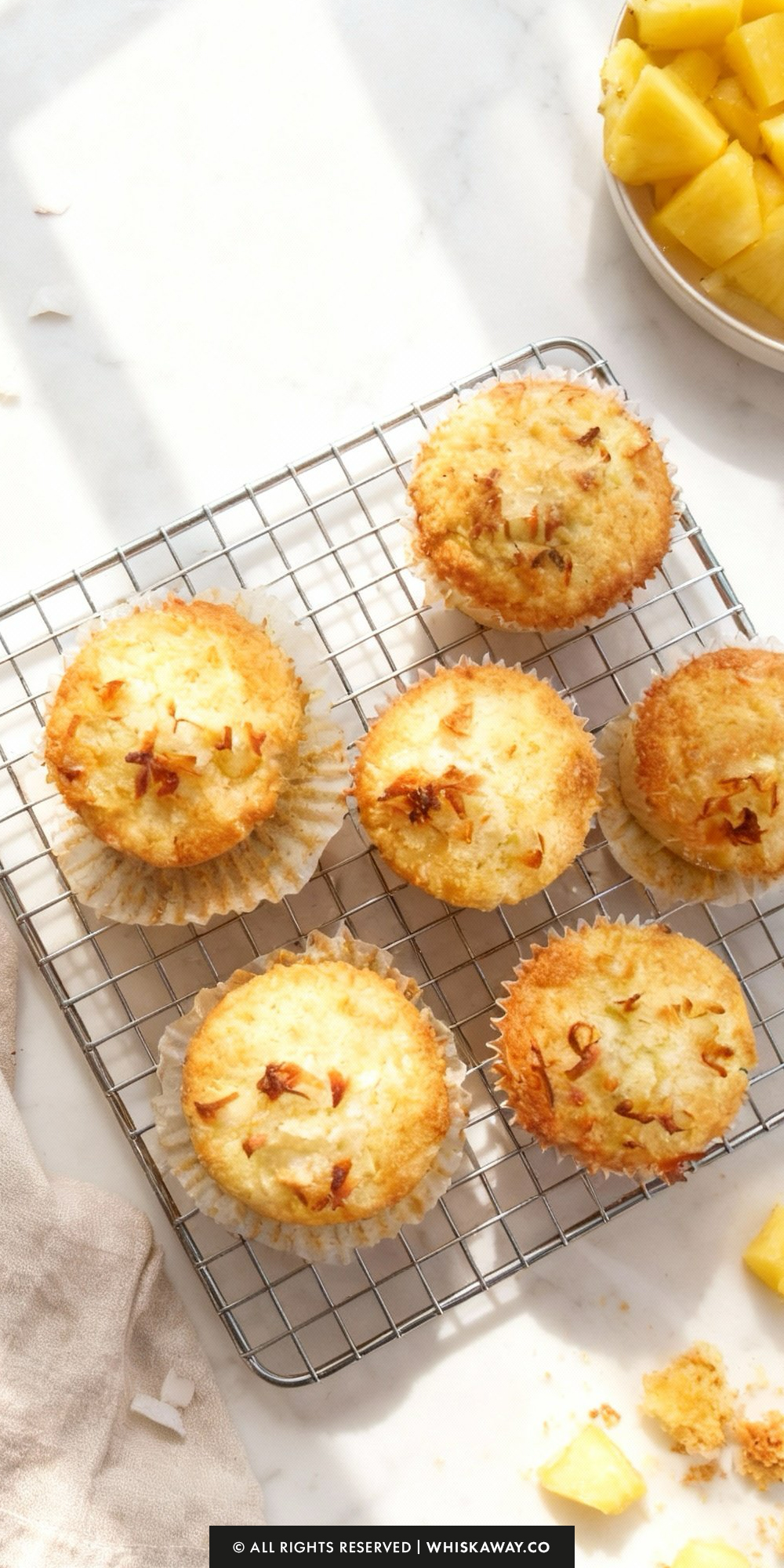
🔥 These muffins lean into tropical flavors while keeping a soft, bakery-style crumb. The recipes below explore similar sweetness and texture in different directions.
How to Get Your Pineapple Coconut Muffins Just Right
Combining juicy fruit with oily coconut requires a bit of finesse to avoid a soggy mess.
Here is how to ensure your muffins have a tropical, bakery-style crumb and a perfectly toasted top.
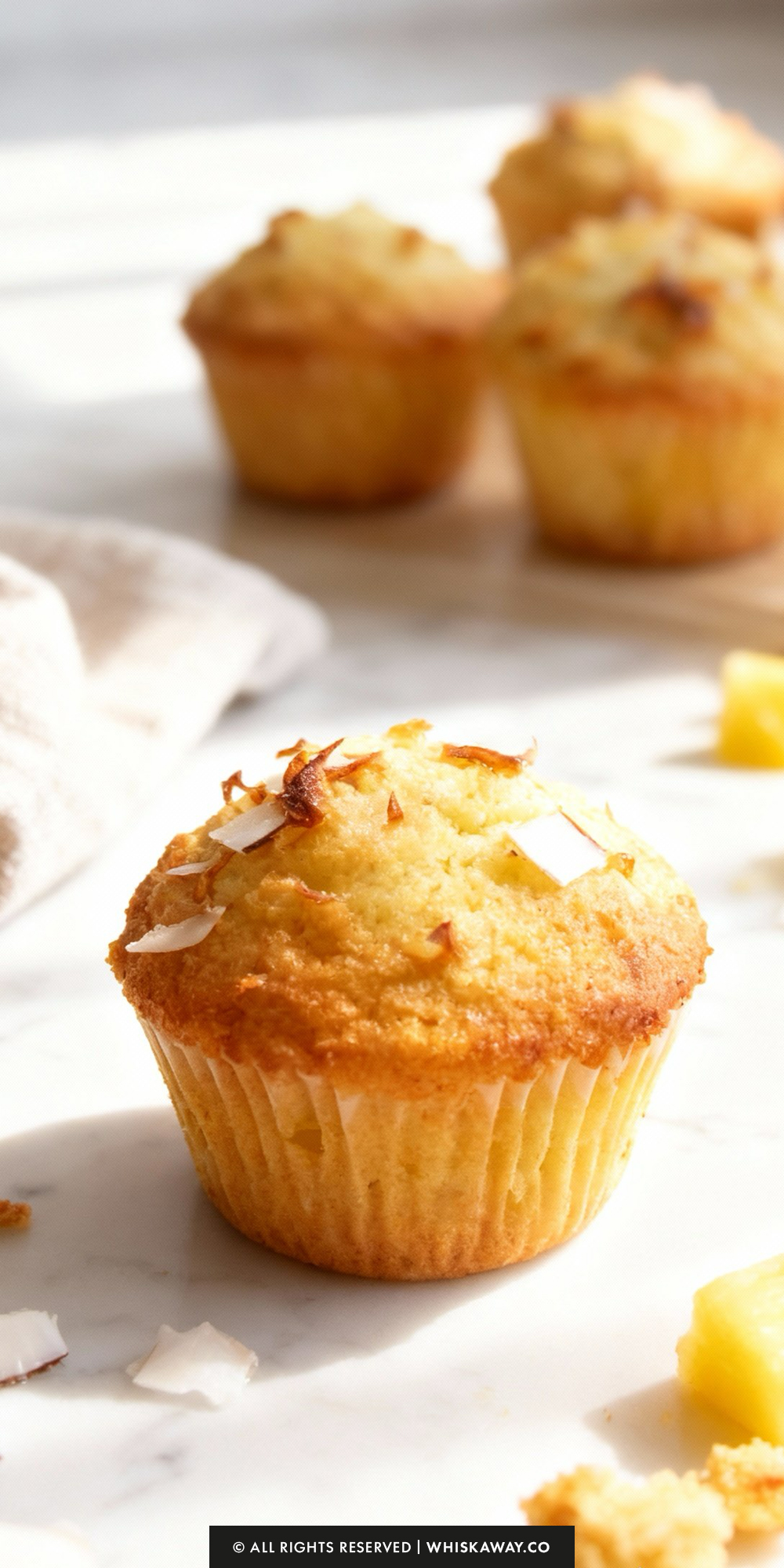
1. The Pineapple “Dry-Off”
The most common mistake with fruit-filled muffins is excess moisture.
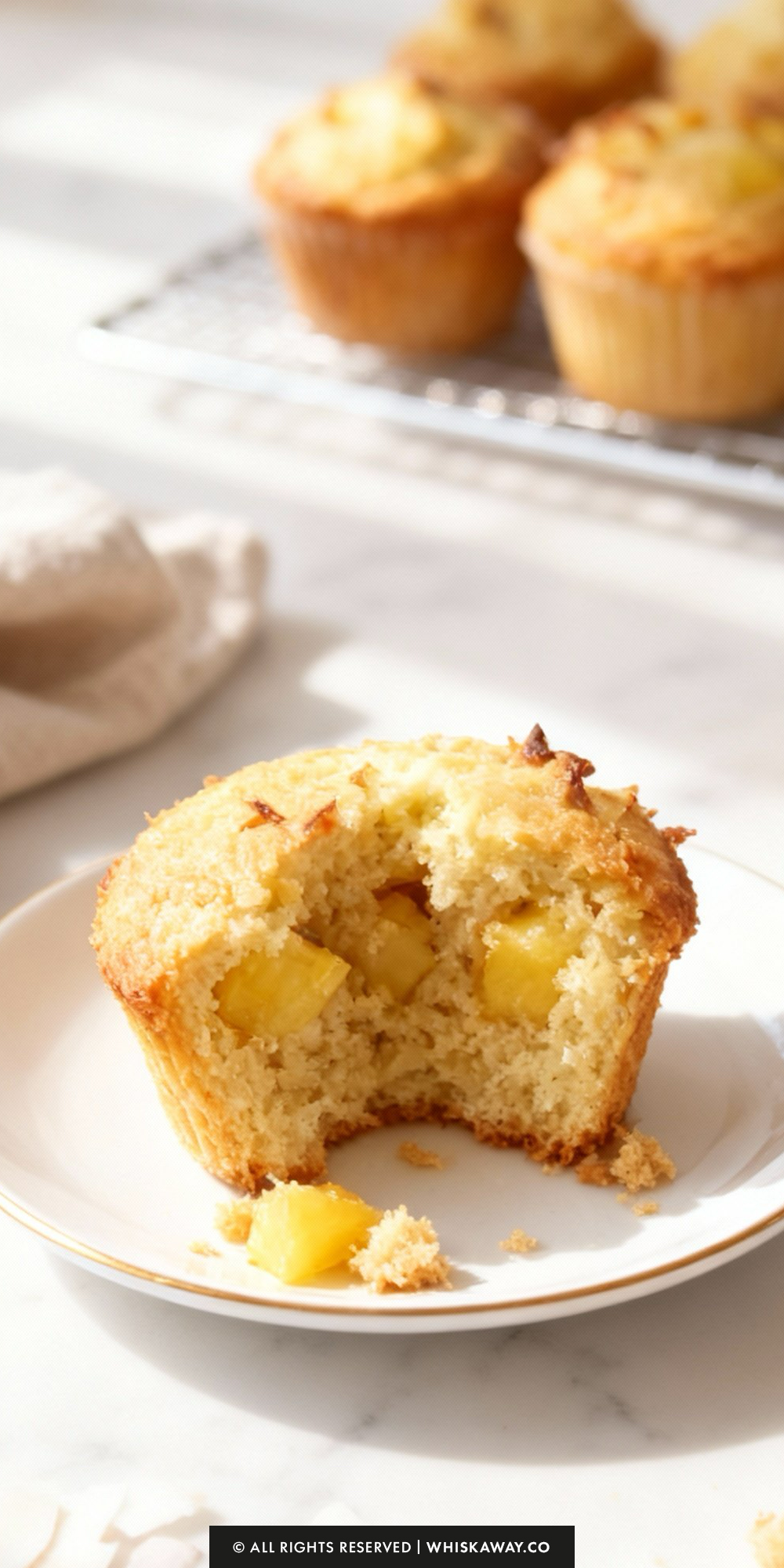
Whether you are using canned or fresh pineapple, drain it well and then pat the cubes dry with a paper towel.
If the fruit is too wet, it will release all its juice into the batter while baking, creating “soggy spots” or gummy holes around the pineapple pieces.
Drying them first ensures they stay suspended in the fluffy crumb.
2. Temperature Synergy
This recipe relies on the “creaming method” (butter and sugar).
Ensure your butter is very soft but not melted, and your eggs are at room temperature.
If you add cold eggs to creamed butter, the butter will seize and clump up.
Room-temperature ingredients emulsify better, creating a much smoother batter and a more uniform rise in the oven.
3. Use Full-Fat Canned Coconut Milk
For the most intense tropical flavor and a tender texture, use canned full-fat coconut milk rather than the thin stuff found in cartons.
Shake the can well before measuring to incorporate the cream at the top. The high fat content in the milk acts as a natural tenderizer for the flour.
4. The “Upper-Middle” Rack Rule
This recipe specifies the upper-middle rack for a reason.
Coconut flakes burn easily. By placing the pan higher up, the muffins get the heat they need to rise while the coconut on top toasts to a beautiful golden brown without scorching the bottoms of the muffins.
5. Avoid the Over-Whisk
Once you add the flour and baking powder, put the whisk down and switch to a rubber spatula if possible.
Mix until the flour is just barely combined.
Over-mixing develops gluten. In a muffin, too much gluten leads to “tunnels” in the center and a tough, rubbery texture.
A few tiny lumps in the batter are actually a good sign!
6. The “Cooling” Five-Minute Window
Don’t leave the muffins in the tin for more than five minutes after they come out of the oven.
The residual heat from the metal pan will continue to cook the muffins, which can dry them out.
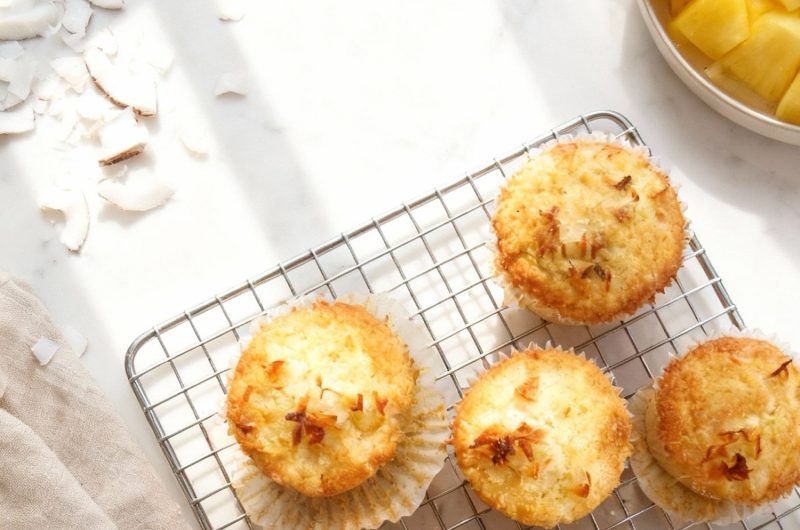
Moving them to a wire rack allows air to circulate, keeping the bottoms from getting soggy from trapped steam.
Easy Baking Tips That Have Worked for Me
- I press pineapple in a sieve until almost dry.
- I toast the coconut lightly or it tastes raw.
- These need extra bake time due to fruit moisture.
- I avoid liners. Greased tins release better.
- They taste sweeter after cooling.
Save For Later to Your Pinterest Board

Variation Tips
The tropical combination of pineapple and coconut is incredibly versatile.
Whether you want to lean into the cocktail-inspired flavors of the islands or need to adapt the recipe for specific dietary needs, these variations are simple to implement without losing that signature fluffy texture.
1. The “Piña Colada” Twist
Turn your morning muffin into a non-alcoholic tribute to the famous vacation drink.
Add 1 teaspoon of rum extract and the zest of one lime to the wet ingredients.
TOnce cooled, drizzle a simple glaze made of powdered sugar and a splash of pineapple juice over the top.
2. The Macadamia Crunch
If you prefer a bit of textural contrast against the soft fruit and chewy coconut:
Fold 1/2 cup of toasted, chopped macadamia nuts into the batter along with the pineapple.
The buttery, rich fat from the nuts pairs perfectly with the tropical fruit and adds a satisfying “snap” to every bite.
3. The Mango-Coconut Swap
Replace the 1 cup of pineapple cubes with 1 cup of diced fresh mango.
Mango provides a softer, creamier texture and a floral sweetness that is slightly less acidic than pineapple, making for a very sophisticated, mellow muffin.
4. The “Upside-Down” Style
Place 1 teaspoon of brown sugar and a small pineapple wedge (or half a ring) at the bottom of each muffin liner before pouring the batter on top.
When you peel the liner off, you’ll have a caramelized, fruit-forward bottom that looks like a mini upside-down cake.
5. Dietary Adaptations
Dairy-Free & Vegan:
Replace the 8 tablespoons of butter with 1/2 cup of solid virgin coconut oil. This will actually intensify the coconut flavor!
Use 2 flax eggs (2 tablespoons ground flaxseed mixed with 6 tablespoons water, set for 10 minutes) instead of the large eggs.
Gluten-Free:
Use a 1:1 Gluten-Free All-Purpose Baking Flour (look for a blend containing xanthan gum).
Because these muffins are quite moist from the pineapple and coconut milk, they won’t get as dry as other gluten-free baked goods can.
Less Sweet/Lower Sugar:
Swap the “sweetened” flaked coconut for unsweetened shredded coconut.
Reduce the granulated sugar to 3/4 cup. The pineapple provides a lot of natural sweetness, so the muffins will still be plenty flavorful.
How to Properly Store Your Pineapple Coconut Muffins
Because these Pineapple Coconut Muffins are packed with moisture from both the fruit and the coconut milk, they require a little extra attention to keep them from becoming soggy.
Here is how to maintain that tropical freshness for as long as possible.
1. Room Temperature (Best for Immediate Enjoyment)
Duration: 1 to 2 days.
The Method: Store them in an airtight container.
Place a paper towel at the bottom of the container and another one over the top of the muffins before sealing.
This acts as a moisture “wick,” absorbing the excess humidity released by the pineapple so your muffin tops don’t get sticky.
2. Refrigeration (Best for Humid Climates)
Duration: Up to 5 days.
If your kitchen is particularly warm or humid, the fridge is your best bet to prevent the fruit from spoiling.
Ensure they are in a tightly sealed container to prevent them from absorbing “fridge smells.”
Note: Chilling can slightly firm up the butter in the batter, so these are best enjoyed after a quick warm-up.
3. Freezing (The Long-Term Solution)
Duration: Up to 3 months.
These muffins freeze beautifully! Wrap each fully cooled muffin individually in plastic wrap, then place them all into a heavy-duty freezer bag.
Thawing: Leave a muffin on the counter for about 30–60 minutes, or thaw it in the refrigerator overnight.
4. How to Reheat for “Fresh-Baked” Quality
Since these muffins are rich in healthy fats and fruit, reheating them can actually improve the texture of a day-old muffin by “waking up” the coconut oils.
For a Soft Texture: Microwave on high for 15–20 seconds. This makes the pineapple extra juicy and the crumb incredibly soft.
For a Toasted Topping: Heat in a toaster oven or regular oven at 300°F (150°C) for about 5 minutes. This is the best way to restore the “crunch” to the coconut flakes on top.
5. Storage Mistakes to Avoid
The “Warm Container” Trap: Never put these muffins into a container while they are still warm. The trapped steam will turn the toasted coconut topping into a gummy mess and make the paper liners peel away from the cake.
Direct Sunlight: Coconut milk and butter are sensitive to heat. Leaving your container on a sunny countertop can cause the muffins to spoil much faster or develop an “off” taste.
Over-Stacking: Try to store them in a single layer. The weight of stacking can crush the delicate, fruit-heavy crumb of the muffins on the bottom.
FAQs
Can I use fresh pineapple instead of canned?
Yes, you certainly can! Fresh pineapple often has a brighter, more tart flavor. Just ensure you core it and chop it into small, uniform cubes (about 1/4 inch). Whether using fresh or canned, the most important step is to pat the fruit dry with paper towels to remove excess moisture before folding it into the batter.
What is the difference between flaked coconut and shredded coconut?
This recipe calls for sweetened, flaked coconut, which consists of larger, flatter pieces that stay moist and chewy inside the muffin and get beautifully toasted on top. Shredded coconut is much finer and drier; if you use it as a substitute, the texture of the muffin may be slightly less “meaty,” and the topping may brown much faster.
Why did my muffins turn out dense or rubbery?
This is usually caused by over-mixing the batter. Once you add the flour, you should only whisk or stir until you no longer see white streaks. If you continue to mix, you develop too much gluten, which creates a tough, bread-like texture rather than a light, tender muffin crumb.
My coconut topping is browning too fast; what should I do?
If your oven runs hot or you notice the coconut flakes turning dark brown before the 15-minute mark, simply tent a piece of aluminum foil loosely over the muffin tin. This allows the centers to finish baking while protecting the delicate coconut from the direct heat.
Can I use a different type of milk if I don’t have coconut milk?
You can substitute the coconut milk with whole milk or a heavy cream/water mixture (1:1). However, you will lose that deep, creamy tropical undertone. If you make this swap, consider adding 1/2 teaspoon of coconut extract to the batter to maintain the intended flavor profile.
Pineapple Coconut Muffins
12
muffins10
minutes20
minutesLooking for tropical flavor? These pineapple coconut muffins are moist, sweet, and lightly textured.
Ingredients
1 1/4 cups sweetened, flaked coconut, divided
1 1/4 cups (6 1/4 ounces) all-purpose flour
1 cup (7 ounces) granulated sugar
1 cup (6 ounces) drained pineapple cubes, chopped
1/2 cup coconut milk
8 tablespoons (4 ounces) unsalted butter, very soft
2 large eggs
2 1/2 teaspoons baking powder
1/2 teaspoon salt
Directions
- Position your oven rack in the upper-middle slot and preheat the oven to 375°F (190°C). Prep a 12-cup muffin tin by lining it with paper cupcake liners.
- In a large mixing bowl, combine the very soft butter, sugar, and salt. Stir these together vigorously until the texture is smooth and looks creamy.
- Add the eggs to the bowl one at a time, whisking well after each addition to ensure they are fully incorporated. Pour in the coconut milk and stir in 3/4 cup of the flaked coconut, keeping the rest aside for the topping.
- Stir in the flour and baking powder, whisking just until the dry ingredients disappear into the batter. Finally, fold in the chopped pineapple pieces until they are evenly distributed.
- Spoon the batter into the prepared muffin liners, dividing it as evenly as possible. Take the remaining coconut flakes and sprinkle them generously over the top of each muffin.
- Slide the pan into the oven and bake for about 20 minutes. You’re looking for a beautiful golden-brown color and a center that feels set. Let the muffins rest in the hot pan for 5 minutes before moving them to a wire rack to finish cooling.