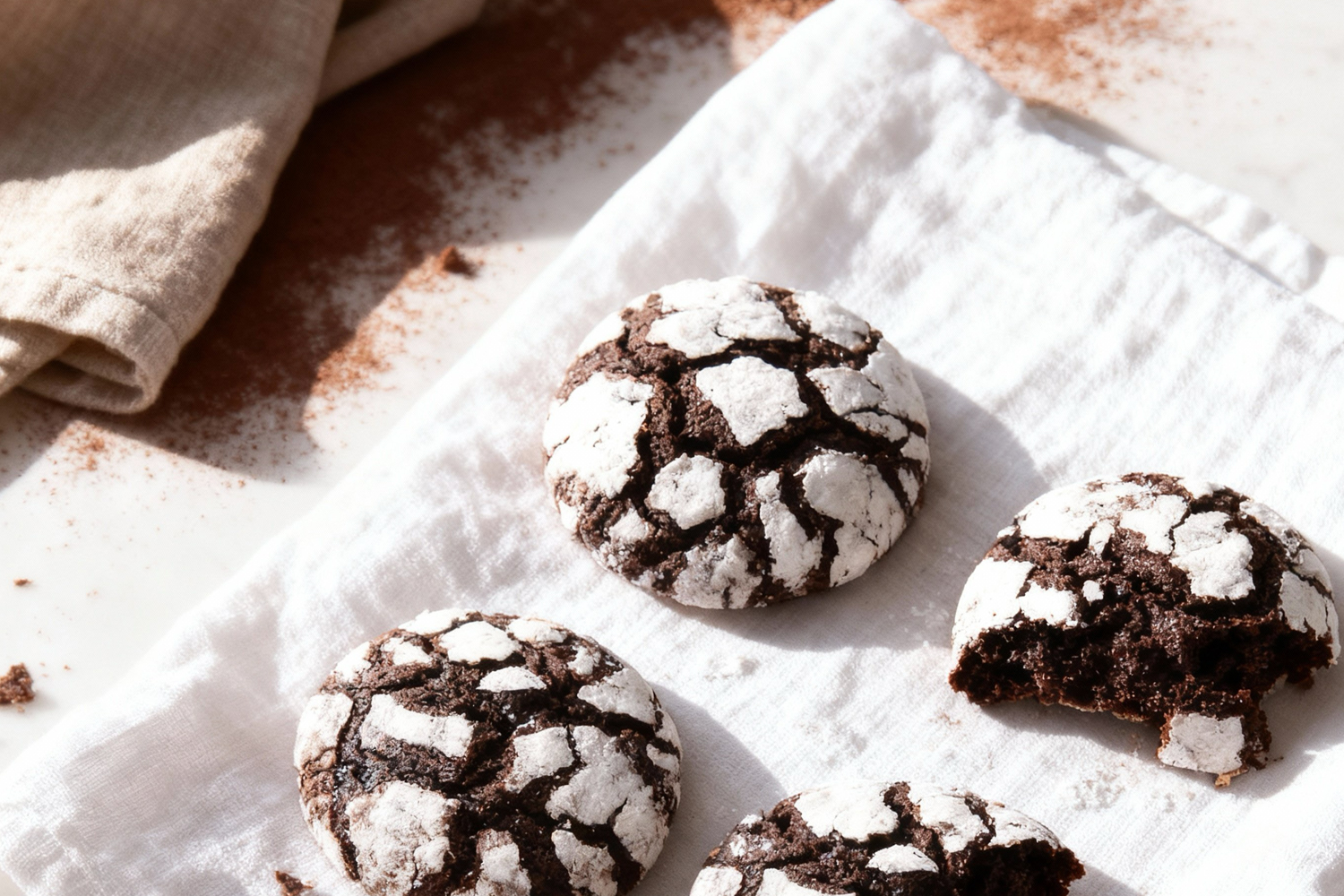
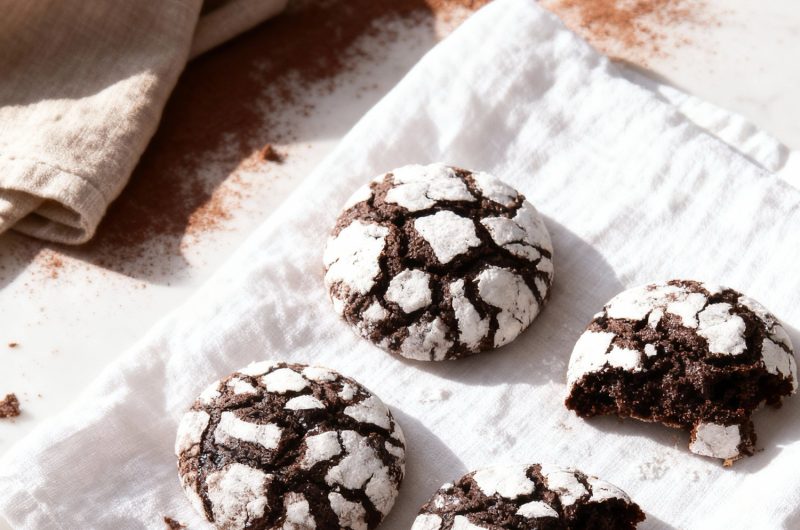
Crinkle cookies are chewy, chocolaty, and visually irresistible. Covered in powdered sugar, they crack as they bake, revealing a fudgy center that’s soft and decadent.
Each cookie is a perfect mix of texture and chocolatey goodness.
These cookies are surprisingly simple to make. The slight crunch of the sugar coating pairs beautifully with the melt-in-your-mouth center, making crinkle cookies a favorite for parties, gifts, or quiet nights with a warm drink.
Once you try crinkle cookies, you’ll understand why they’re a chocolate lover’s dream. Every bite is rich, soft, and delightfully indulgent.
How to Make Crinkle Cookies
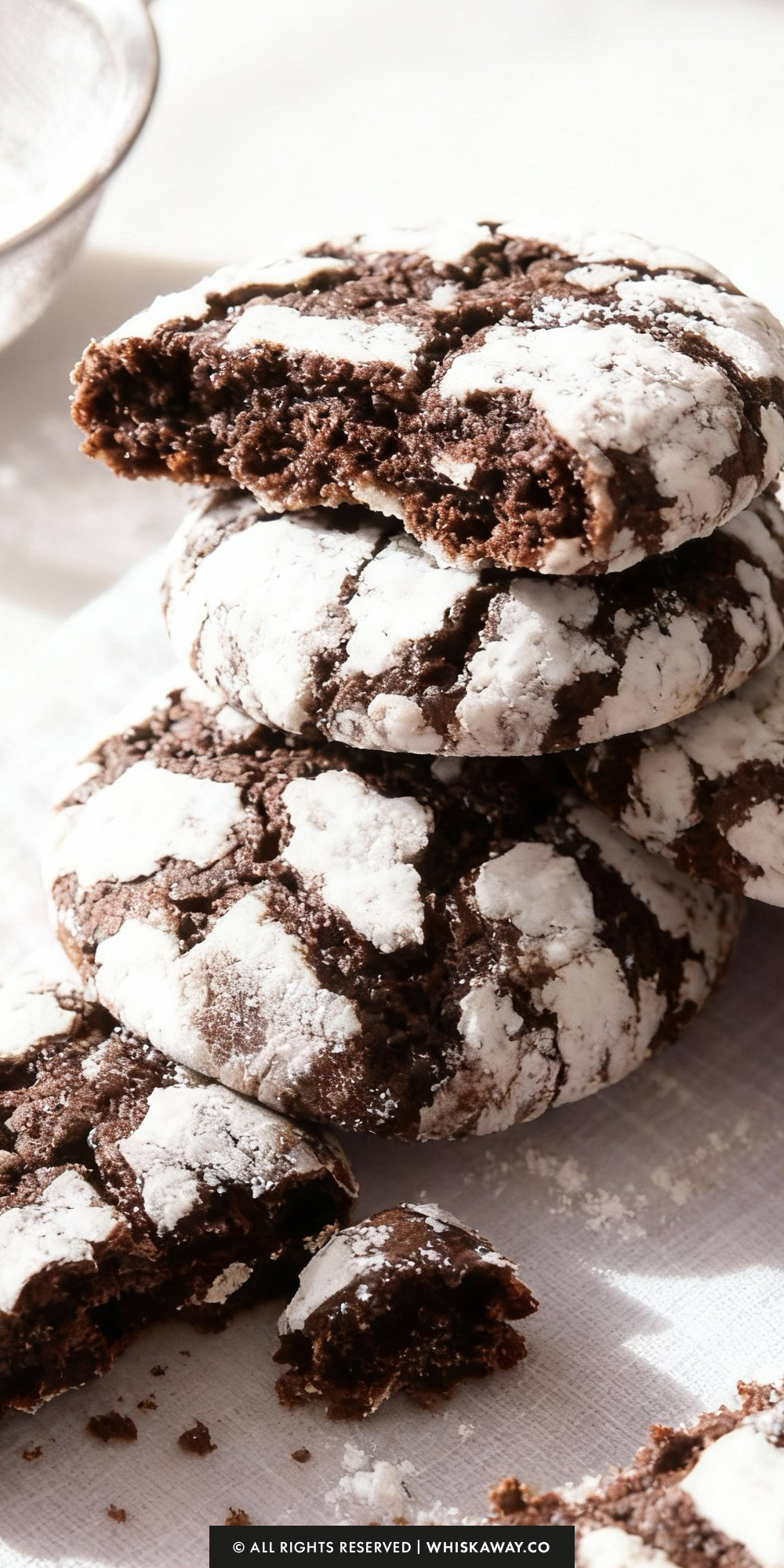
These crinkle cookies deliver dramatic cracks, snowy powdered sugar tops, and soft, brownie-like centers.
They look impressive but are surprisingly simple to make.
Roll, coat, and watch the magic happen.
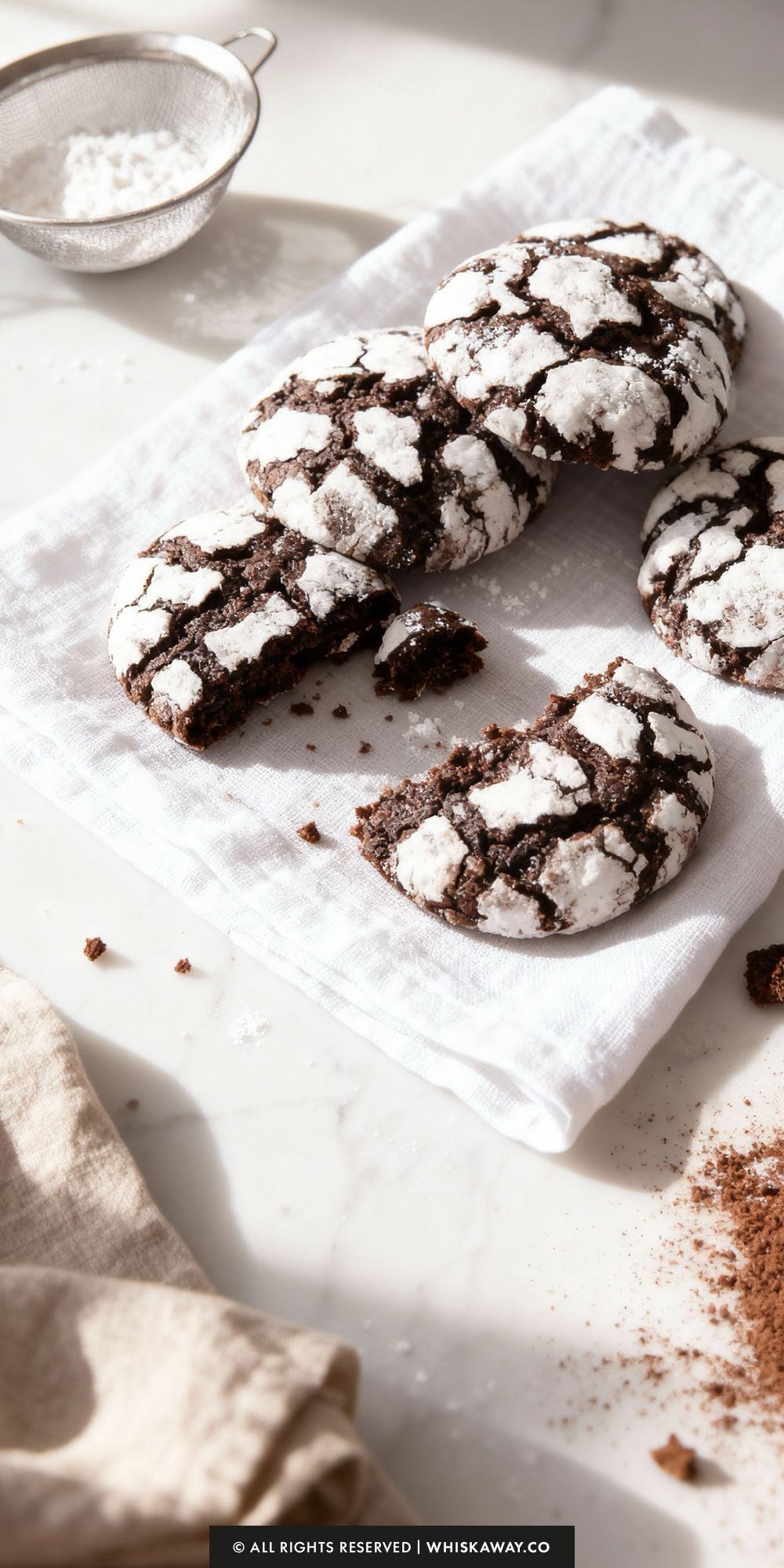
🔥 That signature crackled top and fudgy center make crinkle cookies irresistible. If you’re into dramatic finishes and rich flavor, you’ll enjoy these too.
How to Get Your Crinkle Cookies Just Right
Crinkle cookies are beloved for their fudgy interior, slightly crisp edges, and signature powdered-sugar crackled top.
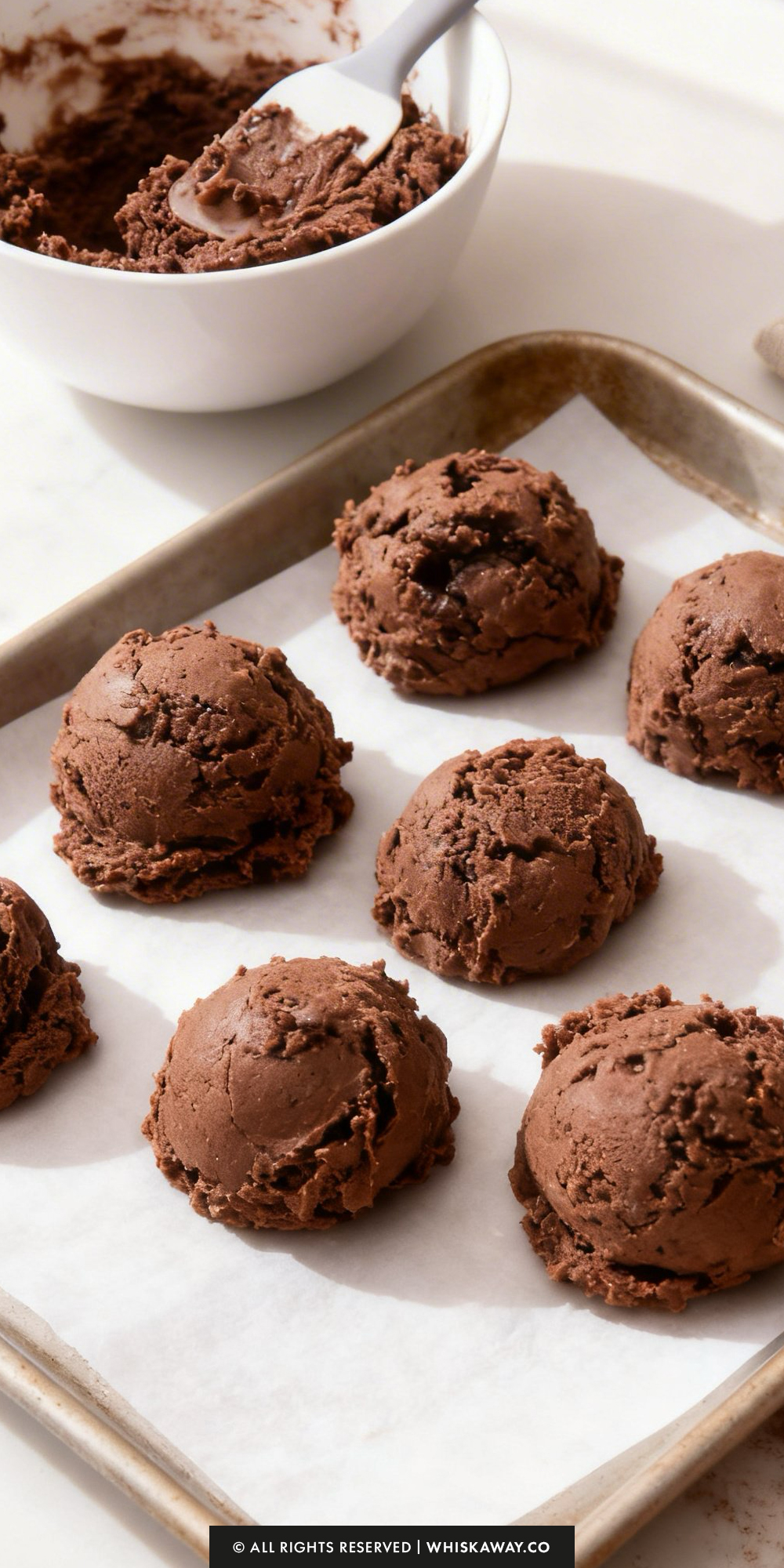
Achieving the perfect balance of texture and appearance requires some key tips and careful technique:
1. Chill the dough thoroughly
Chilling is essential. At least 4 hours in the refrigerator (or overnight) helps the dough firm up, which prevents cookies from spreading too much and encourages the classic crinkle pattern.
Dough that’s too soft will flatten in the oven and produce fewer cracks.
2. Don’t overmix the batter
Once you combine the wet and dry ingredients, mix just until incorporated. Overmixing can develop gluten in the flour, resulting in tougher cookies instead of soft, fudgy centers.
3. Portion consistently
Use a small cookie scoop or tablespoon to measure dough evenly. Uniform dough balls ensure all cookies bake at the same rate and develop consistent texture.
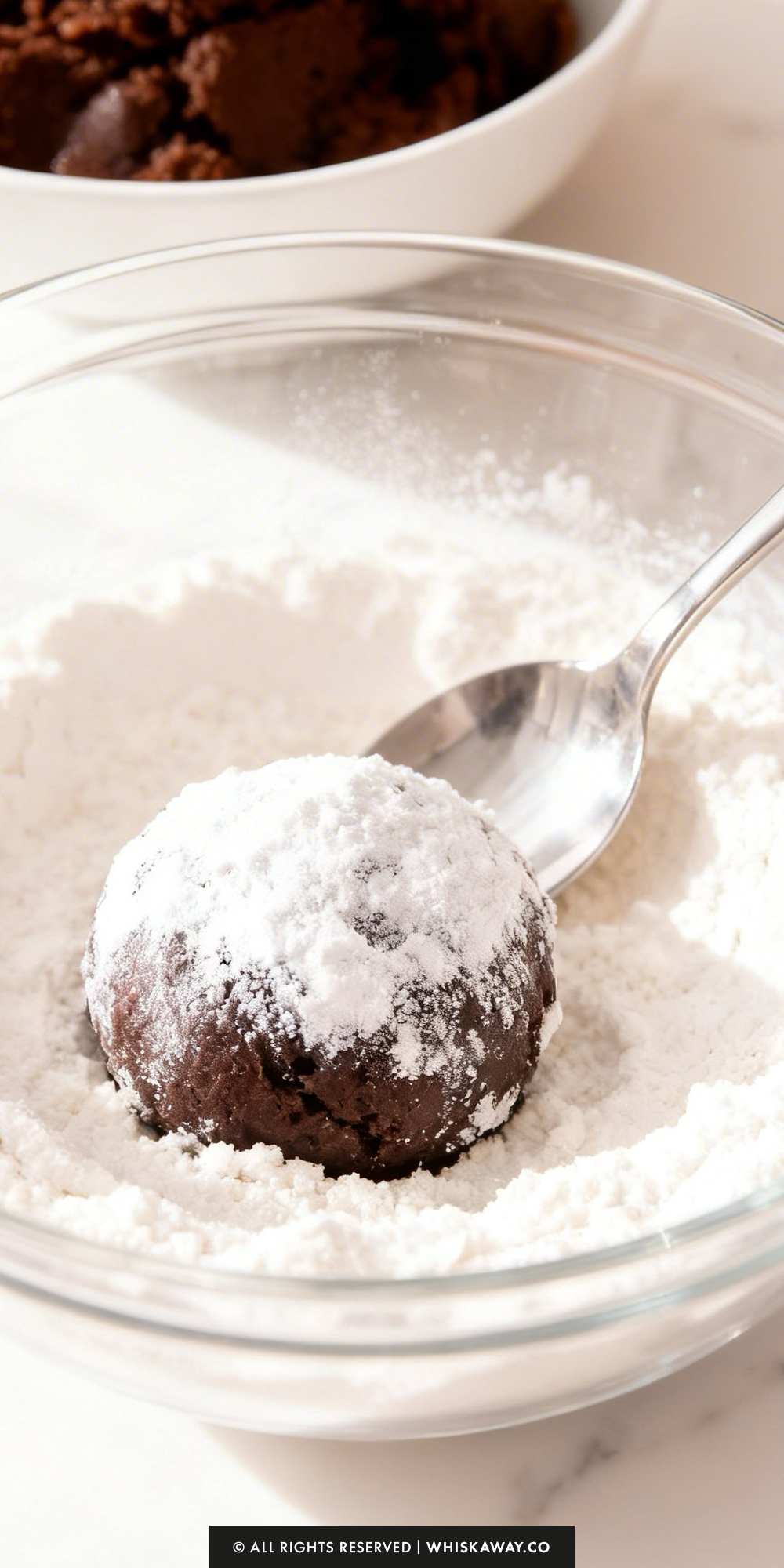
4. Roll generously in powdered sugar
A thick coating of powdered sugar is key to the crinkle effect. Roll each dough ball until fully coated, and be sure to do this right before baking. A light coating won’t crack as dramatically.
5. Space cookies properly
Place the dough balls about 2 inches apart on the baking sheet. Crowding can prevent proper spreading, which diminishes the crinkle effect.
6. Bake just until the edges are set
The cookies should be slightly puffy in the center and appear a touch underbaked when removed from the oven.
This ensures a soft, fudgy interior. Overbaking can dry out the centers and reduce the contrast between the crisp edges and tender middle.
7. Let cookies cool on the pan briefly
Allowing cookies to sit on the baking sheet for a few minutes before transferring to a wire rack helps them firm up without losing their soft, chewy interior.
Common Mistakes to Avoid
- Skipping the chill: Dough too warm will spread excessively and reduce cracking.
- Using too little powdered sugar: Cookies may look dull and won’t get the classic crinkle effect.
- Overbaking: Centers become dry and cakey, losing the signature fudgy texture.
Extra Tip: If your cookies aren’t cracking much by the 9–10 minute mark, gently tap the baking sheet on the counter 1–2 times to encourage cracking before finishing the bake.
Variation Tips
Crinkle cookies are incredibly versatile and can be easily customized to suit different flavors, textures, or dietary needs while keeping the signature fudgy center and crackled exterior.
Here are some creative and practical ideas:
1. Flavor Twists
- Peppermint Chocolate Crinkles: Add ½ teaspoon peppermint extract in place of part of the vanilla for a festive, minty flavor. Top with crushed candy canes after baking.
- •Mocha Crinkles: Add 1 teaspoon instant espresso powder to the cocoa mixture for a subtle coffee kick that enhances the chocolate.
- Orange or Citrus Zest: Mix in 1–2 teaspoons finely grated orange or lemon zest for a bright, aromatic note.
2. Mix-ins
- Fold in ½ cup chocolate chunks, white chocolate chips, or peanut butter chips for extra pockets of flavor.
- Stir in ½ cup chopped nuts (walnuts, pecans, or macadamia) for added crunch.
- For a fruity twist, mix in ¼–½ cup dried cherries, cranberries, or raisins.
3. Texture Adjustments
- Chewy Centers: Reduce the flour by 2–3 tablespoons to make the cookies slightly fudgier.
- Crispier Edges: Bake 1–2 minutes longer and slightly flatten the dough balls before baking.
- Extra Puffy Cookies: Add 1 tablespoon cornstarch to the flour mixture for a softer, cloud-like texture.
4. Dietary Swaps
- Gluten-Free: Substitute a 1:1 gluten-free all-purpose flour blend for the regular flour. Ensure it includes xanthan gum for structure.
- Vegan: Use a flax egg (1 tablespoon ground flaxseed + 3 tablespoons water, let sit 5 minutes) instead of eggs and replace butter with vegan butter or coconut oil.
- Reduced Sugar: Swap half of the granulated sugar with coconut sugar or a sugar substitute suitable for baking. Keep in mind this may slightly change texture and spread.
5. Coating Variations
- Mix powdered sugar with a pinch of cinnamon, cocoa powder, or espresso powder for a subtle twist on the classic crinkle coating.
- Dust with colored sugar for holiday-themed cookies.
Pro-Tip: No matter the variation, always chill the dough before baking to preserve the signature crinkle texture.
Storage Tips
Proper storage is key to keeping your crinkle cookies soft, fudgy, and flavorful for days after baking.
Here’s how to do it:
1. Room Temperature
- Allow cookies to cool completely on a wire rack before storing.
- Store in an airtight container at room temperature for up to 5 days.
- For best results, layer cookies with parchment or wax paper to prevent sticking.
- Avoid leaving cookies exposed to air, as this can dry them out and make the centers less soft.
2. Refrigeration
- Place cooled cookies in an airtight container and refrigerate for up to 2 weeks.
- Refrigeration can slightly firm up the edges, but the centers will remain soft.
- Let cookies sit at room temperature for 10–15 minutes before serving for the best texture.
3. Freezing
- Cookie dough: Shape the dough into balls, coat in powdered sugar, and freeze on a baking sheet for 1–2 hours. Transfer to a freezer-safe container or bag. Bake straight from frozen, adding 1–2 extra minutes to the baking time.
- Baked cookies: Allow cookies to cool completely, then layer them in a freezer-safe container with parchment paper between layers. Freeze for up to 3 months. Thaw at room temperature for 30–60 minutes or warm briefly in the microwave (10–15 seconds) to enjoy soft, fresh-like cookies.
4. Packaging Tips
- Use airtight containers or resealable bags to prevent air exposure.
- Avoid stacking warm cookies; wait until fully cooled to prevent condensation and sogginess.
Common Mistakes to Avoid
- Storing cookies in the fridge without an airtight seal, which can dry them out.
- Freezing cookies without parchment layers, causing them to stick together.
- Leaving baked cookies out for too long uncovered, which leads to a dry, crumbly texture.
Pro-Tip: Crinkle cookies taste best when slightly soft and fudgy in the center. If they become firm during storage, a few seconds in the microwave or a short reheat in a 300°F oven can revive their soft texture.
Save for Later to Your Pinterest Board

FAQs
Can I substitute all-purpose flour with a gluten-free flour?
Yes! Use a 1:1 gluten-free baking flour blend that includes xanthan gum for structure. The texture may be slightly different—more delicate—but the cookies will still be fudgy and delicious.
Can I use a different type of chocolate or cocoa powder?
Absolutely. You can swap natural unsweetened cocoa powder for Dutch-processed cocoa, though it may slightly change the flavor and rise. For chocolate chips, feel free to use semi-sweet, milk, or dark chocolate depending on your preference.
Why are my cookies spreading too much or too little?
If cookies spread too much: Ensure the dough is chilled for at least 4 hours before baking and avoid using melted butter.
If cookies don’t spread enough: Let the dough sit at room temperature for 10–15 minutes before scooping, and check that your oven temperature is accurate.
How should I store crinkle cookies and how long do they last?
Store in an airtight container at room temperature for up to 5 days. For longer storage, refrigerate up to 2 weeks or freeze baked cookies for up to 3 months. Thaw at room temperature or warm slightly in the microwave before serving.
Can I make the dough ahead of time?
Yes! Dough can be refrigerated for up to 24 hours or frozen for up to 3 months. Chill or freeze the dough in pre-portioned balls rolled in powdered sugar. Bake directly from frozen, adding 1–2 extra minutes to the baking time.
Crinkle Cookies
48
cookies15
minutes10
minutesWant a fudgy, crinkly delight? These crinkle cookies are soft, chocolaty, and dusted with powdered sugar for a festive touch.
Ingredients
1¾ cups granulated sugar (350g)
2 cups all-purpose flour (240g)
1 cup unsweetened cocoa powder (100g)
1 cup powdered sugar (120g)
½ cup vegetable oil (120mL)
4 large eggs, room temperature
2 teaspoons vanilla extract
2 teaspoons baking powder
¾ teaspoon salt
Directions
- In a large bowl, use a hand mixer or a stand mixer with a paddle attachment to blend together the sugar, cocoa powder, and vegetable oil. Mix on medium speed until the mixture is smooth, glossy, and fully combined.
- Add the eggs one at a time, mixing well after each addition. Stir in the vanilla extract until incorporated.
- In a separate bowl, whisk together the flour, baking powder, and salt. Gradually fold the dry ingredients into the chocolate mixture on low speed, mixing just until no streaks remain.
- Wrap the dough tightly in plastic wrap and chill in the refrigerator for at least 4 hours or overnight. Chilling helps the cookies hold their shape and develop that signature crinkle texture.
- When ready to bake, preheat your oven to 350°F (177°C) and line two large baking sheets with parchment paper. Pour the powdered sugar into a small bowl.
- Using a small cookie scoop or a tablespoon, portion out the chilled dough into roughly one-inch balls. Roll each ball generously in powdered sugar and arrange them on the prepared sheets, spacing them about 2 inches apart. Only coat the dough balls that will fit on your baking sheets at a time; keep the remaining dough refrigerated and roll it in sugar just before baking.
- Bake the cookies for 10–12 minutes, or until the edges are set and firm, while the centers remain slightly puffy and appear a bit soft.
- Allow the cookies to cool on the baking sheets for a few minutes before transferring them to a wire rack to cool completely.