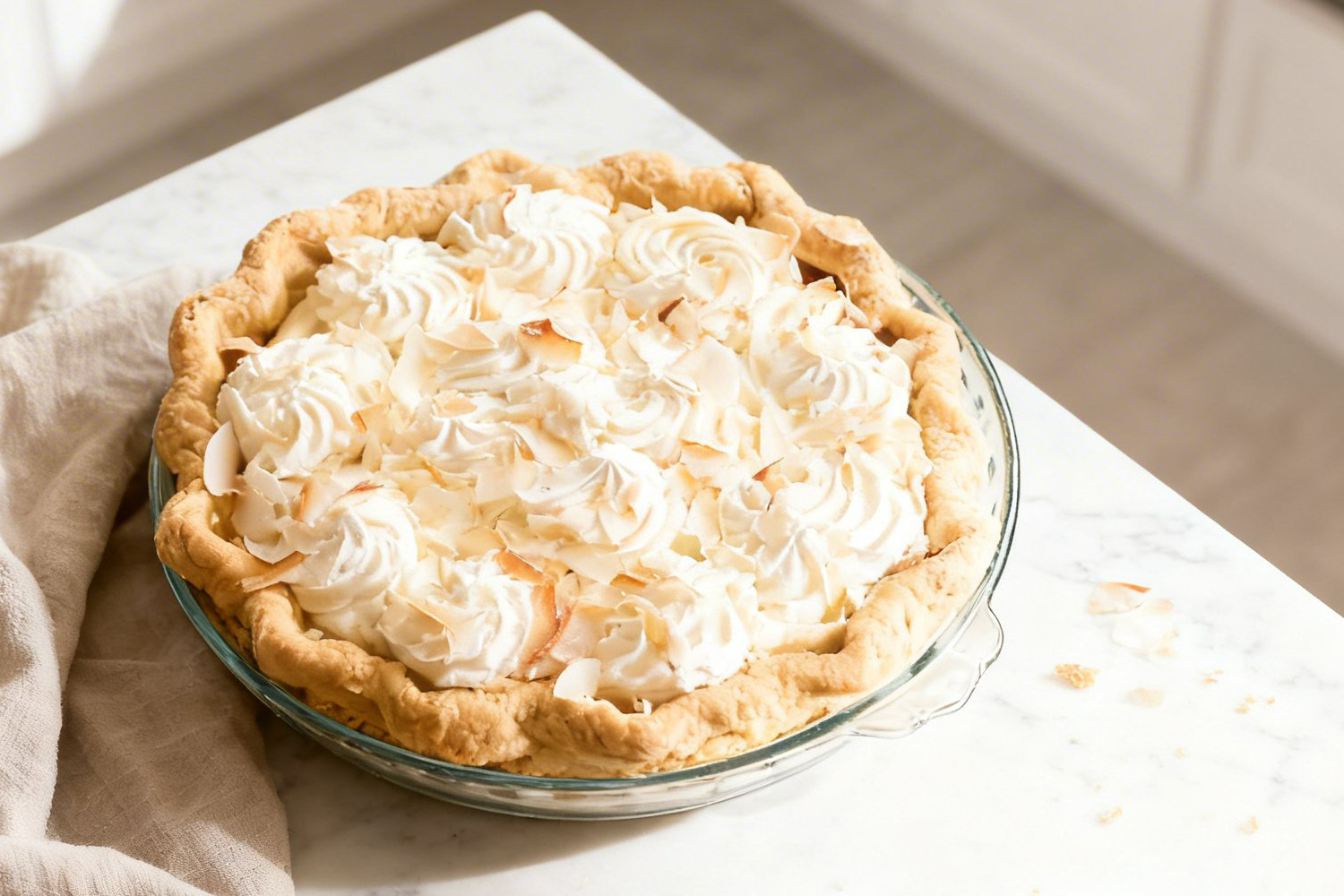
Looking for a tropical twist on a classic dessert? This coconut cream pie combines a silky coconut custard with a flaky, buttery crust and a cloud of whipped cream.
Each bite is creamy, sweet, and lightly nutty, offering a rich flavor that feels indulgent without being overwhelming.
Baking a coconut cream pie at home is approachable, and the tropical notes make it a standout on any dessert table.
Garnish with toasted coconut for extra crunch and flavor. Perfect for summer gatherings, brunches, or whenever you’re craving a slice of paradise in every bite.
Why You’ll Love This Recipe
This coconut cream pie is all about texture contrast and aromatic flavor.
What Makes Them Special
- Coconut-infused custard for authentic flavor
- Shredded coconut adds chew
- Toasted topping adds nutty depth
- Thick custard slices neatly
- Balanced sweetness with tropical notes
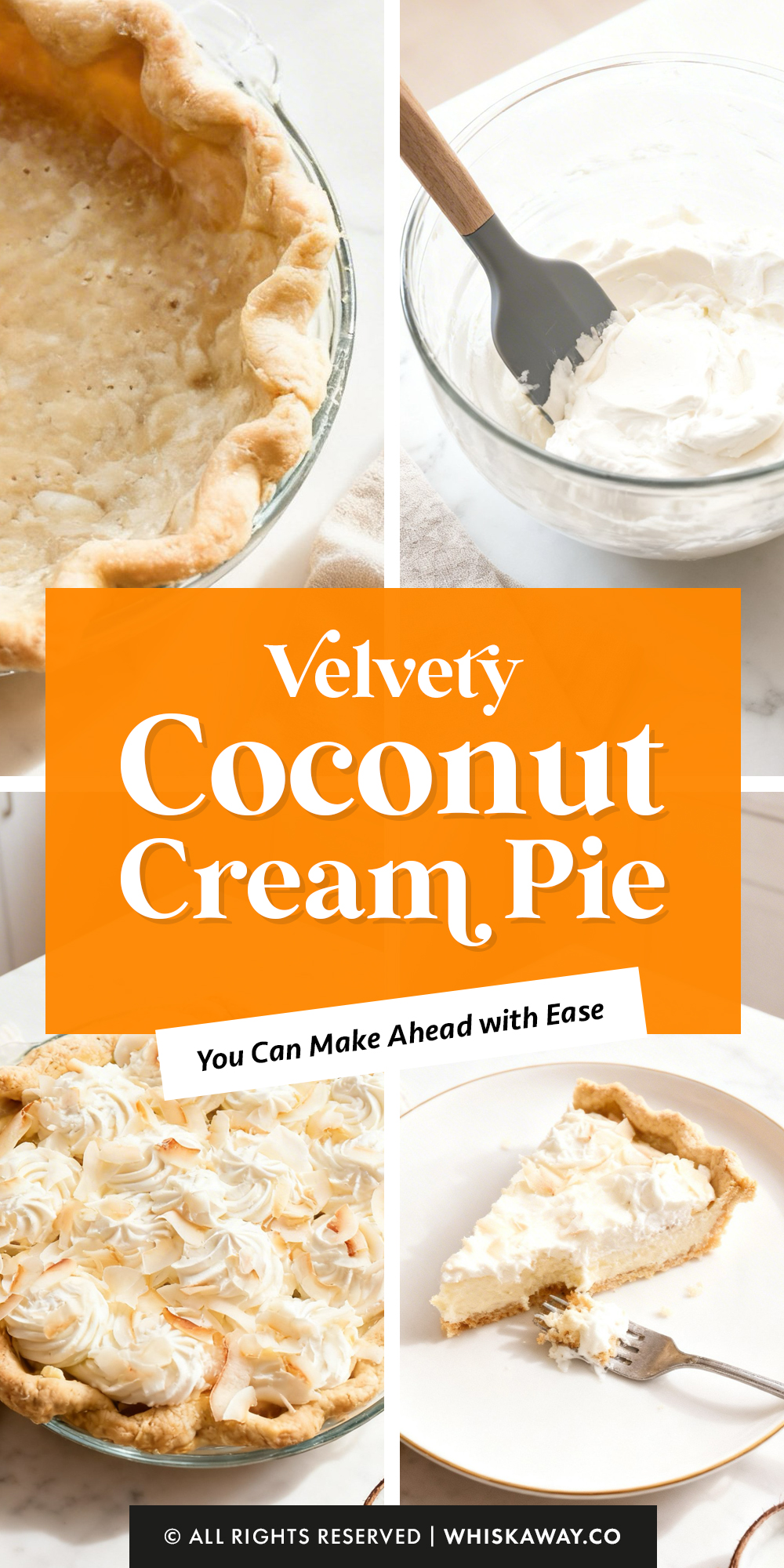
Save This Pin for Later to Your Pinterest Board
🔥 If tropical and creamy flavors are your favorite, you’ll also love:
How to Get Your Coconut Cream Pie Just Right
The hallmark of a great Coconut Cream Pie is a custard that is rich enough to hold a sharp edge when sliced, but soft enough to melt in your mouth.
Because this recipe relies on the stability of egg yolks and cornstarch, technique is everything.
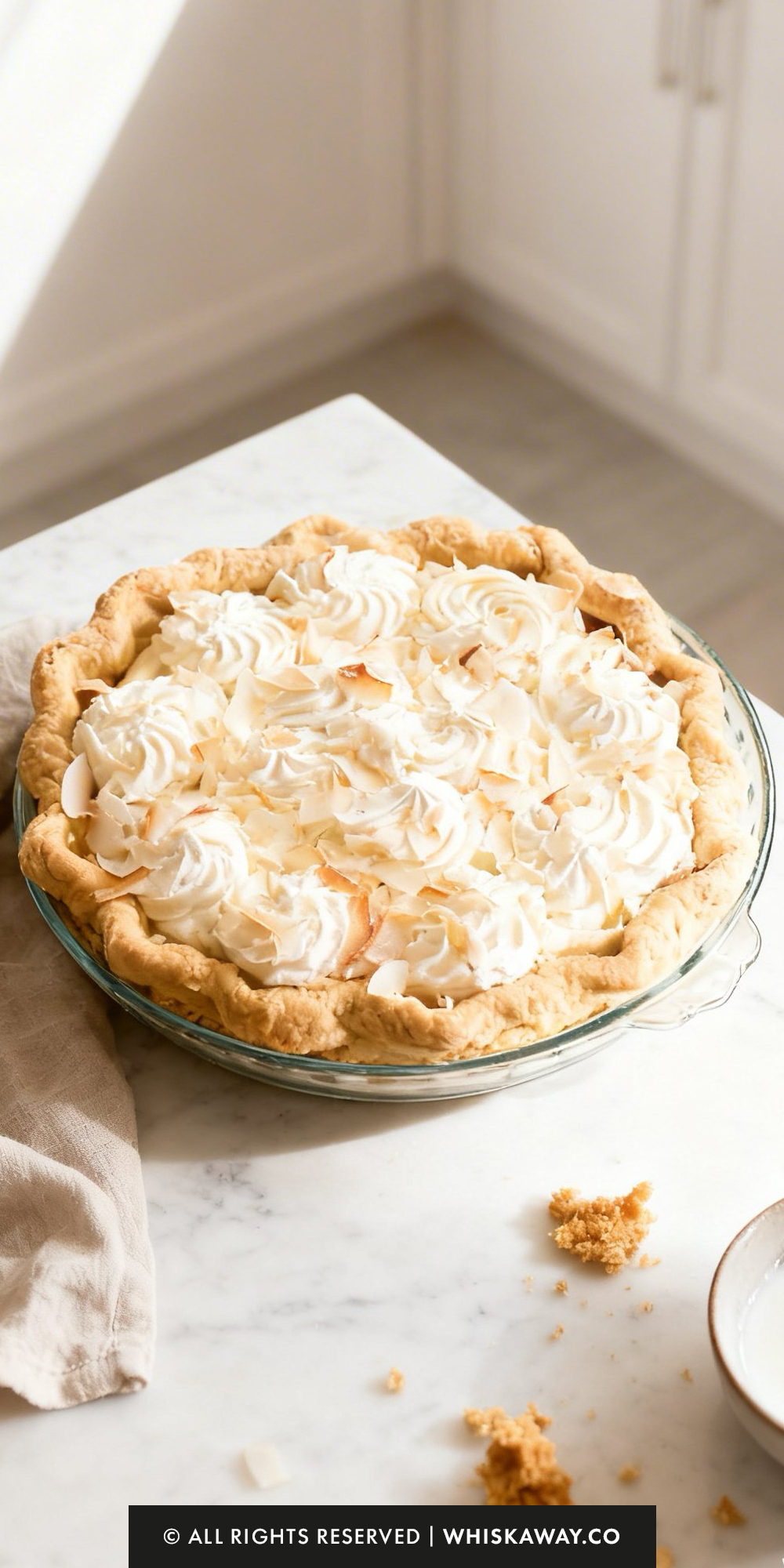
1. Master the Custard Consistency
The 90-Second Rule: Once you return the tempered eggs to the pot, you must cook the mixture for the full 90 seconds while it bubbles.
This ensures the cornstarch is fully “activated.” If you undercook it, the pie will be runny; if you overcook it, the starch bonds can actually break, causing the pudding to thin out again.
Strain for Perfection: Even with careful tempering, tiny bits of cooked egg can sometimes appear.
For a truly professional, silky mouthfeel, pour the finished pudding through a fine-mesh sieve before stirring in the shredded coconut.
Use Full-Fat Coconut Milk: This is not the place for “lite” coconut milk or the carton-style milk found in the dairy aisle.
You need the thick, creamy fat found in canned full-fat coconut milk to provide the necessary structure and deep flavor.
2. Ensure a Crisp, Sturdy Crust
To prevent the custard from making your crust soggy, you can brush the inside of your blind-baked crust with a thin layer of melted white chocolate or a beaten egg white (and baking for 2 more minutes) before filling.
This creates a moisture barrier that keeps the pastry crunchy for days.
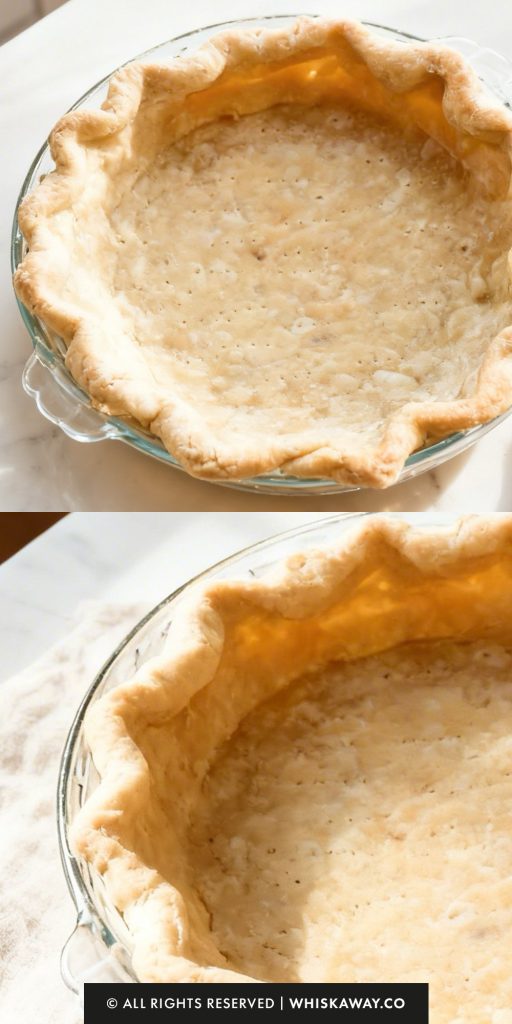
Since the filling is cooked on the stove, your crust must be 100% done before the pudding goes in.
If the bottom looks pale or feels soft, keep it in the oven for another 5 minutes.
3. Pro Tips for Flavor & Texture
Toast Your Garnish: While the recipe uses shredded coconut inside the filling, use toasted coconut for the topping.
Toasted coconut adds a nutty complexity and a much-needed crunch that contrasts beautifully with the soft cream.
The “Medium Peak” Sweet Spot: When whipping your cream, stop the mixer the moment the tracks in the cream hold their shape but the tips of the peaks slightly curl over.
Over-whipping will turn the cream grainy and “buttery,” which ruins the elegance of the pie.
Coconut Extract is Key: Coconut milk provides the creamy base, but the coconut extract is what provides that “bakery-style” aromatic punch.
Don’t skip it if you want the flavor to really stand out.
4. Common Mistakes to Avoid
Rushing the Chill: A cream pie is a test of patience. If you slice it before the 3-hour mark (or better yet, 6 hours), the center will slump and run.
The cornstarch needs significant cold time to fully “set.”
Scrambling the Eggs: When tempering, the stream of hot liquid should be very thin and your whisking should be very fast.
If you pour too quickly, you’ll end up with sweet scrambled eggs instead of custard.
Not Touching the Surface: Ensure the plastic wrap is physically touching the custard.
If there is a gap, the steam will condense into water droplets on the wrap, which then drip back onto your pie and create a slimy surface.
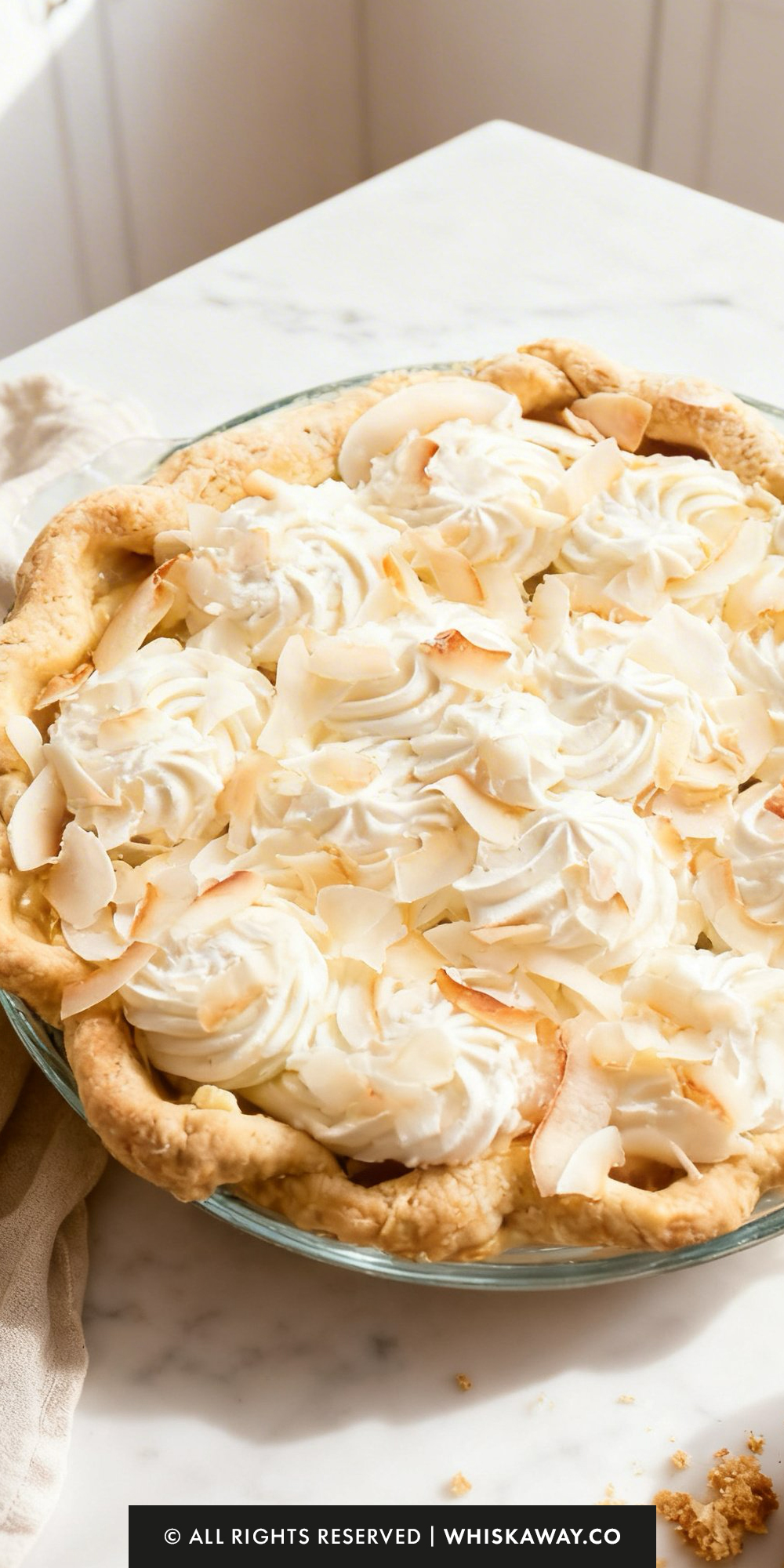
Baking Tips for This Recipe
- Toast coconut separately before topping for deeper flavor.
- Cook custard until noticeably thick before removing from heat.
- Stir continuously to prevent scorching.
- Chill thoroughly before slicing.
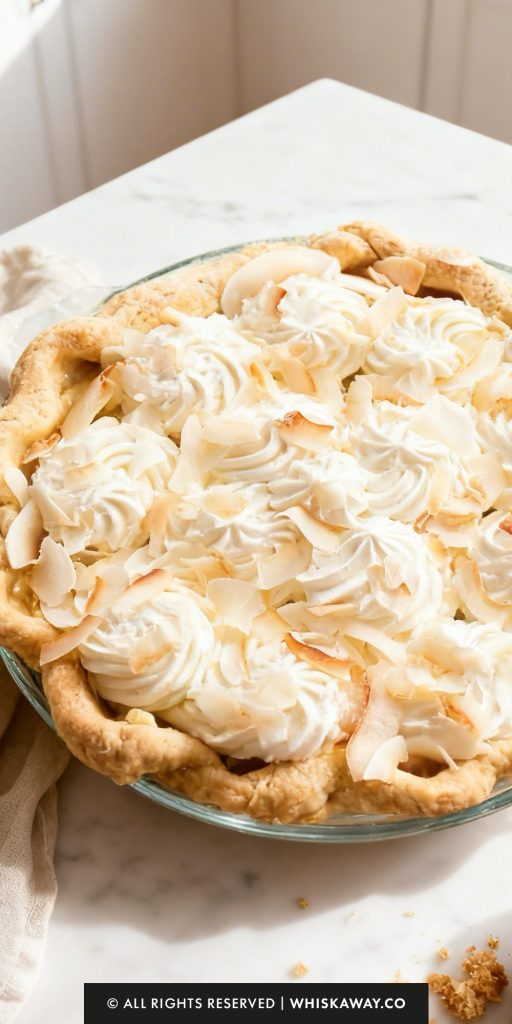
Variation Tips
The Coconut Cream Pie is a tropical classic, but its creamy, custard-based profile makes it incredibly easy to customize.
Whether you want to heighten the coconut intensity or add a complementary flavor, these tweaks will help you make the recipe your own.
1. The “Extra Toasted” Nutty Twist
If you prefer a deeper, more savory coconut flavor:
Before adding the shredded coconut to the filling, toast it in a dry skillet over medium heat until golden and fragrant.
This infuses the custard with a warm, nutty aroma rather than the standard sweet-and-creamy profile.
2. The Chocolate-Coconut “Mounds” Version
For those who love the classic candy bar pairing:
Spread a thin layer of dark chocolate ganache (melted chocolate mixed with a splash of cream) over the bottom of the baked crust and let it set before pouring in the coconut custard.
Drizzle the top of the whipped cream with chocolate syrup and sprinkle with toasted almonds.
3. Tropical Pineapple Fusion (Piña Colada Style)
To lean into the vacation vibes:
Fold ½ cup of well-drained crushed pineapple into the custard along with the shredded coconut.
Garnish with a Maraschino cherry and a small lime zest for a bright, acidic pop that cuts through the rich coconut.
4. Crust & Texture Alternatives
The Graham Cracker or Macaroon Crust: Instead of a traditional pastry shell, use a graham cracker crust for a honeyed crunch, or a coconut macaroon crust (shredded coconut, egg whites, and sugar) for a gluten-free, triple-coconut experience.
The Key Lime Tweak: Add 1 tablespoon of fresh lime juice and a teaspoon of lime zest to the custard.
The citrus acidity balances the richness of the coconut milk beautifully.
5. Dietary Adaptations
Dairy-Free & Vegan:
Use a high-quality vegan butter and replace the half-and-half with extra-creamy oat milk or additional coconut milk.
Since the recipe already uses cornstarch and egg yolks, you can replace the 4 yolks with 2 tablespoons of extra cornstarch or a specialized vegan custard powder to maintain the “set.”
Use a chilled can of coconut cream (the thick part at the top) whipped with powdered sugar.
Lower Sugar:
Use unsweetened shredded coconut instead of sweetened, and replace the granulated sugar with monk fruit sweetener or allulose.
Note that unsweetened coconut has a slightly tougher texture, so you may want to pulse it in a blender for a second before adding it to the pudding.
Creative Garnish Ideas
Coconut Chips: Use large, wide unsweetened coconut chips instead of fine shreds for a modern, high-end bakery look.
White Chocolate Shavings: Use a vegetable peeler to create large curls of white chocolate to scatter over the whipped cream.
It blends perfectly with the white-on-white aesthetic of the pie.
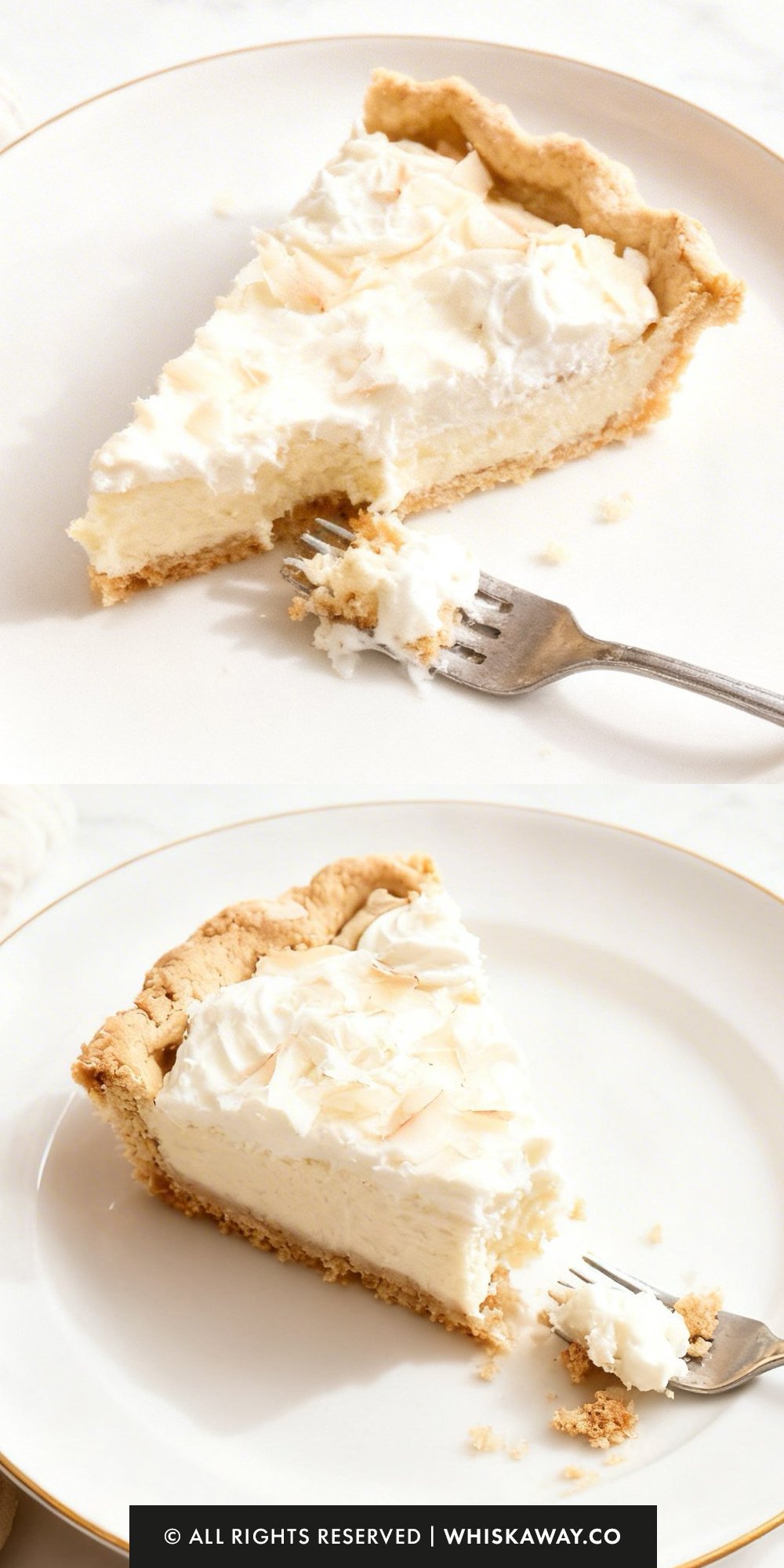
How to Properly Store Your Coconut Cream Pie
Storing a Coconut Cream Pie requires a bit of finesse because it consists of three distinct layers:
- A crisp crust
- A moist custard
- An airy whipped cream
All of which react differently to time and temperature.
1. Refrigeration (The Cold Standard)
Duration: 3 to 5 days.
This pie must be kept in the refrigerator. After the initial 3-hour set time, keep it covered.
If the pie hasn’t been topped with whipped cream yet, keep the plastic wrap pressed directly against the custard surface.
If it is fully assembled, use a deep pie carrier or loosely tent it with foil.
Avoid sealing it airtight with plastic wrap over the whipped cream, as this can cause the cream to weep and collapse.
2. Room Temperature (Service Only)
The 2-Hour Rule: Because this is an egg-and-dairy-heavy custard, it should never sit at room temperature for more than 2 hours.
Beyond this, the risk of foodborne illness increases, and the structural integrity of the pudding will begin to soften.
3. Freezing (Not Recommended)
I generally advise against freezing a fully assembled Coconut Cream Pie.
Custards thickened with cornstarch often “break” or separate when thawed, resulting in a grainy texture and a pool of liquid at the bottom of the crust.
If you want to get ahead, you can freeze the blind-baked pie crust for up to 3 months. Just thaw it and add the fresh filling when you’re ready.
4. How to Maintain the “Snap” of the Crust
The biggest storage challenge is the “soggy bottom.” Over time, the moisture from the custard will migrate into the pastry.
If you plan on keeping the pie for several days, make sure you used the egg wash seal during the blind-baking phase.
This thin, baked-on layer of egg acts as a waterproof shield for the pastry.
If you aren’t serving the whole pie at once, consider only adding whipped cream to the individual slices you are serving.
This keeps the main pie easier to cover and protects the custard surface.
5. Storage Mistakes to Avoid
The Odor Sponge: Butter and cream are highly absorbent.
If you store the pie uncovered near strong-smelling foods like cut onions or leftovers, your pie will start to taste like your fridge.
Always ensure it has a dedicated cover or a loose foil tent.
Premature Packaging: Never cover the pie while the custard is still warm.
Any residual heat will create condensation on the underside of your wrap, which will drip down and create a puddle on your beautiful custard.
The Microwave Trap: Never try to warm up a slice of this pie.
Heat will instantly liquify the cornstarch bonds in the custard and melt the whipped cream, leaving you with a bowl of sweet soup.
This dessert is designed to be enjoyed chilled.
FAQs
My filling is too runny and didn’t set. What happened?
This is usually caused by undercooking the cornstarch. Cornstarch must reach a full boil to activate its thickening power. You need to see large, slow bubbles popping on the surface. Once it bubbles, you must cook it for the full 90 seconds. If it’s still runny after chilling, you can’t easily fix it—it’s best to enjoy it as a “spoon dessert” in bowls!
Can I use the coconut milk from a carton instead of a can?
No. The coconut milk in a carton (the kind you drink or put in cereal) is far too thin and lacks the fat content needed for a stable custard. You must use canned full-fat coconut milk. For even better results, give the can a good shake or stir before measuring to incorporate the thick coconut cream that often settles at the top.
Why did my custard turn out lumpy or have “scrambled egg” bits?
This happens if you add the hot milk to the egg yolks too quickly (scrambling them) or if the cornstarch wasn’t fully whisked in. To ensure a professional finish, always temper your eggs by adding the hot liquid in a tiny, slow stream. If you do see lumps, simply pour the warm custard through a fine-mesh strainer before you stir in the shredded coconut.
How do I prevent the bottom of the crust from getting soggy?
The best defense is a full blind bake. Since the filling is “no-bake,” the crust must be 100% cooked and golden before the pudding goes in. For extra protection, you can brush the inside of the hot, baked crust with a little bit of beaten egg white and pop it back in the oven for 2 minutes to create a “waterproof” seal.
How long will the pie stay fresh once I add the whipped cream?
While the custard lasts for about 5 days, the whipped cream is best within 24 hours. Over time, whipped cream begins to “weep” (release water) and lose its volume. If you are making the pie in advance, store the chilled custard pie and wait to add the freshly whipped cream until right before you plan to serve it.
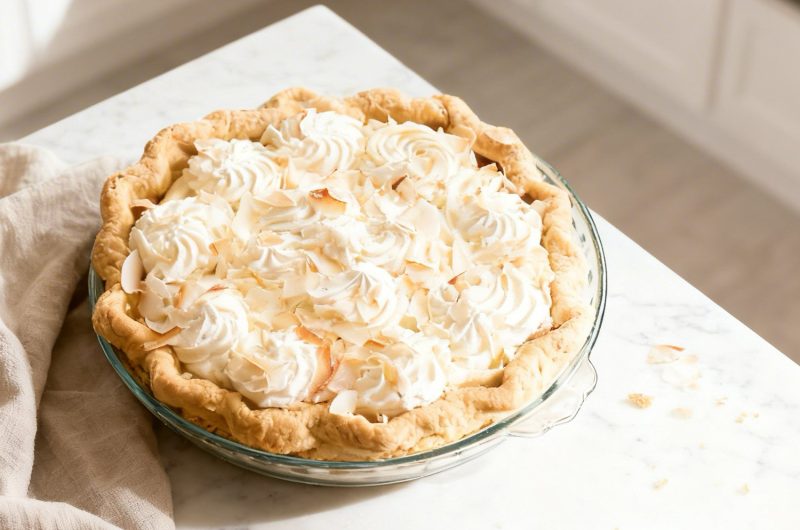
Coconut Cream Pie
8
Slices5
hours45
minutes35
minutesThis coconut cream pie recipe is luscious, creamy, and filled with tropical flavor.
Ingredients
- For the Filling
1 (14 ounce) can full-fat coconut milk
1 cup (240ml) half-and-half
1 cup (80g) sweetened shredded coconut
2/3 cup (130g) granulated sugar
1/4 cup (30g) cornstarch
4 large egg yolks
2 Tablespoons (28g) unsalted butter, softened
1 unbaked flaky Pie Crust (or All Butter Pie Crust)
1 teaspoon pure vanilla extract
1/2 teaspoon coconut extract (optional)
1/4 teaspoon salt
- For the Whipped Cream & Garnish
1 and 1/2 cups (360ml) cold heavy cream or heavy whipping cream
3 Tablespoons (20g) confectioners’ sugar or granulated sugar
3/4 teaspoon pure vanilla extract
Optional for garnish: unsweetened coconut shavings, coconut chips, or sweetened shredded coconut
Directions
- Pastry Base
- Start with well-chilled pie dough. It’s best to make this the day before so it has at least two hours to rest in the fridge before you roll it out.
- Preheat your oven to 375°F. Roll out the dough, fit it into your pie pan, and crimp the edges. Perform a full blind bake (using weights/beans) until the crust is completely cooked and golden.
- Let the crust cool entirely before adding any filling. You can actually do this step up to 3 days in advance—just keep the cooled shell covered in the refrigerator.
- Cook the Coconut Custard:
- In a small bowl, whisk the egg yolks and cornstarch until smooth. In a medium saucepan, combine the coconut milk, half-and-half, sugar, and salt.
- Place the saucepan over medium heat. Whisk occasionally and bring the liquid to a boil. Let it bubble for two minutes, then drop the heat to medium-low.
- Very slowly, drizzle about ½ cup of the boiling liquid into your egg yolk mixture while whisking constantly. This warms the eggs gradually so they don't curdle.
- Gradually pour that warmed egg mixture back into the main pot, whisking vigorously. The pudding will thicken and bubble almost instantly—be careful of splattering! Whisk and cook for exactly 90 seconds, then pull it off the heat.
- Fold in the shredded coconut, butter, vanilla, and the optional coconut extract.
- Pour the warm custard into your cooled pie shell.
- Press a piece of plastic wrap directly onto the surface of the pudding. This prevents a rubbery layer from forming on top.
- Refrigerate for at least 3 hours, though overnight is even better, to ensure the pie is fully set and cold.
- Whipped Topping
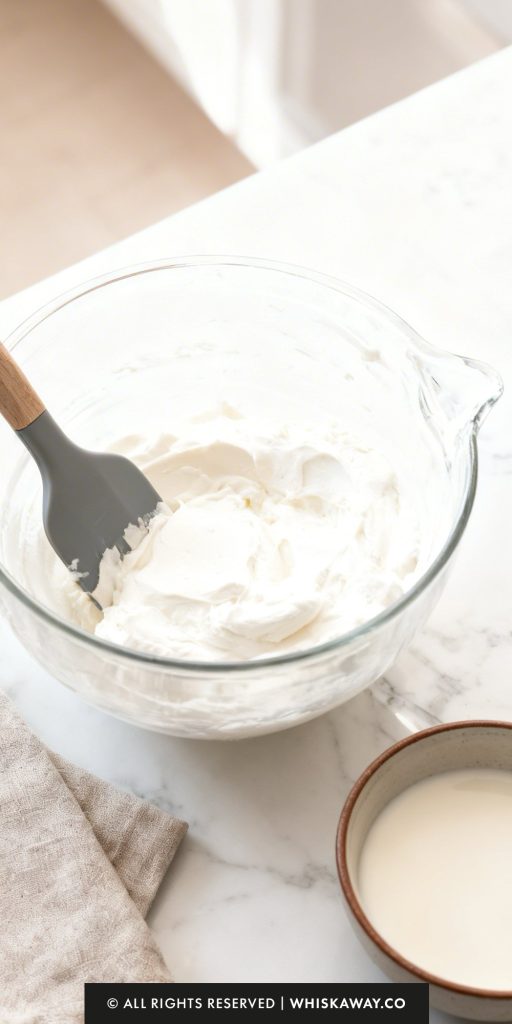
- Using a stand or hand mixer, beat the heavy cream, sugar, and vanilla on medium-high speed. Aim for medium peaks—the stage where the cream holds its shape well but isn't overly stiff or grainy.
- Spread the whipped cream over the custard or use a piping tip for a more decorative look.
- Finish with a sprinkle of toasted coconut or coconut shavings. You can serve it immediately or keep it in the fridge for a few hours before slicing.