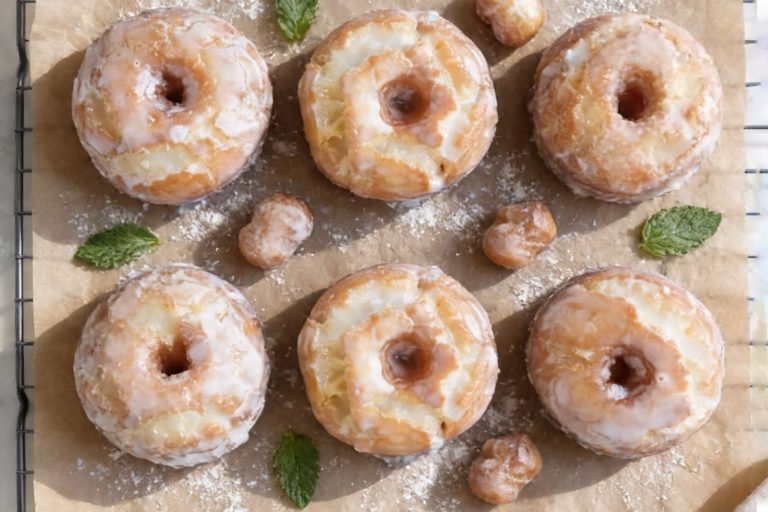
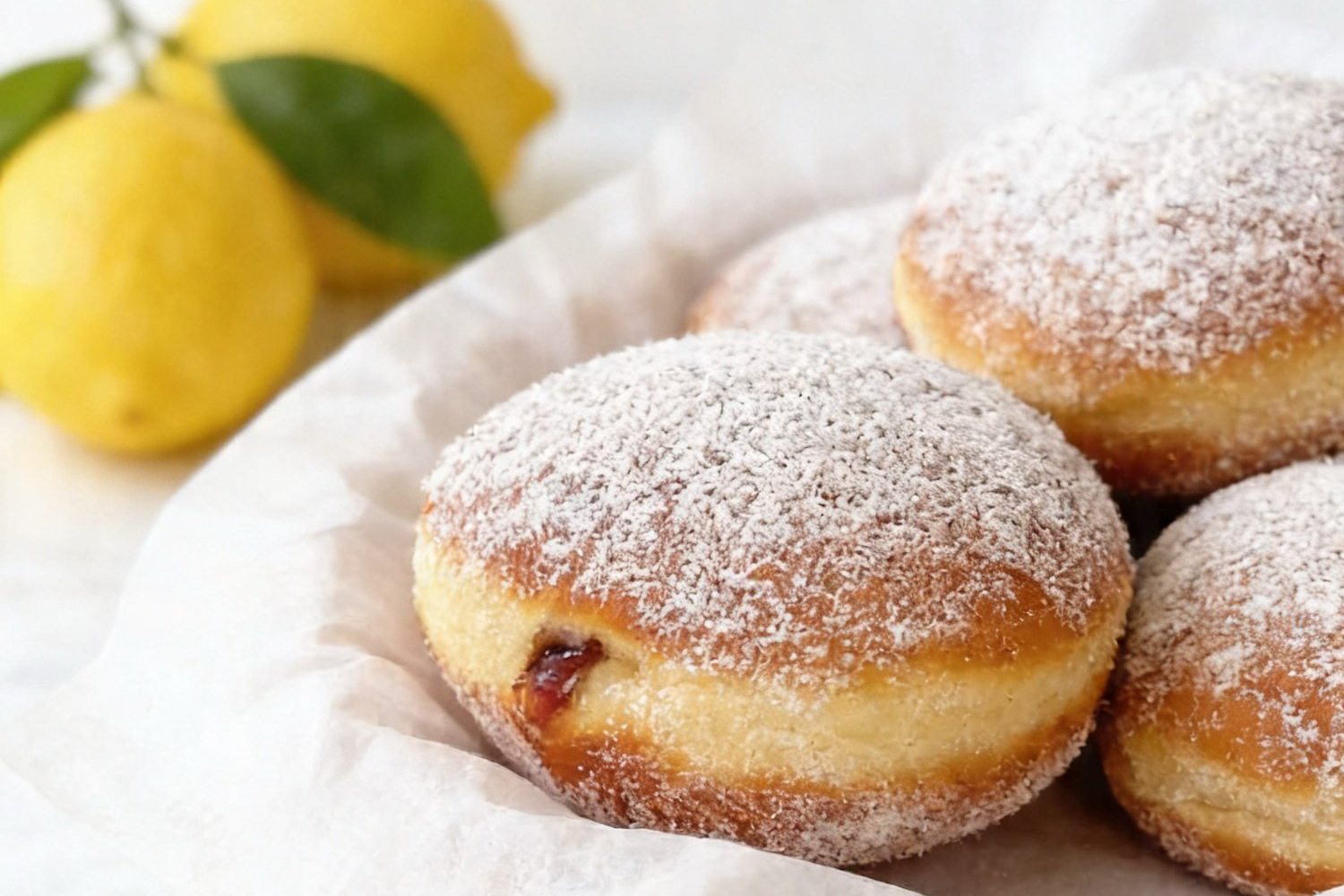
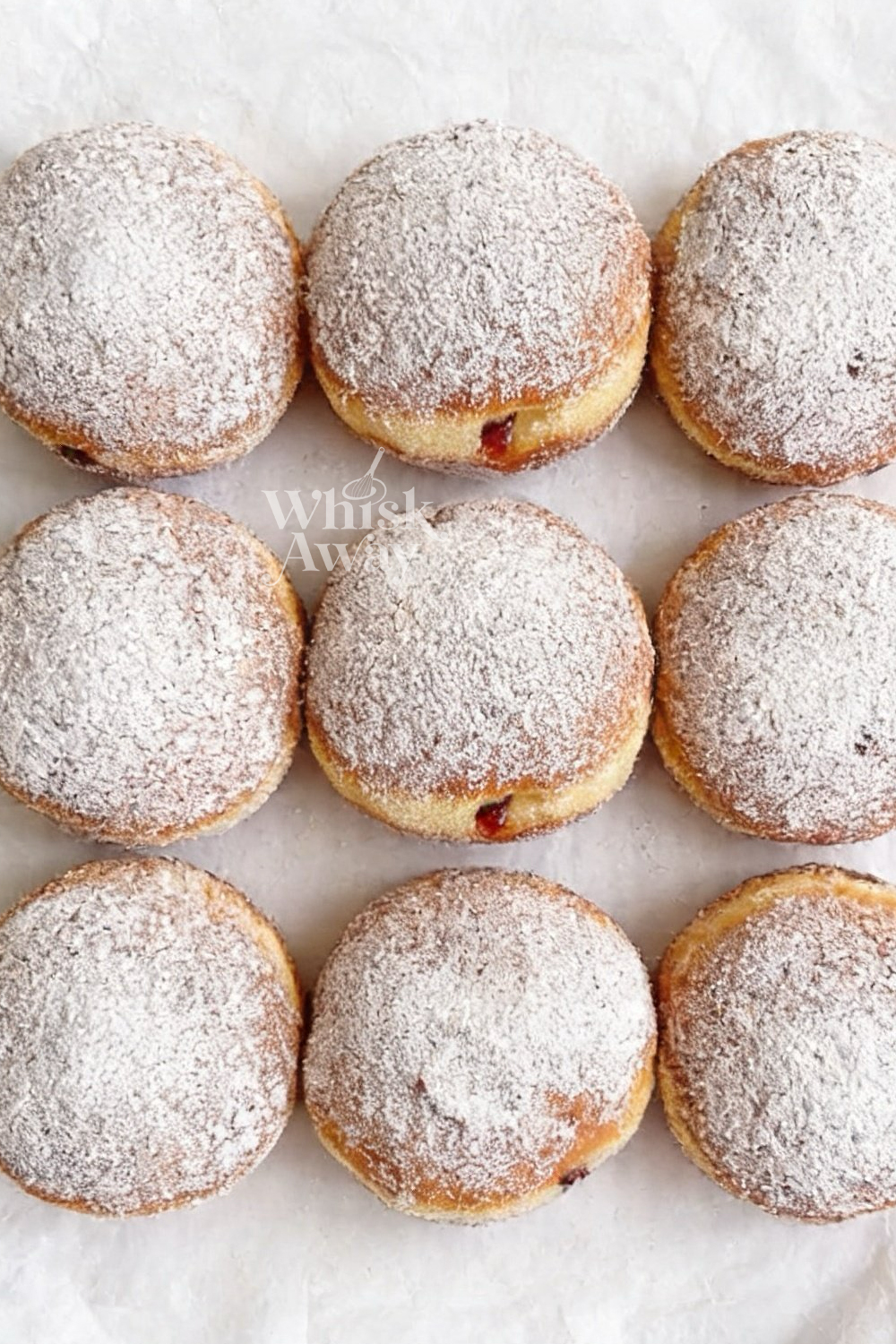
Biting into a soft donut and finding a sweet filling inside is exactly what makes German donuts (filled jelly donuts / Berliner) so enjoyable. The outer layer is light and pillowy, while the inside is filled with fruity jam that adds both sweetness and a slight tang. They might look like something you’d only get from a bakery, but they’re very doable at home with a bit of patience. The process is straightforward, and the payoff is a batch of donuts that feel special and homemade at the same time. Perfect for breakfast, celebrations, or simply when you want something a little different, these donuts bring a fun surprise in every bite. German donuts (filled jelly donuts / Berliner) combine soft dough and flavorful filling into a treat that’s both classic and playful.
🔥
Why You’ll Love This German Donuts
Soft donuts filled with sweet, fruity jelly are always a treat worth savoring
- Light, airy exterior encases flavorful jam
- Melt-in-your-mouth texture with each bite
- Can be filled with any fruit preserves you love
- Great for brunch, dessert, or gifting
- A classic European-style donut everyone will adore
Save This Pin for Later to Your Pinterest Board

Ingredients
Donut Dough Ingredients
- Neutral oil (like avocado or canola) for frying: Ensures even frying without imparting strong flavor.
- All-purpose flour: Provides structure for the yeast-raised donuts.
- Milk (room temperature): Adds moisture and richness to the dough and helps yeast activation.
- Raspberry jam (or filling of choice): Provides a sweet, fruity center that contrasts with the soft dough.
- Granulated & powdered sugar: Sweeten both the dough and coating for extra flavor and texture.
- Unsalted butter: Adds richness, tenderness, and flavor.
- Egg yolks: Contribute richness, color, and help bind the dough.
- Instant yeast: Leavens the dough, creating a light and airy texture.
- Lemon zest: Adds a bright citrus note that complements the fruity filling.
- Vanilla extract: Enhances sweetness and adds depth of flavor.
- Kosher salt: Balances sweetness and strengthens dough structure.
- Pinch of cinnamon: Adds subtle warmth to complement the fruity jam.
Tips To Get Your Recipe Right
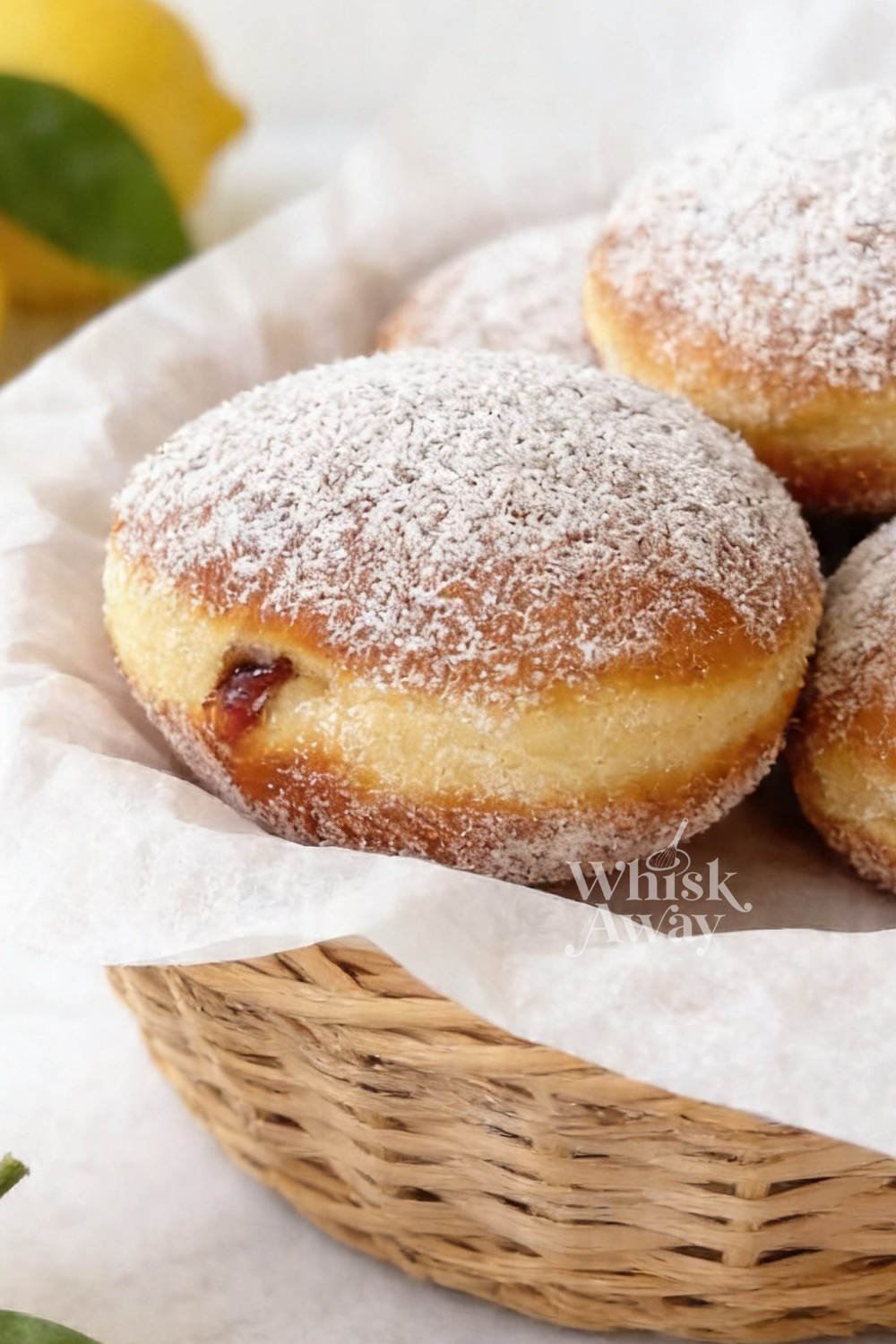
- Perfect Proofing: Let the dough balls rise until nearly doubled. Under-proofed Berliners sink in the oil, becoming dense and greasy, while fully proofed ones float and develop the signature pale white ring. Patience here is key.
- Maintain Oil Temperature: Keep frying oil steady around 350°F (177°C). Too cool, and the donuts soak up oil; too hot, and the outside browns before the center cooks. Wait for the oil to rebound between batches to preserve texture.
- Float, Don’t Push: When frying, let the Berliner float naturally. Avoid pressing or flipping it too early; the top and bottom should touch the oil, but the center stays suspended, preserving the iconic white ring.
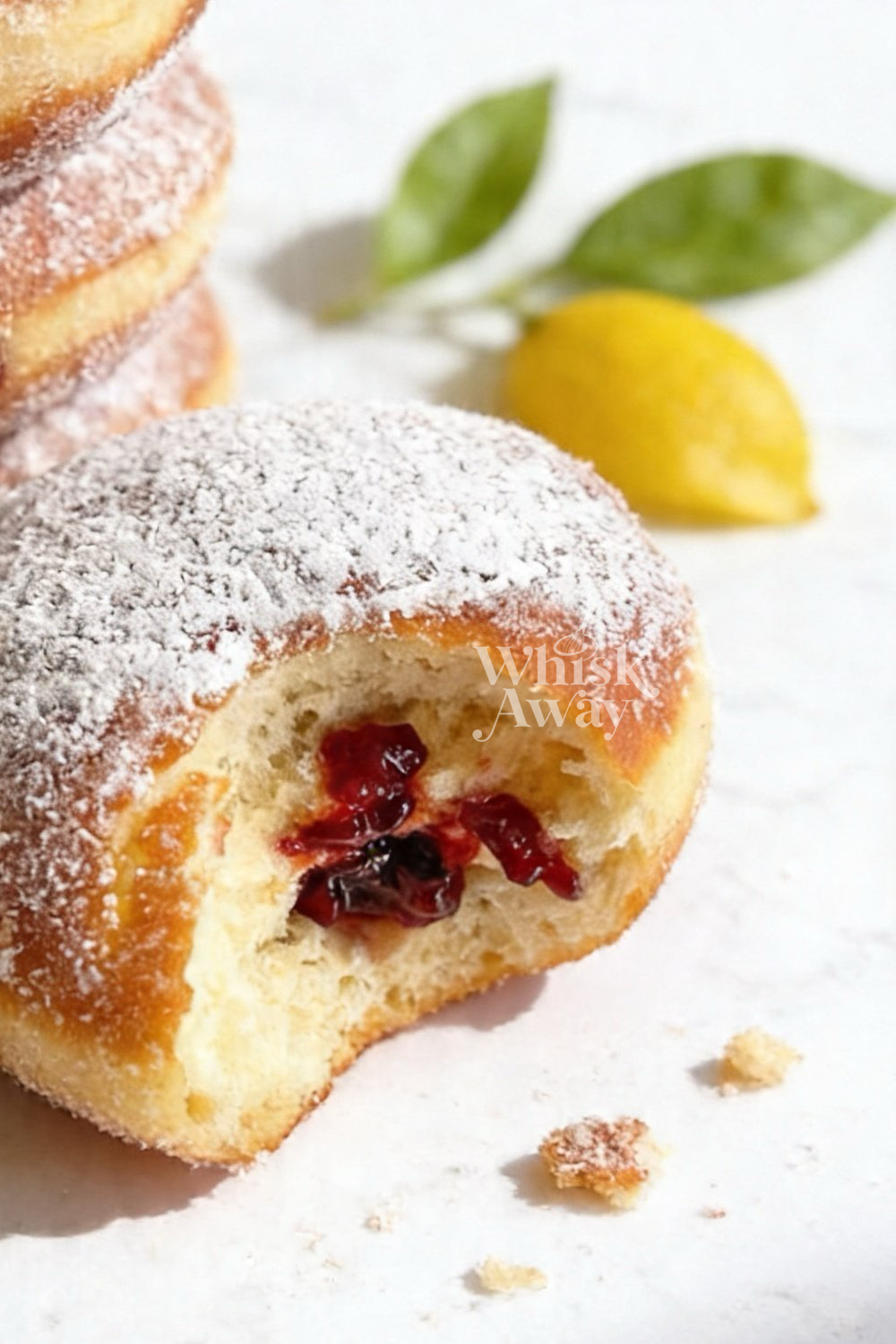
- Filling Technique: Insert the piping tip through the white ring and stop when you feel slight resistance. Use room-temperature jam and about 1–1.5 tablespoons per donut to avoid a soggy center while ensuring even, full distribution.
- Finishing Touches: Roll warm (not hot) donuts in granulated sugar for proper adhesion. Add a hint of lemon zest to the dough for balance, and strain chunky jams to prevent clogged piping tips and maintain a smooth, professional finish.
Storage Tips
- Always refrigerate due to perishable fillings; store in a sealed container for up to 3–4 days.
- Freeze unfilled donuts for up to 2 months.
- For filled donuts, freeze only if well-wrapped and thaw in the refrigerator.
FAQs
Why is my donut still raw in the center even though the outside is dark brown?
This is a classic case of the oil being too hot. Since Berliners don’t have a hole in the middle, the heat has a longer journey to reach the center. Keep your oil strictly between 350°F and 365°F. If the outside is browning too fast, drop the temperature by 5 degrees. Also, make sure your dough balls aren’t larger than 80 grams; anything bigger is very difficult to cook through.
How do I stop the jam from leaking out after I fill them?
Leaking usually happens for two reasons: the hole you poked was too large, or you filled the donut while it was steaming hot. Let the donuts cool until they are just barely warm to the touch. Use a thin skewer or a small knife to create a pilot hole first, then insert the piping tip. Stop squeezing the moment you feel the donut’s walls resist—if you overfill, the pressure will force the jam back out the way it came.
I don’t have a piping bag. Is there another way to fill them?
Absolutely. You can use a heavy-duty Ziploc bag with a small corner snipped off, though it’s a bit harder to control. If you don’t have that, you can carefully use a small paring knife to cut a slit in the side and use a small espresso spoon to nudge the jam inside. It’s a bit more rustic, but it gets the job done!
Can I use a different type of jam or even custard?
Yes! The dough is a neutral, buttery canvas. While raspberry or apricot is traditional, you can use lemon curd, chocolate hazelnut spread, or vanilla pastry cream. Just ensure your filling is smooth. If your jam has large chunks of fruit or seeds, it will clog your piping tip. Give it a quick pulse in the blender or push it through a sieve before filling.
What is the secret to that perfectly snowy powdered sugar look?
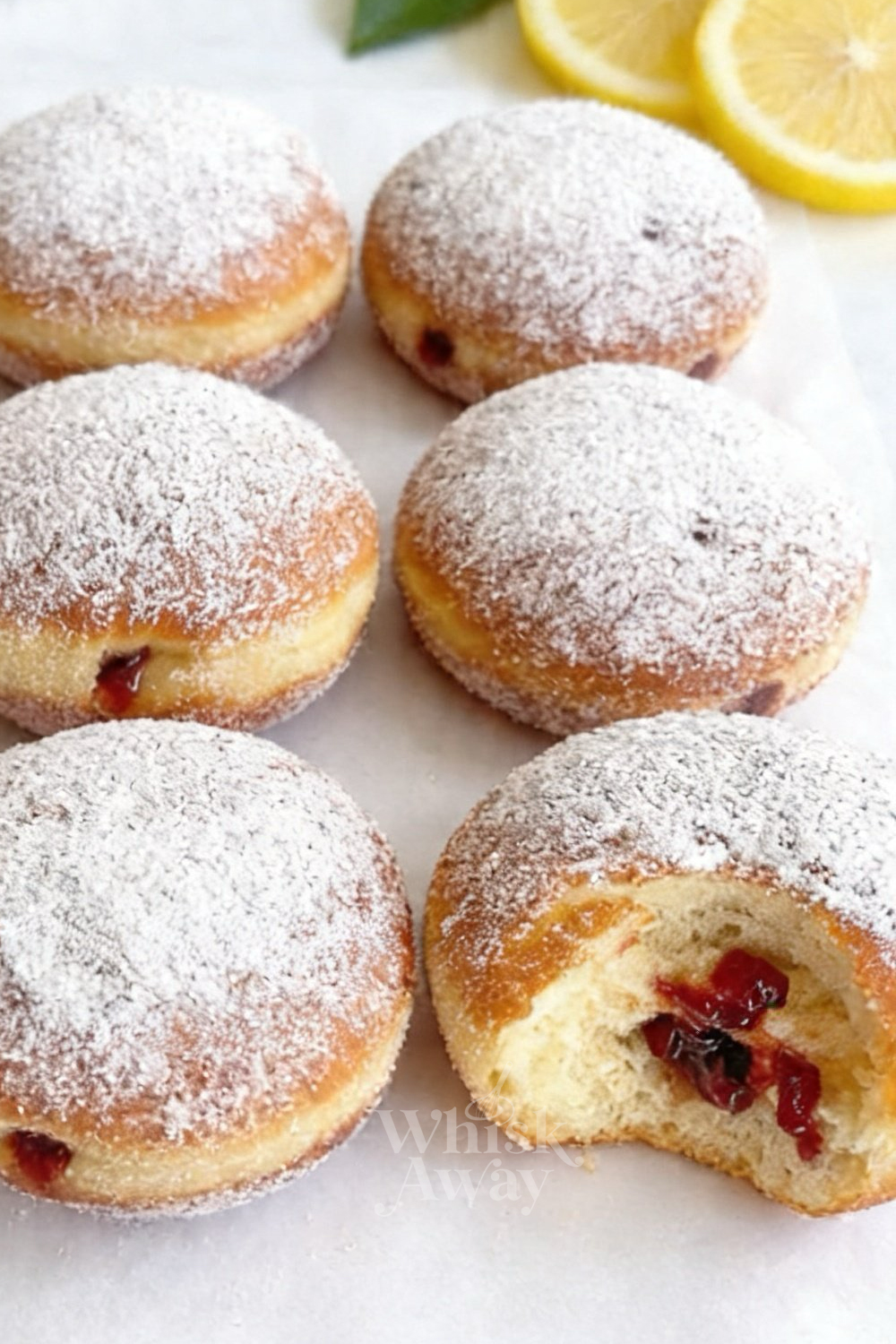
If you dust your donuts while they are still hot, the powdered sugar will melt and turn into a clear glaze. Wait until the donuts are completely cool for that final dusting. For an extra-professional look, use non-melting donut sugar (also called snow sugar), which is designed to stay white and powdery even on moist surfaces.
German Donuts
15
Donuts25
minutes10
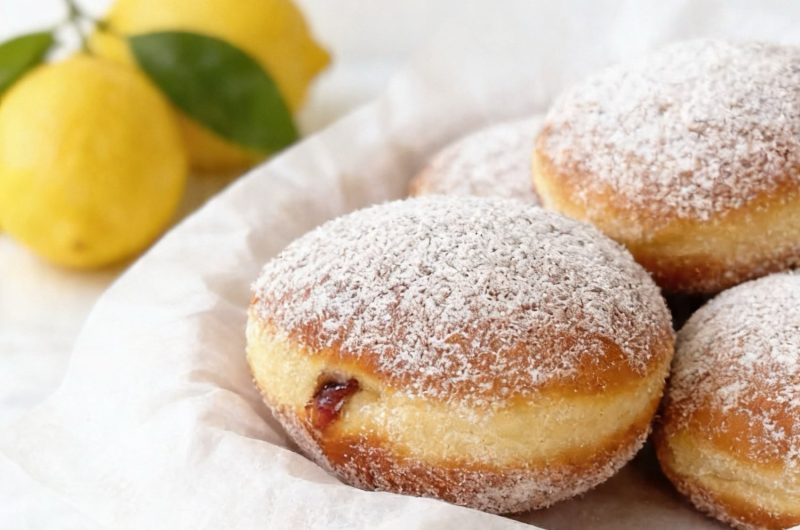
minutesThese filled jelly donuts (berliner) are soft, pillowy, and filled with fruity jam for a classic treat.
Ingredients
Oil for frying (Neutral oil like avocado or canola)
4 cups All-purpose flour
1 cup Milk (room temp, plus more as needed)
1 cup Raspberry jam (or jam/filling of choice)
Granulated sugar (about 1 cup, for coating)
Powdered sugar (about 1/2 cup)
1/3 cup Sugar (for dough)
5 tablespoons Unsalted butter (softened)
3 large Egg yolks (room temp)
2 1/4 teaspoons Instant yeast
1 1/2 teaspoons Lemon zest
1 teaspoon Quality pure vanilla extract
1/2 teaspoon Kosher salt
Pinch of cinnamon
Directions
- In your stand mixer bowl, combine the flour, sugar, yeast, salt, and lemon zest. Give it a quick stir to distribute the yeast.
- Add the egg yolks, softened butter, vanilla, and milk. Using the dough hook, knead the mixture for approximately 10 minutes. You are looking for a dough that is soft, supple, and no longer clings to the sides of the bowl. If it feels too dry, add a splash more milk; if it’s too tacky, a tablespoon of flour.
- Shape the dough into a smooth ball and place it in a lightly oiled bowl. Cover it loosely with plastic wrap and set it in a warm, draft-free area. Let it rise for 45–60 minutes, or until it has clearly doubled in volume.
- Gently deflate the dough by punching the center. For professional results, weigh the dough pieces—aiming for roughly 80 grams each (which should yield about 15 donuts).
- Use your palms to roll each piece into a tight, smooth ball. Place them on a parchment-lined baking sheet, leaving enough space for expansion. Cover the balls with a clean kitchen towel and let them proof again for 30–60 minutes. They should look very puffy and nearly double in size again; this step is essential for a light, airy texture.
- Pour at least 2 inches of oil into a deep pot. Heat it to a steady 350°F–365°F (177°C–185°C). Carefully lower a few dough balls into the oil. Fry for about 2 minutes per side.
- Crucial Tip: Do not push the donuts down into the oil. They should float high. This allows the center section to remain un-submerged, creating that signature white rim characteristic of an authentic Berliner.
- Once they are a deep golden brown on both sides, remove them and let them rest on paper towels.
- Fill a piping bag with your jam and use a small filling tip. Once the donuts are cool enough to touch, insert the tip into the side—right through the white center ring—and squeeze until you feel the donut expand slightly.
- Mix the granulated sugar with a pinch of cinnamon in a shallow bowl. While the donuts are still warm, roll them in the mixture until fully coated. Arrange the filled donuts on a rack and give them a light, elegant dusting of powdered sugar.
There are no reviews yet. Share your thoughts above!