

Could a scone be zesty, sweet, and just the right amount of crunch? These lemon poppy seed scones strike that balance, with bright citrus flavor and tiny crunches from the seeds.
Each bite is tender and flavorful, perfect for breakfast, brunch, or tea time.
So if you want to make these irresisitible treats, grab your apron, and let’s get started!
Why You’ll Love This Recipe
Citrus lovers will adore these scones for their bright lemon zing and subtle nutty crunch from poppy seeds. They feel light, refreshing, and perfect for spring or brunch.
What Makes Them Special
- Lemon zest brings vibrant fragrance and sharp citrus flavor.
- Poppy seeds add a unique textural contrast.
- Light, tender crumb keeps them from feeling too heavy.
- Can be finished with sweet lemon glaze for bakery-style presentation.
- Pairs beautifully with both coffee and herbal tea.
Save This Pin for Later to Your Pinterest Board

🔥 These lemon poppy-seed scones are fresh, zesty, and beautifully aromatic. If you enjoy citrus bakes, cranberry orange scones and blueberry scones are great next recipes to try. For a simple option, classic English plain scones work beautifully.
How to Get Your Lemon Poppy Seed Scones Just Right
These scones are a masterclass in balance: the zing of fresh lemon, the earthy crunch of poppy seeds, and the subtle floral depth from the almond extract.
Because this recipe uses Greek yogurt, the dough is naturally more hydrated than a standard cream scone, requiring a few specific adjustments for success.

1. The Secret to the Grown-Up Flavor
(a) To maximize the citrus impact, add the lemon zest to the sugar before you put it in the food processor.
Use your fingers to rub the zest into the sugar until it’s fragrant and moist.
This releases the essential oils directly into the sweetener.
(b) Don’t be tempted to add more almond extract than called for.
At ¼ teaspoon, it acts as a flavor enhancer that makes the lemon taste more like lemon; any more, and it can become overpowering and medicinal.
(c) For the glaze, never use bottled lemon juice. The bottled version lacks the bright acidity needed to cut through the powdered sugar.
Freshly squeezed juice provides the zing that makes these scones professional-grade.
2. Master the Food Processor Method
(a) The food processor is a tool of speed, not power. Use short, sharp pulses.
If you let the blade run continuously, you will warm the butter and over-develop the gluten, resulting in a flat, tough scone instead of a tall, flaky one.
(b) Your butter chunks should be the size of small peas or lentils when you’re done pulsing.
These cold bits are what create the internal steam necessary for a light crumb.
3. Common Mistakes to Avoid
Over-mixing the Yogurt
Once you add the Greek yogurt and eggs, work quickly.
Yogurt is acidic and begins reacting with the baking powder immediately.
The longer you stir, the more lift you lose.
The Sticky Trap
Because of the yogurt, this dough is naturally tackier than others. Do not keep adding flour to make it dry, as this will make the scones heavy.
Instead, flour your hands and the surface, and handle the dough as little as possible.
Glazing Too Early
If the scones are too hot, the glaze will melt and soak into the pastry, making it soggy.
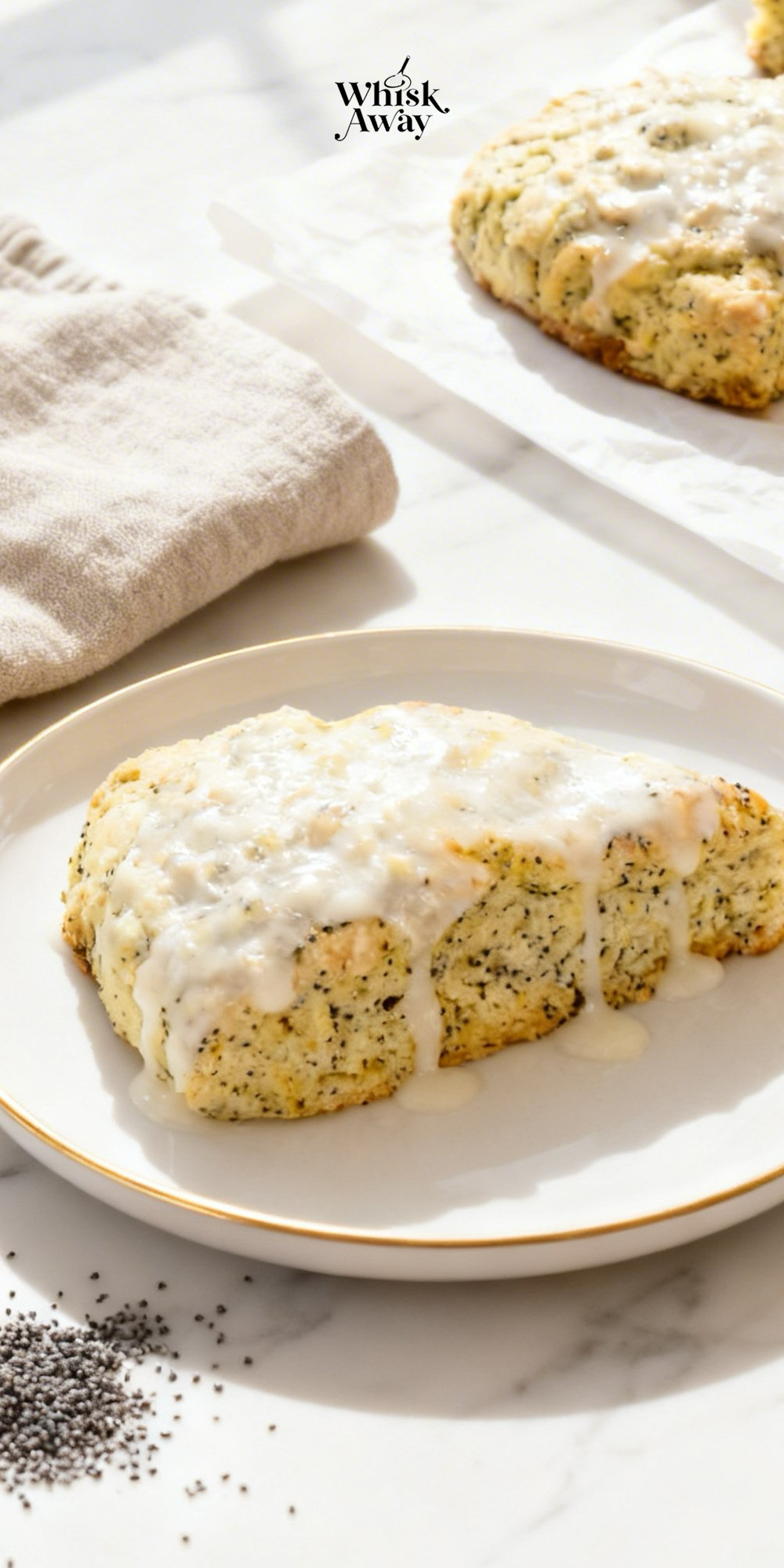
Wait for the full 5–8 minute cooling period so the glaze sits on top as a beautiful, opaque shell.
4. Timing & Technique Advice
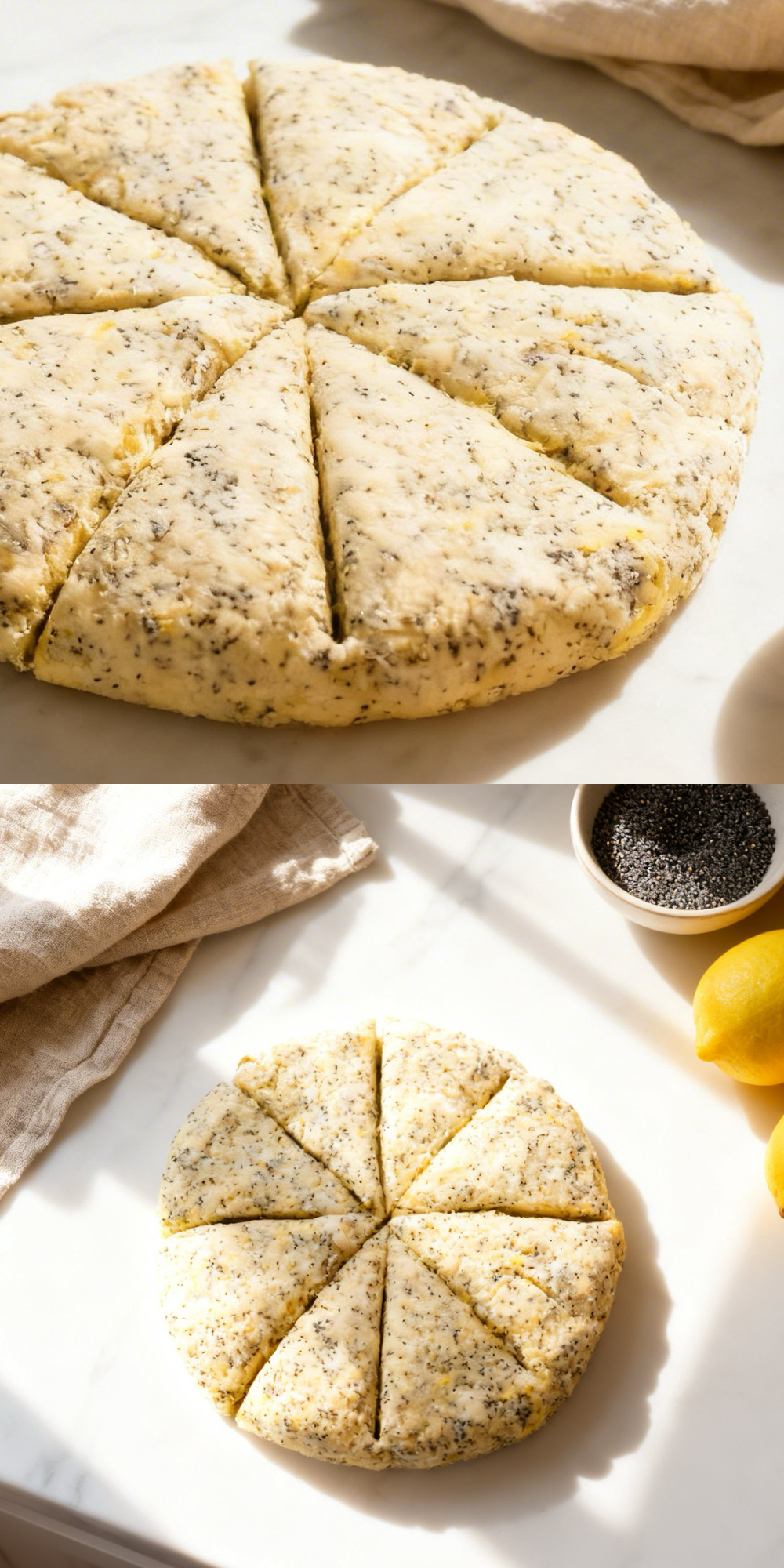
The Sharp Knife Cut: Unlike the circular press method, these wedges should be cut with a single, swift motion of a sharp knife.
Avoid sawing through the dough, which can pinch the edges and stop the rise.
Cold Ingredients are King: Ensure your yogurt and eggs are used straight from the fridge.
The colder the dough stays until it hits the 375°F oven, the better the final texture will be.
Pro-Tip: If you find the dough is too soft to handle after mixing, pop the entire bowl in the fridge for 15 minutes before patting it out.
This rest makes the dough significantly easier to shape and cut.
Baking Tips for This Recipe
Zest lemon before juicing: The oils in the zest add concentrated citrus aroma and flavor that off-the-shelf extracts can’t match.
Soak poppy seeds briefly (optional): Soaking reduces the chance of them absorbing moisture from your scone dough and leaves them plump and flavorful.
Add lemon zest into the dry mix: This releases more citrus oils and distributes them evenly throughout the batter.
Keep liquids cold: Just like with blueberry scones, cold ingredients help maintain height and flakiness.
Drizzle glaze after cooling slightly: Warm scones can melt glaze, making it run off rather than cling.

Variation Tips
The lemon poppy seed scone is a bright, sophisticated treat that serves as an excellent base for experimentation.
Whether you want to lean into the floral notes or add a bit of seasonal fruit, these tweaks can be easily managed in any kitchen.
1. Lavender X Lemon
For an elegant, floral twist that pairs perfectly with Earl Grey tea:
- Add 1 tablespoon of culinary-grade dried lavender buds to the food processor along with the flour and poppy seeds.
The lavender provides a subtle, herbal depth that complements the citrus and the hint of almond extract beautifully.
2. Orange X Ginger
A sunnier, spicier version that is particularly good for brunch:
- Replace the lemon zest and juice with orange zest and juice.
- Fold in 2 tablespoons of finely minced crystallized ginger when you add the yogurt.
This version is less tart and offers a warm, lingering spice from the ginger.
3. The Berry-Burst
To add juiciness and a pop of color:
Gently fold in ½ cup of fresh blueberries or raspberries after the dough has just come together.
Pro-Tip: Be extra careful when patting out the dough to avoid crushing the berries.
4. Texture & Ingredient Alternatives
The Sour Cream Swap: If you are out of Greek yogurt, sour cream is an excellent 1:1 substitute.
It offers a similar fat content and acidity, resulting in a very rich and tender scone.
The Nutty Crunch: Add ½ cup of sliced almonds to the dough or sprinkle them on top of the butter-brushed scones before baking.
This doubles down on the flavor provided by the almond extract.
Double Glaze: For those who love a sweet-tart punch, let the first layer of glaze set for 10 minutes, then apply a second coating.
It creates a thick, professional-looking icing.
5. Dietary Adaptations
Gluten-Free:
Use a high-quality 1:1 gluten-free flour blend.
Since these scones rely on Greek yogurt for moisture, they remain surprisingly soft and don’t get as crumbly as some other gluten-free bakes.
Dairy-Free & Vegan:
Use chilled vegan butter sticks and replace the Greek yogurt with a thick dairy-free alternative (like almond or coconut-based Greek-style yogurt).
Replace the 2 eggs with ½ cup of unsweetened applesauce or a commercial egg replacer.
Refined Sugar-Free:
Replace the granulated sugar with coconut sugar (note: this will turn the dough a light brown) or a monk fruit sweetener.
For the glaze, use a powdered erythritol blend.
6. Creative Serving Idea
These scones are incredible when split and served with a layer of homemade lemon curd and a sprinkle of extra poppy seeds.
The double-dose of lemon makes for a truly vibrant treat.
How to Properly Store Your Lemon Poppy Seed Scones
The lemon poppy seed scone is a delicate balance of moisture (from the Greek yogurt) and a crisp, buttery exterior.
Because of the citrus glaze, these scones require specific care to ensure the icing doesn’t disappear into the pastry or become unpleasantly sticky.
1. Room Temperature
Duration: Up to 3 days.
Once the glaze is completely dry and set, place the scones in an airtight container.
If you live in a humid climate, place a piece of parchment paper between layers of scones. This prevents the glaze from one scone sticking to the bottom of another.
2. Refrigeration (For Humid Environments)
Duration: Up to 5 days.
If your kitchen is warm, the butter and yogurt content makes these a candidate for the fridge.
Serving Note: Scones firm up significantly when cold. For the best flavor, let them sit on the counter for 15–20 minutes before eating, or give them a very brief warm-up (see below).
3. Freezing
Duration: Up to 3 months.
You can freeze these glazed or unglazed.
Wrap each scone tightly in plastic wrap to lock in the moisture, then place them in a freezer-safe bag.
To Thaw: Thaw at room temperature for about an hour. The glaze may look slightly more matte after thawing, but the flavor will be perfectly preserved.
4. How to Reheat Without Ruining the Glaze
Reheating glazed scones is tricky because you want to warm the center without melting the icing into a puddle.
The Toaster Oven (Low Heat): Use a low setting (250°F / 120°C) for just 3–5 minutes.
This gently warms the scone through without causing the glaze to run.
(For Unglazed Scones): If you haven’t glazed them yet, slice the scone in half and toast it.
It creates a wonderful crunch that contrasts with the poppy seeds.
The Microwave: Avoid if possible. If you must, use a 5-second burst.
Any longer and the lemon glaze will melt and the scone will become rubbery.
5. Storage Mistakes to Avoid
(a) Never put scones in a container while they are still warm. The residual steam will turn your beautiful glaze into a clear, sticky liquid and make the scone gummy.
(b) Air is the enemy of the scone. If your container isn’t truly airtight, the Greek yogurt moisture will evaporate, leaving you with a dry, crumbly biscuit.
(c) Butter-heavy pastries absorb odors easily. Ensure they are stored away from strong-smelling foods (like cut onions or garlic) in the fridge.

FAQs
Can I use regular yogurt instead of Greek yogurt?
It is not recommended. Greek yogurt is strained, meaning it has a much lower moisture content and a thicker consistency. Regular yogurt is too watery and will make your dough overly sticky and difficult to shape. If you don’t have Greek yogurt, sour cream is the best 1:1 substitute, as it provides the necessary fat and thickness.
Why do I use almond extract in a lemon recipe?
Think of almond extract as a flavor bridge. At a very small dosage (¼ teaspoon), it doesn’t make the scone taste like cherries or nuts; instead, it rounds out the sharp acidity of the lemon and makes the citrus taste more “baked-in” and professional. If you skip it, the lemon flavor will feel a bit flatter.
Do I need to soak the poppy seeds before adding them?
No. Unlike in some dense cake recipes, poppy seeds in scones are meant to provide a delicate crunch. Soaking them would make them soft and cause them to bleed a greyish hue into your bright yellow dough. Add them dry to the food processor to ensure they remain distinct and crispy.
How do I prevent the lemon flavor from being bitter?
Bitterness usually comes from the pith (the white part of the lemon skin). When zesting, use a microplane and stop as soon as you reach the white layer. To get the most zing without the bitter aftertaste, rub your fresh zest into the sugar with your fingertips before mixing; this releases the aromatic oils without the need for excessive juice in the dough.
Can I freeze the unbaked dough wedges?
This is actually a great pro move. You can cut the dough into wedges, place them on a tray to freeze solid, and then transfer them to a freezer bag. Bake them straight from the freezer whenever you want a fresh treat; just add 2–3 minutes to the original baking time. Do not glaze them until after they are baked and cooled.

Lemon Poppy Seed Scones
8
servings20
minutes20
minutesThis lemon poppy seed scones recipe is zesty, lightly sweet, and tender with a delicate crunch.
Ingredients
- For the Scones
2 cups all-purpose flour
⅓ cup plain Greek yogurt
⅓ cup granulated sugar
6 tablespoons cold butter, cubed
3 tablespoons poppy seeds
3 tablespoons lemon zest
3 teaspoons vanilla extract
2 large eggs, lightly beaten
1 tablespoon baking powder
1 tablespoon butter, melted
½ teaspoon kosher salt
¼ teaspoon almond extract
- For the Glaze
1 cup powdered sugar
3 tablespoons fresh lemon juice
2 tablespoons butter, melted
½ teaspoon lemon zest
Directions
- Preheat your oven to 375°F (190°C). Prepare a baking sheet by lining it with a silicone mat or a piece of parchment paper and set it aside.
- Combine the flour, sugar, poppy seeds, baking powder, and salt in a food processor. Give it a quick 3-second pulse just to integrate the dry ingredients.
- Toss the cold, cubed butter into the processor. Execute three 1-second pulses. The goal is efficiency without over-processing. You want visible chunks of butter remaining; these are the secret to a flaky scone. If you prefer a more hands-on approach, you can skip the machine and use a pastry blender to cut the butter in by hand.
- Pour the buttery flour mixture into a large mixing bowl.
- Add the beaten eggs, Greek yogurt, vanilla and almond extracts, and the fresh lemon zest directly into the bowl.
- Stir the mixture until it starts to come together.
- Starting with a fork helps keep things light, but don't be afraid to finish the job with your hands to ensure everything is well-managed. The dough should feel slightly tacky but manageable.
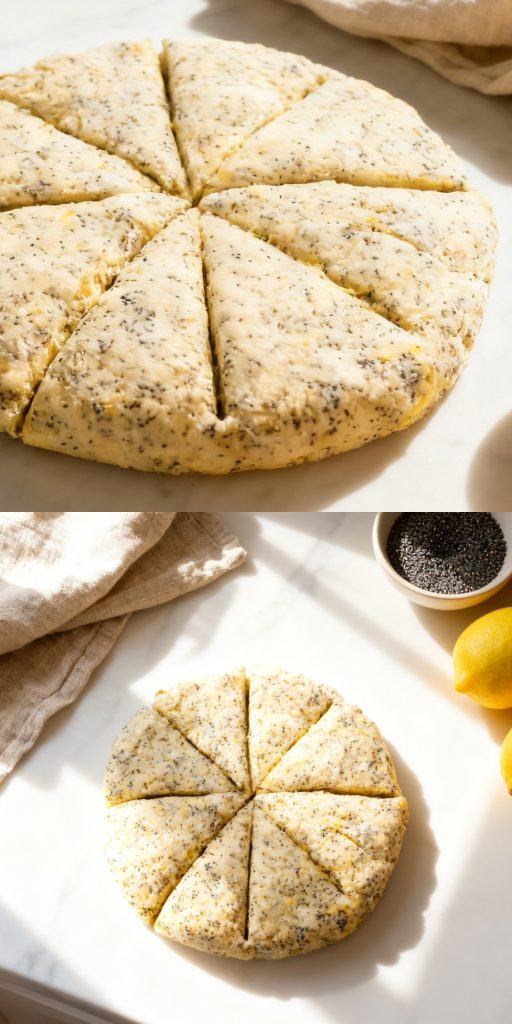
- On a lightly floured countertop, pat the dough into a circular shape about 1-inch thick.
- Using a sharp knife, slice the circle into 8 even wedges. Transfer these triangles onto your prepared baking sheet.
- Use a pastry brush to coat the tops of each wedge with a layer of melted butter.
- Slide the tray into the oven for 18–21 minutes. You’re looking for a delicate golden brown color to develop along the edges.
- While the scones are in the oven, whisk together the powdered sugar, melted butter, lemon juice, and zest in a medium bowl until smooth.
- Let the scones rest on the hot pan for 3 minutes after removing them from the oven, then move them to a wire rack for another 5 minutes. Drizzle the lemon glaze over the warm scones and let it set completely before serving.
- These scones maintain their bright flavor and texture for up to 3 days when kept in an airtight container at room temperature.