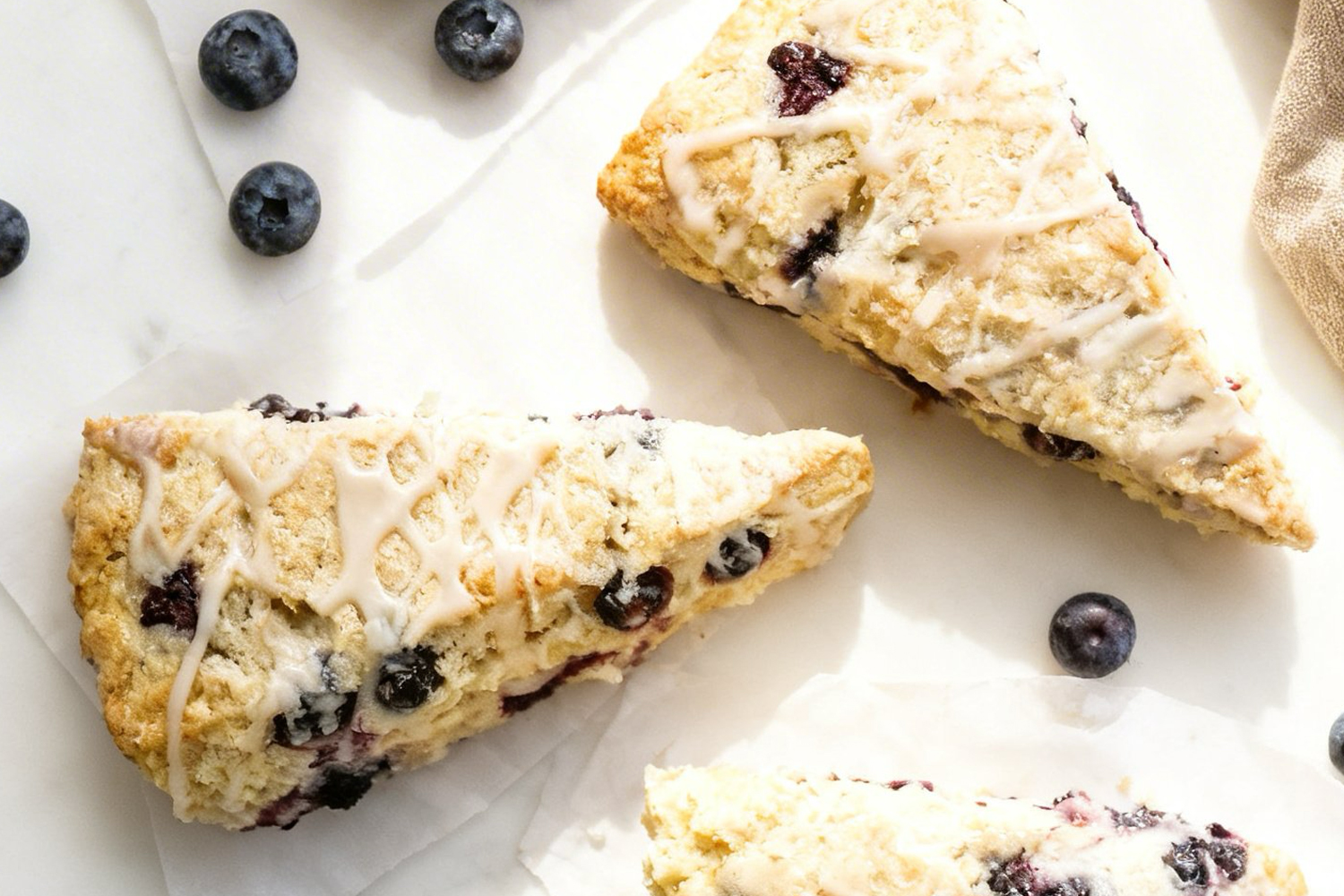
What if your morning could taste like fresh berries and buttery perfection?
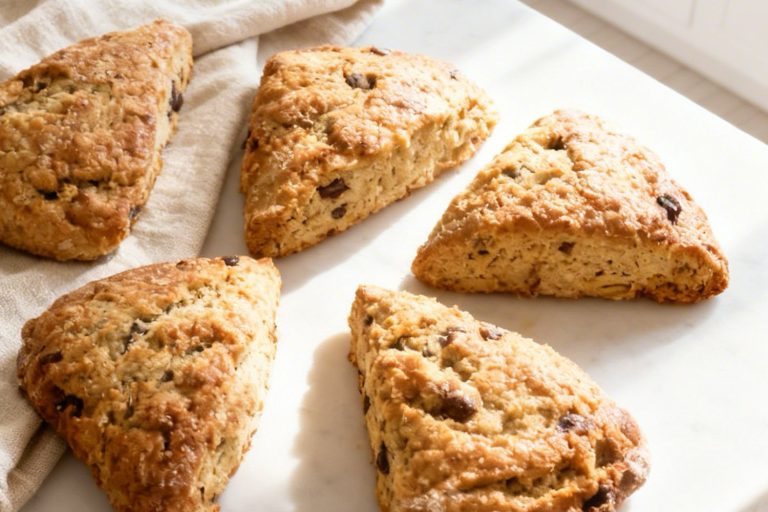
Blueberry scones combine juicy blueberries with tender, golden scones, offering a soft, slightly crumbly texture that melts in your mouth.
Making blueberry scones at home is simple, and the aroma of berries and baked dough filling your kitchen is irresistible.
They’re perfect for breakfast, brunch, or as a sweet snack, and they feel fancy without being complicated.
Why You’ll Love This Recipe
Bursting with sweet-tart berries, blueberry scones offer bright fruit pockets that contrast beautifully with a tender, buttery crumb, making them a favorite for breakfast or brunch.
What Makes Them Special
- Fresh blueberries add natural sweetness and juicy bursts in every bite.
- Golden edges and soft centers balance texture and flavor.
- Slightly sweet scone dough will never overwhelm your morning coffee.
- Easy to customize with lemon zest or a glaze for extra brightness.
- Great served warm straight from the oven or later at room temperature.
Save This Pin for Later to Your Pinterest Board

🔥 These blueberry scones are soft, buttery, and bursting with juicy berries. If you enjoy bright flavors, lemon poppy-seed scones and cranberry orange scones are great next recipes to try. For a more traditional option, classic English plain scones are always reliable.
How to Get Your Blueberry Scones Just Right
These blueberry scones are designed to be bakery-style, substantial, sweet, and bursting with fruit.
Because they contain a higher moisture content from the berries and buttermilk, the technique differs slightly from a traditional plain scone.
1. The Secret to the Grated Butter Method
Freeze Your Butter: For the best results, put your butter sticks in the freezer for 15 minutes before grating.
This ensures the butter doesn’t soften while you hold it, keeping those tiny shreds distinct.
Airy Pockets: When these cold butter shreds hit the oven, they create thousands of tiny steam pockets.
This is what gives the scones a tender-crumb texture rather than a heavy, cake-like feel.
Minimal Friction: Folding in grated butter is much faster than rubbing it in by hand.
This reduces the heat from your fingers, which is the number one enemy of flaky pastry.
2. Berry Management | Keeping Them Whole
(a) Use a wide rubber spatula to fold in the blueberries. Avoid stirring in circles, which can crush the berries and bleed blue juice throughout the dough.
Instead, cut through the center and lift from the bottom.
(b) You can use frozen blueberries, but do not thaw them. Add them directly from the freezer.
Note that frozen berries are more likely to streak the dough, so work even faster if using them.
(c) If your berries are very ripe and soft, toss them in a tablespoon of flour before adding them to the dough.
This creates a barrier that helps them stay suspended in the dough rather than sinking or bursting.
3. Common Mistakes to Avoid
Skipping the Fridge Rest: It is tempting to go straight to the oven, but the 20-minute chill is non-negotiable.
It relaxes the gluten (making the scone tender) and solidifies the butter (making the scone flaky). Without it, the scones may spread too much and lose their height.
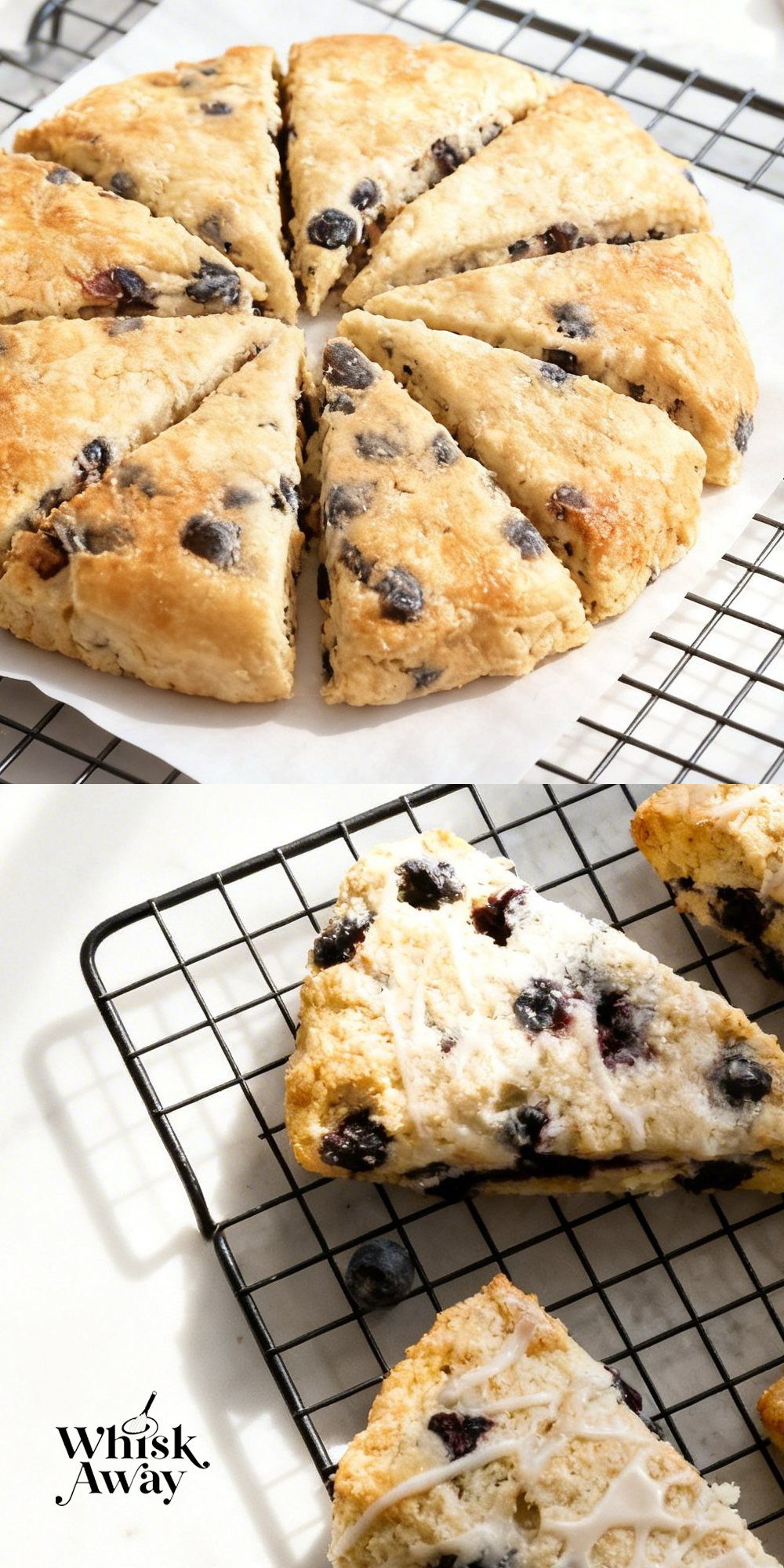
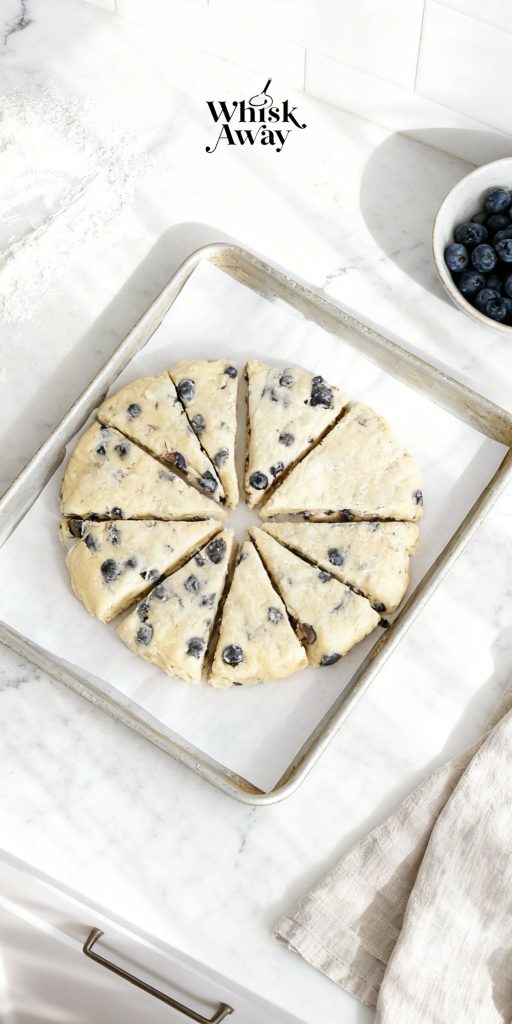
The Space Factor: When arranging them in a circle, don’t crowd them.
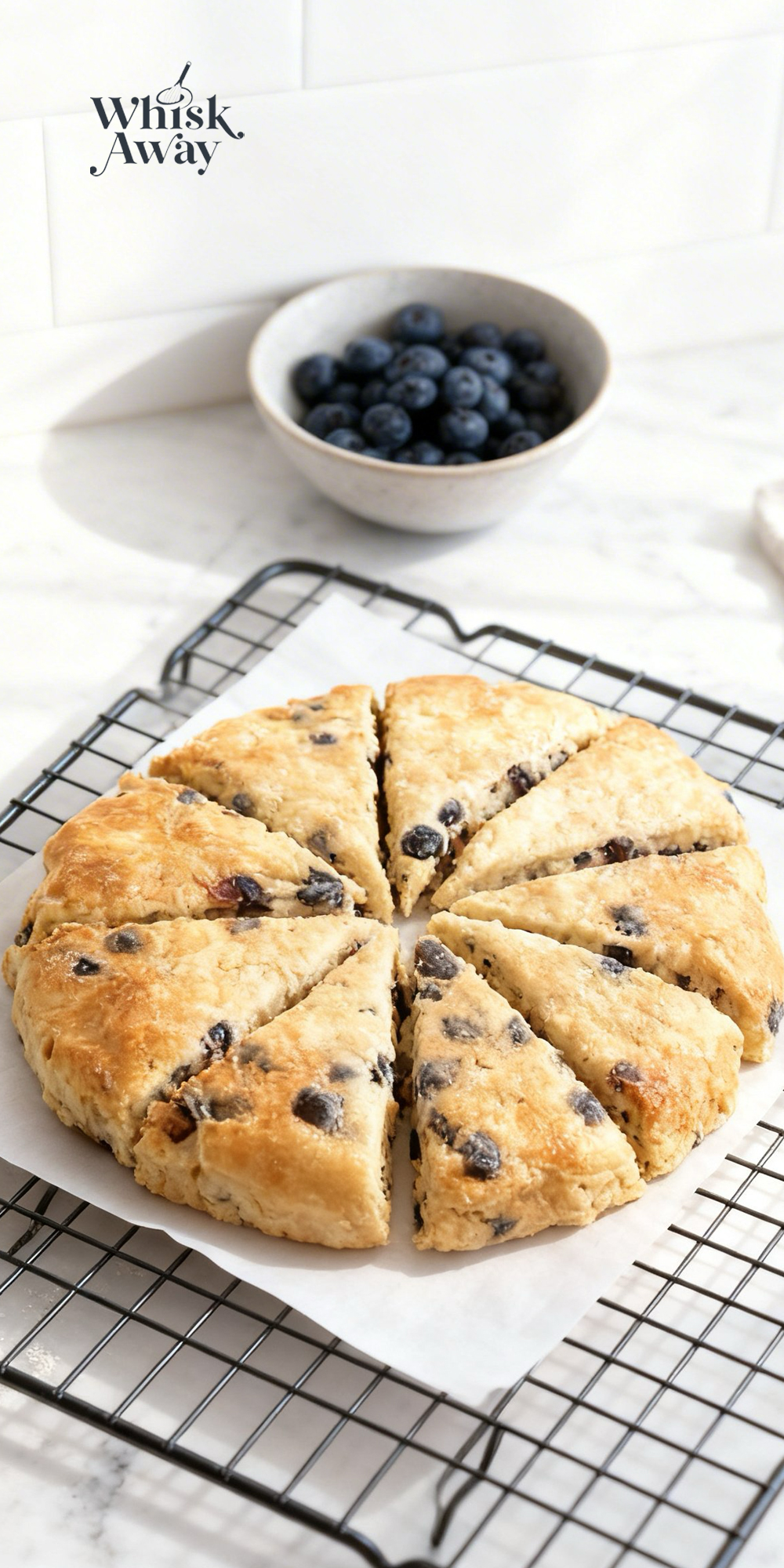
That ¼-inch gap allows the heat to hit the sides of the triangles, helping them rise vertically.
If they are touching, the centers will stay doughy while the tops burn.
Over-Baking: Blueberries hold a lot of heat. If you wait until the scones are dark brown, they will be dry inside.
Pull them out when the edges are just lightly golden; the residual heat will finish the center as they cool.
4. Timing & Technique Advice
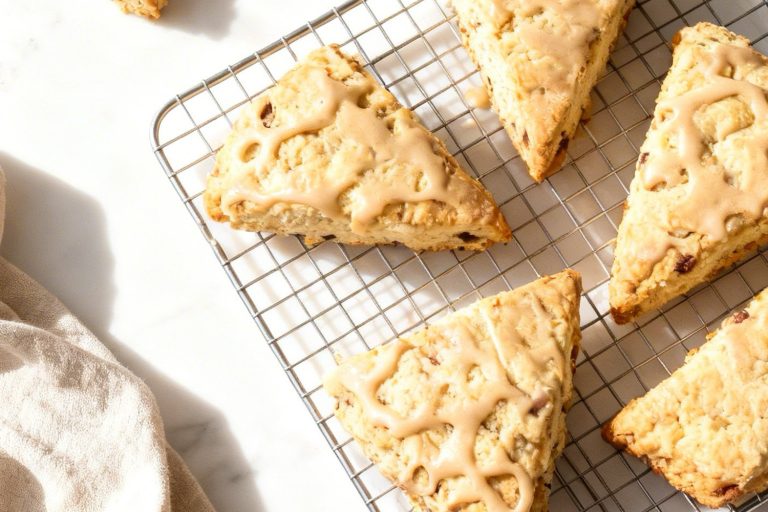
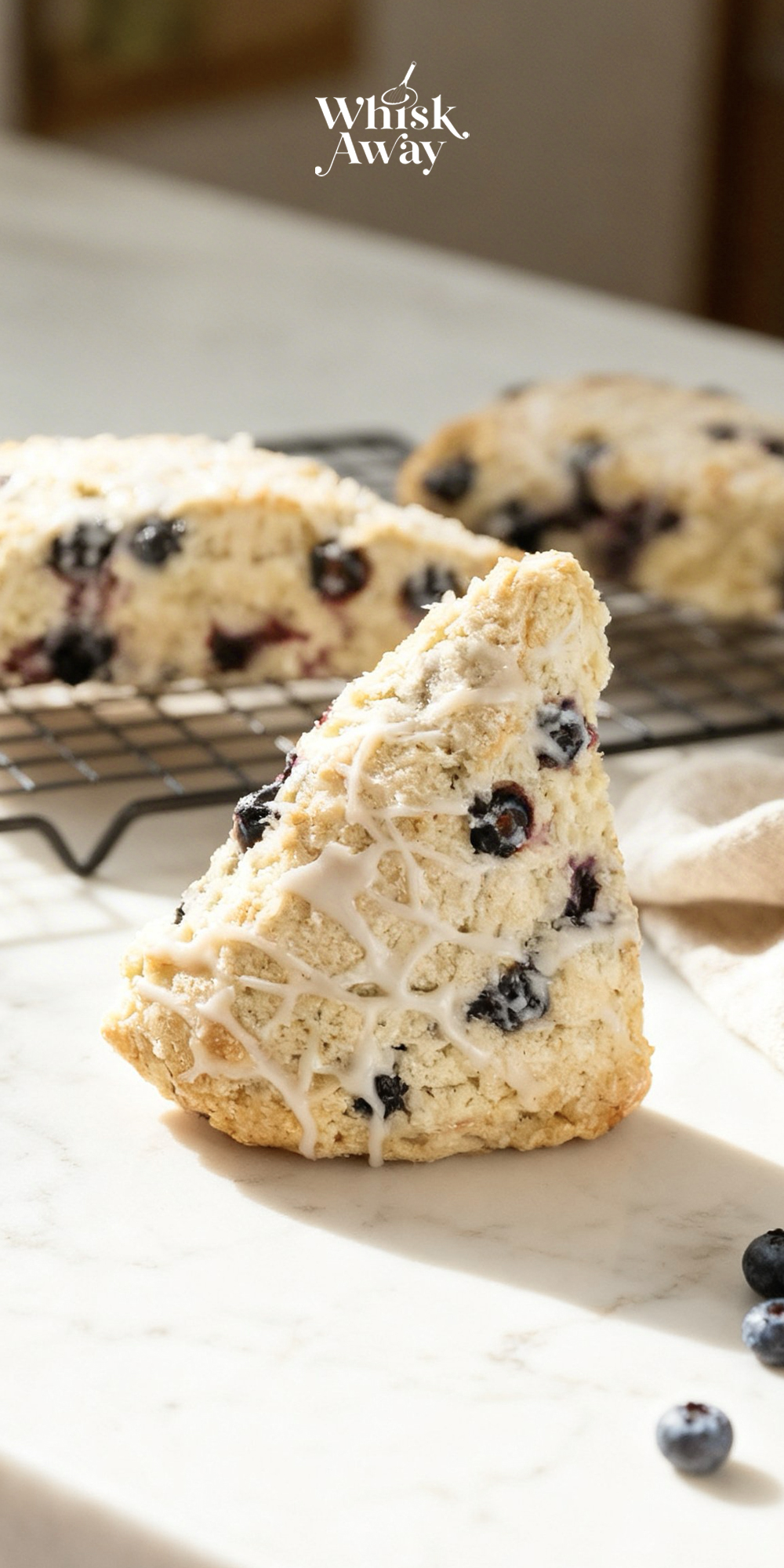
(a) Never glaze a warm scone. The sugar will melt and disappear into the crust, making it soggy.
Wait until they are completely cool to the touch so the glaze sits perfectly on top.
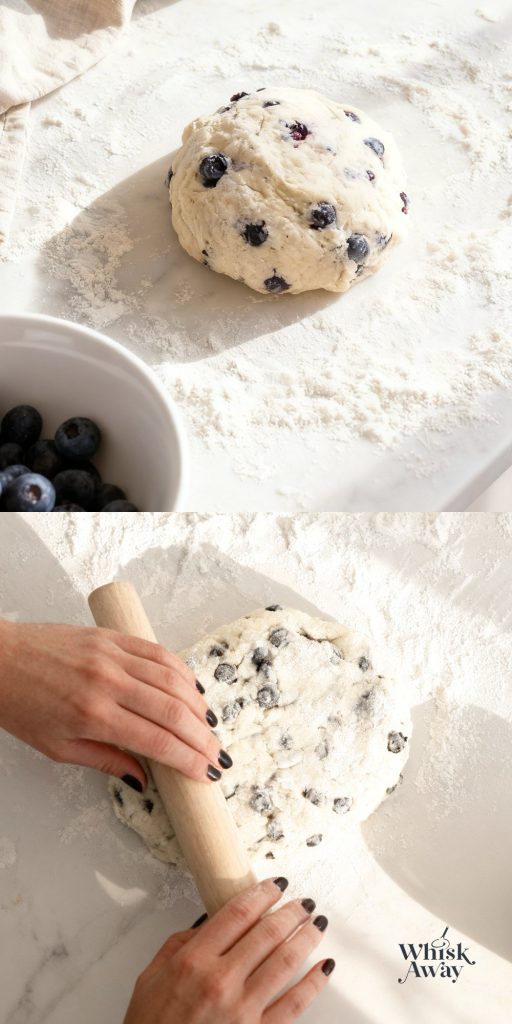
(b) When shaping the dough into a 1-inch thick slab, use your hands rather than a rolling pin.
This preserves the lift of the leavening agent and prevents the berries from being flattened.
Pro-Tip: For an extra flavor boost, add the zest of one lemon to your sugar before whisking the dry ingredients.
The acidity of the lemon elevates the natural sweetness of the blueberries and brightens the entire scone.
Baking Tips for This Recipe
Use cold or frozen blueberries: Cold berries won’t burst during mixing and their moisture stays inside—not bleeding into the dough and making it soggy.
Toss berries lightly in a teaspoon of flour before folding in: This thin coat helps prevent them from sinking to the bottom and keeps them distributed evenly.
Fold gently and only until combined: Overmixing activates gluten and squeezes juices out of the berries, both of which make the texture tough or wet.
Pat dough to about ¾–1 inch thickness: Too thin and they bake quick and dry; too tall and the center won’t set properly.
Chill shaped dough 10–15 minutes before baking: This firms the butter and slows spread, resulting in taller, more defined scones.
Variation Tips
The Blueberry Scone is a fantastic canvas for experimentation.
Because the base dough is rich and slightly sweet, it supports a wide variety of fruit, spice, and texture additions without losing its signature flakiness.
1. The Lemon-Blueberry Brightener
Blueberries and lemon are a match made in heaven. The acidity of the citrus highlights the floral notes of the berries.
Rub the zest of two large lemons into the sugar before mixing it with the flour.
Replace the milk in the glaze with fresh lemon juice for a tart, zesty finish.
2. The White Chocolate & Raspberry Twist
For an even more indulgent, “dessert-style” scone:
- Use ¾ cup blueberries and ¾ cup fresh raspberries.
- Fold in ½ cup of white chocolate chips along with the fruit.
The creamy sweetness of the white chocolate balances the tartness of the raspberries beautifully.
3. The Cinnamon-Spice Warmth
If you prefer a deeper, more “cozy” flavor profile:
- Add 1 teaspoon of ground cinnamon and a pinch of nutmeg to the dry ingredients.
- Instead of plain sugar, sprinkle the tops with a cinnamon-sugar mix before baking.
4. Texture & Ingredient Alternatives
The “ogurt Swap:
If you don’t have buttermilk, you can use 1 cup of plain Greek yogurt.
The thick consistency makes the dough slightly richer and helps the scones hold their shape even better during the bake.
The Sugar Crunch Topping:
For a bakery-style sparkle and a satisfying crunch, replace the granulated sugar topping with Turbinado (raw) sugar or sparkling coarse sugar.
Nutty Addition:
For extra protein and crunch, fold in ½ cup of toasted slivered almonds or chopped pecans.
5. Dietary Adaptations
Gluten-Free:
Use a high-quality 1:1 gluten-free flour blend (one that includes xanthan gum).
Because scones rely on a short texture (meaning less gluten development), they adapt to gluten-free flours much better than bread does.
Dairy-Free & Vegan:
Use chilled vegan butter sticks (grated while frozen) and replace the buttermilk with almond or soy milk mixed with 1 tablespoon of lemon juice (let it sit for 5 minutes to “curdle” into vegan buttermilk).
Replace the 2 eggs with ¼ cup of unsweetened applesauce or a commercial egg replacer.
Reduced Sugar:
You can reduce the sugar in the dough to ½ cup without affecting the structure.
To maintain the flavor, add an extra teaspoon of vanilla extract or the zest of an orange.
6. Creative Serving Idea
Split a warm blueberry scone and top it with a dollop of lemon curd and a smear of clotted cream. The silky, tart curd is the perfect companion to the bursting blueberries.
How to Properly Store Your Blueberry Scones
Because Blueberry Scones contain fresh fruit, they have a higher moisture content than plain scones.
This makes them incredibly tender, but it also means they require a bit more care during storage to prevent the crust from becoming soft or the berries from affecting the texture.
1. Room Temperature (Best for Short-Term)
Duration: Up to 2 days.
Once the glaze has completely set, place the scones in an airtight container.
Note: If your kitchen is particularly warm, the moisture from the blueberries can make the scones weep.
In this case, placing a sheet of paper towel at the bottom of the container can help absorb excess humidity.
2. Refrigeration (Recommended for Fruit Scones)
Duration: Up to 5 days.
Store in a sealed container or a zip-top bag.
The refrigerator helps keep the fresh fruit stable for longer. However, cold temperatures will firm up the butter, so these are best enjoyed after a quick reheat.
3. Freezing (Best for Long-Term Freshness)
Duration: Up to 3 months.
Scones freeze beautifully, even with the glaze.
Wrap each scone individually in plastic wrap to prevent freezer burn, then place them in a heavy-duty freezer bag.
To Thaw: Let them sit at room temperature for about an hour. For a “fresh-baked” feel, pop the thawed scone into a warm oven for a few minutes.
4. How to Reheat for the Best Texture
Reheating is the secret to reviving the “crunch” of the exterior and the “fluff” of the interior.
The Oven Method: The gold standard for reheating. Place scones on a baking sheet at 300°F (150°C) for 5–10 minutes.
This recrisps the edges without drying out the fruit.
The Toaster Oven: If you have one, use the “light toast” setting.
This is perfect for individual scones and gives the glazed top a nice caramelization.
The Microwave: Use with caution! Only heat for 10–15 seconds.
Any longer and the blueberries can become dangerously hot, and the pastry will turn chewy as it cools.
5. Storage Mistakes to Avoid
The Warm Wrap: This is the most common error. If you package scones while they are even slightly warm, the steam will turn the glaze into a sticky liquid and make the pastry soggy.
They must be 100% cool.
Over-stacking: Try to store blueberry scones in a single layer.
The weight of stacked scones can crush the delicate fruit-filled crumb and cause the glaze to stick.
Skipping the Seal: Because these are high-fat pastries, they can easily absorb odors from the fridge (like onions or garlic).
Ensure your container has a strong, airtight seal.
FAQs
Can I use frozen blueberries instead of fresh?
Yes, you certainly can! However, do not thaw them before adding them to the dough. Thawed berries release too much juice, which will turn your entire batch of dough purple. Add them straight from the freezer and work quickly to prevent them from bleeding into the mixture.
Why did my scones spread out and become flat during baking?
This usually happens if the butter became too soft before the tray hit the oven. To prevent “spreading,” ensure your butter is ice-cold (grating it while frozen is best) and never skip the 20-minute refrigerator chill after shaping. This rest period allows the gluten to relax and the butter to solidify, ensuring a high, vertical rise.
My scones are a bit dry. What happened?
Dry scones are often the result of over-baking or using too much flour. When measuring your flour, use the “spoon and level” method rather than scooping directly with the measuring cup, which can pack the flour down. Also, pull the scones out the moment the edges are lightly golden; they will continue to firm up as they cool on the rack.
Can I substitute the buttermilk with something else?
If you don’t have buttermilk, you can make a quick substitute by adding 1 tablespoon of lemon juice or white vinegar to 1 cup of whole milk; let it sit for 5 minutes until it curdles. Alternatively, you can use 1 cup of plain Greek yogurt for an even richer, tangier scone.
How do I get that crunchy, professional-looking top?
The secret is the “double-sweet” finish. Brushing the tops with melted butter just before they go into the oven creates a golden crust, while the sprinkle of granulated sugar (or even better, coarse sparkling sugar) provides that signature bakery crunch that contrasts beautifully with the soft interior.
Blueberry Scones
12
servings10
minutes30
minutes90
minutesThis blueberry scones recipe is soft, slightly sweet, and bursting with fresh blueberries.
Ingredients
- For the Scones
4 cups all-purpose flour
1 ½ cups fresh blueberries
1 cup sugar, + 2 tablespoons sugar * 1 cup cold buttermilk
1 1/3 sticks cold unsalted butter
2 large eggs
1 tablespoon baking powder
pinch of sea salt
melted unsalted butter (for brushing)
- For the Glaze
½ cup sifted powdered sugar
1 to 2 tablespoons whole milk
Directions
- Begin by preheating your oven to 375°F (190°C). In a large mixing bowl, combine the flour, 1 cup of sugar, baking powder, and a pinch of salt, whisking until well-integrated.
- For ultimate flakiness, grate your cold butter using a cheese grater directly into the bowl. Gently fold the butter shreds into the flour mixture until evenly distributed.
- In a separate container, whisk the buttermilk and eggs together.
- Pour the liquid into the dry ingredients. Use a spoon or rubber spatula to stir the mixture until it just comes together to form a dough.
- Carefully fold in the fresh blueberries. Be gentle here to avoid crushing the fruit and turning the dough purple.
- Transfer the dough onto a floured surface. Gently roll or pat it out until it is consistently 1-inch thick.
- Slice the dough into 12 triangular wedges.
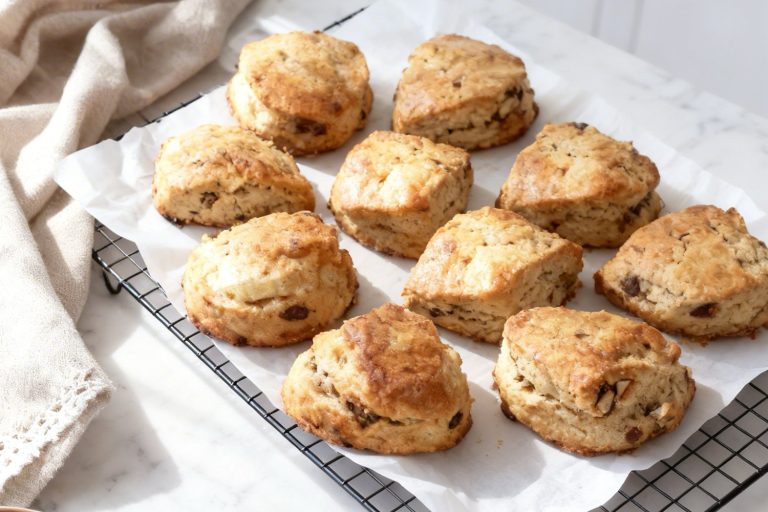
- Line a baking sheet with parchment paper. Arrange the triangles in a circular pattern, leaving about ¼ to ½ inch of space between each piece.
- Place the entire tray in the refrigerator for 20 to 25 minutes. This step is crucial—it re-hardens the butter, which is the secret to a high, flaky rise.
- Once chilled, remove the tray and lightly brush the tops with melted butter. Give them a generous sprinkle with the remaining 2 tablespoons of sugar.
- Slide the tray into the oven and bake for 25 to 30 minutes. You are looking for the edges to be a pale, golden brown.
- Transfer the scones to a wire rack and let them reach room temperature before glazing.
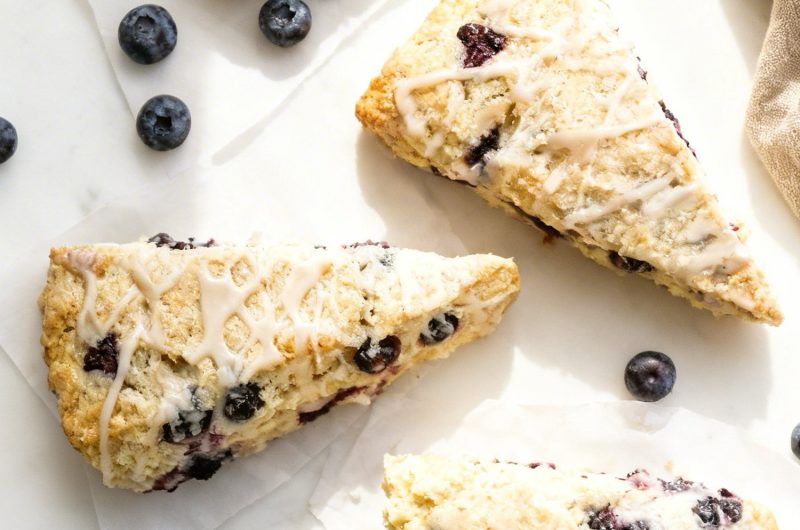
- Whisk the powdered sugar and milk together until smooth. Drizzle the glaze over the cooled scones. You may have a bit of glaze left over, which is perfect for those who like an extra-sweet finish.
- Pro-Tip for Best Results
- If your blueberries are particularly large or juicy, you can toss them in a teaspoon of flour before folding them into the dough. This helps them grip the dough better and prevents them from sinking to the bottom of the scones.